Greenland Ice Sheet4
-

The Melting of the Greenland Ice, Seen Up Very Close
A small team of scientists ventures out onto the Greenland ice sheet to study the forces large and small that are accelerating the melting of the world’s second-largest ice mass.
-

Photo Essay: Melting Greenland, Up Close
As climate warms, the Greenland ice sheet is melting, helping to fuel global sea-level rise. Follow a small team of scientists as they hike onto the sheet to investigate the forces large and small that are demolishing the ice.
-

Exposing Greenland’s Green Past
Findings from last year indicate that the Greenland Ice Sheet is perhaps not as stable as scientists had hoped.
-

Will Loss of Arctic Sea Ice Cause More ‘Snow on Ice’ in Greenland?
Scientists are collecting lake sediment, rock, water and plant samples to tease apart linkages between Arctic sea ice, atmospheric uptake, and changes in snowfall on the Greenland Ice Sheet.
-

The Greenland Ice Sheet Is Sponging Up Meltwater
As climate warms, the surface of the Greenland ice sheet is melting, and all that meltwater ends up in seasonal rivers that flow to the sea. At least that is what scientists have assumed until now. A new study has shown that some of the meltwater is actually being soaked into porous subsurface ice and…
-

Radar Reveals Meltwater’s Year-Round Life Under Greenland Ice
An improved technique developed by a graduate student at Lamont-Doherty Earth Observatory and her colleagues is making it possible to use airborne ice-penetrating radar to reveal meltwater’s life under the ice throughout the year.
-
Most of Greenland Ice Melted to Bedrock in Recent Geologic Past, Says Study
Finding Suggests the Ice Sheet Is More Vulnerable Than Thought
-

In Greenland, Exactly Where Meltwater Enters the Ocean Matters
In southern Greenland in summer, rivers have been streaming off the ice sheet, pouring cold fresh water into the fjords. A new study tracks where that meltwater goes—with surprising results.
-

The Changing Upernavik Waterfront
Project Background: Changing conditions in Greenland’s northwest glaciers over the last decade have led to a range of questions about water temperature and circulation patterns in the fjords where ocean water meets the glacial fronts.


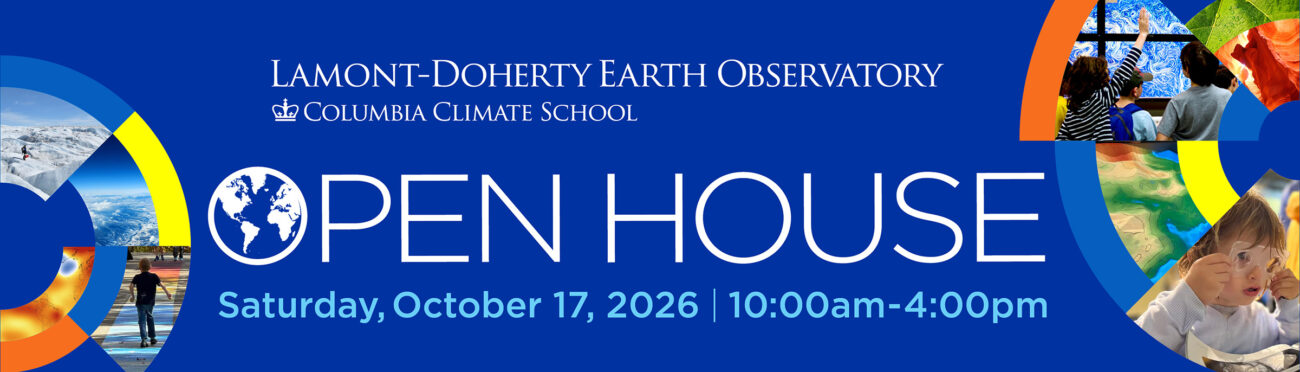
On Saturday, October 17, 2026 from 10am to 4pm, Lamont-Doherty Earth Observatory Open House—our biggest, best science fun and discovery event of the year—will take place on our beautiful campus in Palisades, NY. Mark your calendar and join us for this free, family-friendly celebration of science! RSVP Today!
