Lamont-Doherty Earth Observatory136
-
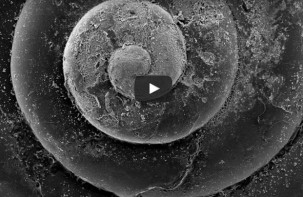
What Is Ocean Acidification & Why Does It Matter?
Excess carbon dioxide absorbed into the oceans is starting to have profound effects on marine life, from oysters to tiny snails at the base of the food chain. Our scientists explain the changes and what they are learning about ocean acidification in the past.
-

MPA-ESP Alum Serves as Earth Institute Postdoctoral Fellow
For Justin Mankin, the MPA in Environmental Science and Policy program helped expose his passion for environmental science. Mankin is currently serving as an Earth Institute postdoctoral fellow and research scientist, where he is focusing on climate variability.
-

Partnering Best Minds in Science & Business to Take on Climate Change
While national governments can set goals for combating climate change, many of the decisions that lead to action will come from business leaders. The new Columbia Center for Climate and Life helps them build from a foundation of science.
-

Antarctica’s Ice: the Big Picture
The impacts of climate change are being felt around the world, but the changes in the polar regions have been more pronounced. The world began to take notice to these changes when an ice shelf roughly the size of Rhode Island collapsed into the ocean in 2002.
-

Using LiDAR to Shine a Light on Ross Ice Shelf
LiDar (Light Detection and Ranging) is a remote sensing technique that uses light to develop an elevation image of the surface of the Earth. It is sensitive enough to image small items such as seals lying on the ice surface.
-

Greenland Glaciers Retreating Faster than Any Time in Past 9,500 Years
A new study uses sediment cores to track the expansion and retreat of glaciers through time, and finds that they are retreating quickly and are more sensitive to temperature change than previously realized.
-

American Geophysical Union 2015: Key Earth Institute Events
Scientists at Columbia University’s Earth Institute will present important findings at the American Geophysical Union fall 2015 meeting, Dec. 14-18–the world’s largest gathering of earth and space scientists.
-

The Compact Efficiency of New Airborne Science
The latest team celebration is around the magnetometer data. Magnetics has evolved quite a bit over the years of geophysical sampling. Lamont scientist Robin Bell recalls when in the 1990s working on a project in West Antarctica that the magnetometer was towed on a winch ~100 meters behind the aircraft – now it is nearly…
-

Photo Essay: Land, Lava, People
On Hawaii, lava is a way of life. The whole island is made of the stuff. Eruptions from Kilauea volcano have been adding new land and wiping out old for all of human time, and far before. In recent decades, lava flows have wiped out communities and major roads. The latest eruption, which began in June 2014, now…


October 28, 2026 is Columbia Giving Day! Your gift to Columbia Climate School helps advance interdisciplinary research, educate the next generation of leaders, and transform bold ideas into real-world solutions for climate, Earth, and society.
