Lamont-Doherty Earth Observatory81
-
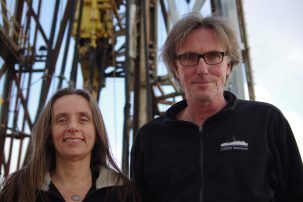
New York City to Punta Arenas: The Beginning of Our Journey
Scientists aboard the R/V Joides Resolution prepare to set sail into the Southern Ocean.
-

Accelerating Climate Solutions Through Novel Research
Between 2016 and 2018, the Center for Climate and Life awarded $2.1 million to 10 leading scientists who are bringing a fresh perspective to one of the most pressing issues of our times.
-

Part of the Pacific Ocean Is Not Warming as Expected. Why?
Climate models predict that as a result of human-induced climate change, the surface of the Pacific Ocean should be warming. But one key part is not.
-

Columbia Researchers Provide New Evidence on the Reliability of Climate Modeling
Observational data confirms that Hadley cell circulation is weakening, which has important consequences for future rainfall in the subtropics.
-

Scientists Map Huge Undersea Fresh-Water Aquifer Off U.S. Northeast
In a new survey of the sub-seafloor off the U.S. Northeast coast, scientists have made a surprising discovery: a gigantic aquifer of relatively fresh water trapped in porous sediments lying below the salty ocean.
-

How Climate Change Impacts the Economy
Warming temperatures, rising seas, and more extreme weather are going to cost us. But they’ll create new business opportunities, too.
-

Melting of Himalayan Glaciers Has Doubled in Recent Years
A new study is the latest and perhaps most convincing indication that climate change is eating the Himalayas’ glaciers, potentially threatening water supplies for hundreds of millions of people across much of Asia.
-

Preparing For When Climate Change Throws a One-Two Punch
The impacts of climate change don’t always come one at a time. A recent workshop focused on what’s needed to predict and adapt when multiple climate-related disasters happen simultaneously.
-

Video: Glacier Research on the Juneau Icefield in Alaska
Research by Lamont’s Johnny Kingslake and Elizabeth Case advances understanding of ice sheet dynamics and how our world may change in the coming centuries.


The first Earth Day in 1970 ignited a movement to stop polluting our planet. Today, our scientists and experts are tackling the most pressing challenges to achieve real-world impact. This Earth Day, join us in our commitment to realizing a just and sustainable future for our planet. Visit our Earth Day website for ideas, resources, and inspiration.
