microplastics
-

October Research Roundup: Select Papers
In this month’s research roundup, we explore how delayed climate action could trigger abrupt changes in the Arctic; what ancient ocean sediments reveal about carbon storage during the last ice age; how fiber-optic cables are improving earthquake monitoring at geothermal sites; and a new timeline of Earth’s magnetic reversals.
-
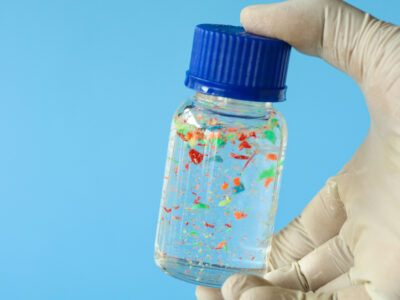
Microplastics Are Chemically Active, and Could Cause Biological Harm
A new study found that when microplastics contact water, their surfaces can become chemically reactive. This could be how they get us sick.
-
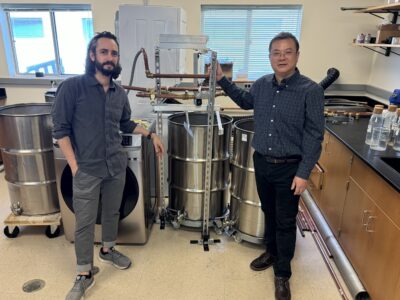
Two Sustainability Students See Opportunity Hidden in Laundry-Induced Microplastic Pollution
Students and faculty at Columbia’s M.S. in Sustainability Management and Sustainability Science programs turned cutting-edge research on microplastics into Moby Filter, a sustainability startup tackling laundry-induced pollution at its source.
-

Nanoplastics Are All Around (and Inside) Us
How are humans exposed to these tiny and ubiquitous plastics? And is there anything we can do about it?
-

Five Ways To Make Your Life More Sustainable
Ready to go green(er) this Earth Day? Here’s a place to start.
-

World Water Film Festival Makes a Splash at Columbia Climate School
The event featured films and speakers from around the world who spotlighted humanity’s essential relationship with water and how it continues to evolve in our changing climate.
-

Combating Microplastics With AI Real-Time Monitoring
Columbia Climate School and Columbia Engineering win a grant from the National Oceanic and Atmospheric Administration to develop AI for sustainable waterways and ocean health.
-

High School Students Learn About Microplastic Pollution in Eco Ambassador Program
New Jersey students spent two days at Lamont-Doherty Earth Observatory studying microplastics and how they affect the world around us.
-

Plugging the Leak on Laundry Pollution
Laundry is the biggest source of microplastic fibers in our waterways. These Columbia researchers are working on a solution.



COP31, the 2026 United Nations Climate Change Conference, aims to advance dialogue, strengthen consensus, and accelerate climate action on a global scale. From November 9–20, 2026 in Antalya, Türkiye, heads of state, ministers, scientists, business leaders, and civil society will gather to advance efforts in emission targets, climate finance, and adaptation and resilience. Once again, our experts, students, and global thought leaders from Columbia Climate School and across Columbia University are contributing to key events, sharing insights, and helping shape the dialogue toward ambitious, science-based solutions. Learn More
