research29
-

Technology Behind GRID3 Program Helps Eradicate Wild Polio in Nigeria
Geospatial data holds great potential to improve health, food security, and educational opportunities in developing countries.
-

Scientists Harness Satellites to Track Algae Growth on Greenland Ice Sheet
To measure algal blooms across large regions of the Greenland ice, and understand their effects on melting over time, scientists are turning to space.
-

How Religion Influences Our Relationship With the Environment
A new study looks at the links between religion and attitudes toward the environment.
-

Graffiti Gallery in Medellín Offers Lessons From a Conflict-ridden Landscape
Community members share their reflections on how the built environment and street art interact with concepts of peace building, conflict, and resilience.
-

Finding Ways for Climate Services to Improve Nutrition in Vietnam
Pranav Singh interned with the ACToday project to understand where climate services—such as forecasts, early-warning systems, and climate predictions—could be used to improve nutrition and eradicate hunger.
-

Project Will Delve Into How Climate and Tectonics Shaped Human Ancestors Over 25 Million Years
A new project will investigate the relationships between tectonics, climate and the evolution of humans’ primate ancestors in Kenya’s Turkana Basin.
-

Stability Check on Antarctica Reveals High Risk for Long-Term Sea Level Rise
The warmer it gets, the faster Antarctica will lose ice, and at some point the losses will become irreversible. That is what researchers say in a new cover story in the leading journal Nature, in which they calculate how much warming the Antarctic Ice Sheet can survive.
-

Europe’s ‘Great Famine’ Years Were Some of the Soggiest in Centuries
Unrelenting rains led to a miserable famine in Europe from 1315-1317. Just how wet was it? A new study reveals that the beginning of the famine included some of the wettest years in the last 700 years.
-

U.S. Should Launch a National Energy Innovation Mission to Reach Climate Goals
A new report details a plan to kickstart energy innovation in the U.S.


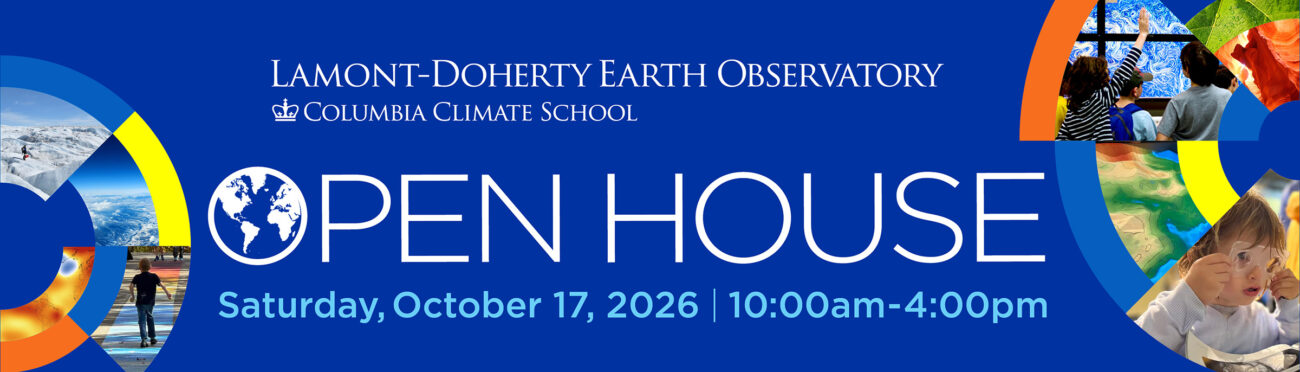
On Saturday, October 17, 2026 from 10am to 4pm, Lamont-Doherty Earth Observatory Open House—our biggest, best science fun and discovery event of the year—will take place on our beautiful campus in Palisades, NY. Mark your calendar and join us for this free, family-friendly celebration of science! RSVP Today!
