Science for the Planet
-

Science for the Planet: Turning Waste Into Critical Materials
Greeshma Gadikota and her team explore how materials that might otherwise be landfilled can be transformed into products needed for solar energy and other critical technologies.
-
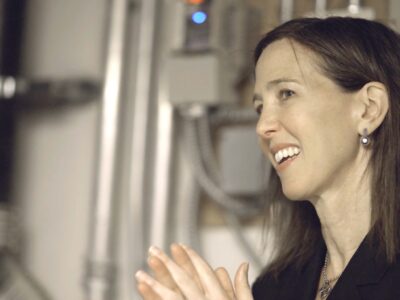
Science for the Planet: Engineering a Cooler Future Through Smarter Buildings
Dean Alexis Abramson explains how she applies engineering, data analytics and machine learning to help dramatically cut energy use and greenhouse gas emissions from buildings.
-

Science for the Planet: Financing Sustainable Development
Meet Lisa Sachs—a lawyer who specializes in how public and private investment can help achieve environmental, social and economic goals.
-

Science for the Planet: Tackling the Invisible Threat of Nanoplastics
Beizhan Yan, an environmental geochemist at the Lamont-Doherty Earth Observatory, has come up with new methods to detect and analyze tiny plastic particles to better understand their impact on human and environmental health.
-

Science for the Planet: Creating Climate Solutions with Urban Communities
Climate School professor Sheila Foster works with frontline communities on climate adaptation strategies.
-

Science for the Planet: In Madagascar, Learning From a Library of Human Experience
Archaeologist Kristina Douglass explains how past human adaptation can inform solutions to modern climate challenges.
-

Science for the Planet: Uncovering the Mysteries of Greenland’s Melting Ice Sheets
Marco Tedesco explains how remote-sensing data can reveal how Greenland’s ice sheets are melting.
-

Science for the Planet: Equitable Climate Adaptation for Coastal Communities
Nadia Seeteram studies how climate risks are impacting housing infrastructure and housing needs in coastal communities.
-

Science for the Planet: Why We Need to Preserve Maritime Forests
Tree-ring scientist Nicole Davi explains the critical role maritime forests play in protecting our coastal communities from storms. The tree-ring records she’s building will help us understand how these ecosystems are responding to climate change.


October 28, 2026 is Columbia Giving Day! Your gift to Columbia Climate School helps advance interdisciplinary research, educate the next generation of leaders, and transform bold ideas into real-world solutions for climate, Earth, and society.
