Water Access
-
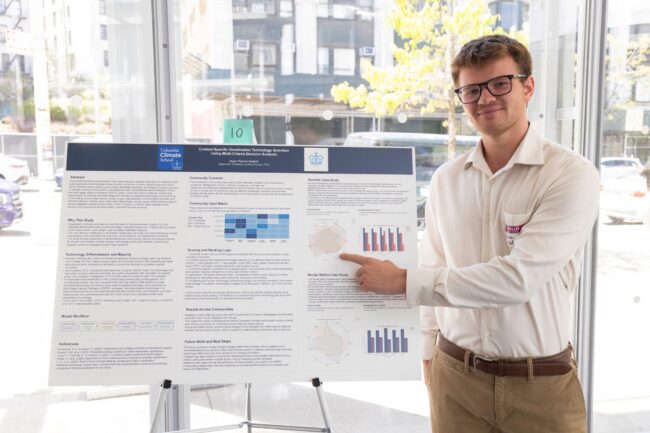
A New Tool for Matching Water Solutions to Community Needs
Sustainable development alum Dylan Dettloff used his Columbia Climate School Collaborative Research Grant to develop a Python-based decision tool to help rural and water-scarce communities identify the most suitable desalination technologies.
-

Shannon Márquez: Empowering Women and Girls Through Access to Water and Sanitation
The engineer and environmental health researcher studies the intersections of gender, water, sanitation, and hygiene.
-
California Dreaming: Drought and Development
California’s water crisis is further proof that environmental issues must be fully integrated into economic development plans and projects. Sustainability management requires that we factor these physical resources and constraints into our designs for new homes, businesses and institutions.
-
Reflections on Haiti
Earlier this month, I was lucky enough to travel to Haiti to install a weather monitoring station, as well as conduct streamflow measurements and water quality assessments with Water Center employee Lior Asaf. Traveling to Haiti gave me my first exposure to how water and climate issues are affecting poor and developing countries, as well…



COP31, the 2026 United Nations Climate Change Conference, aims to advance dialogue, strengthen consensus, and accelerate climate action on a global scale. From November 9–20, 2026 in Antalya, Türkiye, heads of state, ministers, scientists, business leaders, and civil society will gather to advance efforts in emission targets, climate finance, and adaptation and resilience. Once again, our experts, students, and global thought leaders from Columbia Climate School and across Columbia University are contributing to key events, sharing insights, and helping shape the dialogue toward ambitious, science-based solutions. Learn More
