State of the Planet

News from the Columbia Climate School

water matters15

  • High Hopes and Low Expectations for 17th UN Climate Change Conference

    High Hopes and Low Expectations for 17th UN Climate Change Conference

    Numerous please for comprehensive action aimed at the 17th United Nations Climate Change Conference in Durban, South Africa have been issued. However, many doubt that meaningful policies will be passed and have criticized the United States’ position in these talks.

  • Columbia Water Center Scientists to Present New Findings at the AGU Fall Meeting

    Columbia Water Center Scientists to Present New Findings at the AGU Fall Meeting

    The American Geophysical Union’s fall conference is coming up! The meeting will be held in San Francisco from December 5th to the 9th — as usual, Columbia Water Center scientists and associates will be giving a number of presentations covering a dizzying array of topics.

  • Achieving Water Sustainability in Ceará, Brazil

    Achieving Water Sustainability in Ceará, Brazil

    Achieving sustainable water sustainability in Brazil’s semi-arid northeast will involve more than just building pipes, pumps and water towers: it will require significant changes in the ways water is monitored, distributed and used throughout the region.

  • Asia’s Motown Meets Waterworld–The Global Water Supply Chain Crisis

    Asia’s Motown Meets Waterworld–The Global Water Supply Chain Crisis

    Since July, an almost unceasing torrent of rain has soaked Thailand, flooding farms, roads, factories, and finally Bangkok itself, a city of some 12 million people; so far at least 500 people have died. To date the government has ordered evacuations of 12 of the city’s 50 districts, even as water continues to creep through…

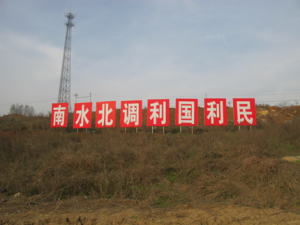
  • China’s Decade Plan for Water

    China’s Decade Plan for Water

    For the first time, China’s No. 1 central document outlining the government’s priorities for the coming year focuses on the construction of water resources acknowledging its importance as a “strategic resource” and its necessity to the economy.

  • Sprouting Trees From the Underground Forest — A Simple Way to Fight Desertification and Climate Change

    Sprouting Trees From the Underground Forest — A Simple Way to Fight Desertification and Climate Change

    Beginning in Niger in the 1980s, Tony Rinaudo, an African aid missionary, began working with farmers to develop a new approach to reforesting degraded landscape. The practice he developed involved selective pruning of shrub shoots to a main stem, which was then pruned of its lower leaves and branches. Within a few years, new woodlands…

  • What are the Keystone XL Pipeline Risks to Water Resources?

    What are the Keystone XL Pipeline Risks to Water Resources?

    One of the issues most passionately discussed now in the media and blogosphere is the KeystoneXL Pipeline proposal, to allow Canadian oil and gas company TransCanada to build a pipeline to transfer tar sands oil from Alberta to Texas. So what are the arguments?

  • Using Tree Rings to Understand and Protect New York’s Water

    Using Tree Rings to Understand and Protect New York’s Water

    The upper Delaware River Basin System is one of the largest water supply systems for the city of New York. Today our understanding and management of these reservoir systems is based on the short historical records of data, which are limited. Scientists need to find a way to look further into the past. One of…

  • Pharmaceuticals in the Water Supply: Is this a threat?

    Pharmaceuticals in the Water Supply: Is this a threat?

    According to the GAO, a “study focused on untreated source water used by public drinking water systems” found that 53 of 74 sites tested had at least one pharmaceutical present, and in 2010 the EPA showed that 54 active pharmaceutical ingredients and 10 metabolites, the product of biological changes to a chemical, had been found…

Photo of the Earth from space with the text "Lamont at AGU25" on top.

AGU25, the premier Earth and space science conference, takes place December 15-19, 2025 in New Orleans, Louisiana. This year’s theme—Where Science Connects Us—puts in focus how science depends on connection, from the lab to the field to the ballot box. Once again, Lamont-Doherty Earth Observatory and Columbia Climate School scientists, experts, students, and educators are playing an active role, sharing our research and helping shape the future of our planet. #AGU25 Learn More

  • High Hopes and Low Expectations for 17th UN Climate Change Conference

    High Hopes and Low Expectations for 17th UN Climate Change Conference

    Numerous please for comprehensive action aimed at the 17th United Nations Climate Change Conference in Durban, South Africa have been issued. However, many doubt that meaningful policies will be passed and have criticized the United States’ position in these talks.

  • Columbia Water Center Scientists to Present New Findings at the AGU Fall Meeting

    Columbia Water Center Scientists to Present New Findings at the AGU Fall Meeting

    The American Geophysical Union’s fall conference is coming up! The meeting will be held in San Francisco from December 5th to the 9th — as usual, Columbia Water Center scientists and associates will be giving a number of presentations covering a dizzying array of topics.

  • Achieving Water Sustainability in Ceará, Brazil

    Achieving Water Sustainability in Ceará, Brazil

    Achieving sustainable water sustainability in Brazil’s semi-arid northeast will involve more than just building pipes, pumps and water towers: it will require significant changes in the ways water is monitored, distributed and used throughout the region.

  • Asia’s Motown Meets Waterworld–The Global Water Supply Chain Crisis

    Asia’s Motown Meets Waterworld–The Global Water Supply Chain Crisis

    Since July, an almost unceasing torrent of rain has soaked Thailand, flooding farms, roads, factories, and finally Bangkok itself, a city of some 12 million people; so far at least 500 people have died. To date the government has ordered evacuations of 12 of the city’s 50 districts, even as water continues to creep through…

  • China’s Decade Plan for Water

    China’s Decade Plan for Water

    For the first time, China’s No. 1 central document outlining the government’s priorities for the coming year focuses on the construction of water resources acknowledging its importance as a “strategic resource” and its necessity to the economy.

  • Sprouting Trees From the Underground Forest — A Simple Way to Fight Desertification and Climate Change

    Sprouting Trees From the Underground Forest — A Simple Way to Fight Desertification and Climate Change

    Beginning in Niger in the 1980s, Tony Rinaudo, an African aid missionary, began working with farmers to develop a new approach to reforesting degraded landscape. The practice he developed involved selective pruning of shrub shoots to a main stem, which was then pruned of its lower leaves and branches. Within a few years, new woodlands…

  • What are the Keystone XL Pipeline Risks to Water Resources?

    What are the Keystone XL Pipeline Risks to Water Resources?

    One of the issues most passionately discussed now in the media and blogosphere is the KeystoneXL Pipeline proposal, to allow Canadian oil and gas company TransCanada to build a pipeline to transfer tar sands oil from Alberta to Texas. So what are the arguments?

  • Using Tree Rings to Understand and Protect New York’s Water

    Using Tree Rings to Understand and Protect New York’s Water

    The upper Delaware River Basin System is one of the largest water supply systems for the city of New York. Today our understanding and management of these reservoir systems is based on the short historical records of data, which are limited. Scientists need to find a way to look further into the past. One of…

  • Pharmaceuticals in the Water Supply: Is this a threat?

    Pharmaceuticals in the Water Supply: Is this a threat?

    According to the GAO, a “study focused on untreated source water used by public drinking water systems” found that 53 of 74 sites tested had at least one pharmaceutical present, and in 2010 the EPA showed that 54 active pharmaceutical ingredients and 10 metabolites, the product of biological changes to a chemical, had been found…