State of the Planet

News from the Columbia Climate School

Agriculture34

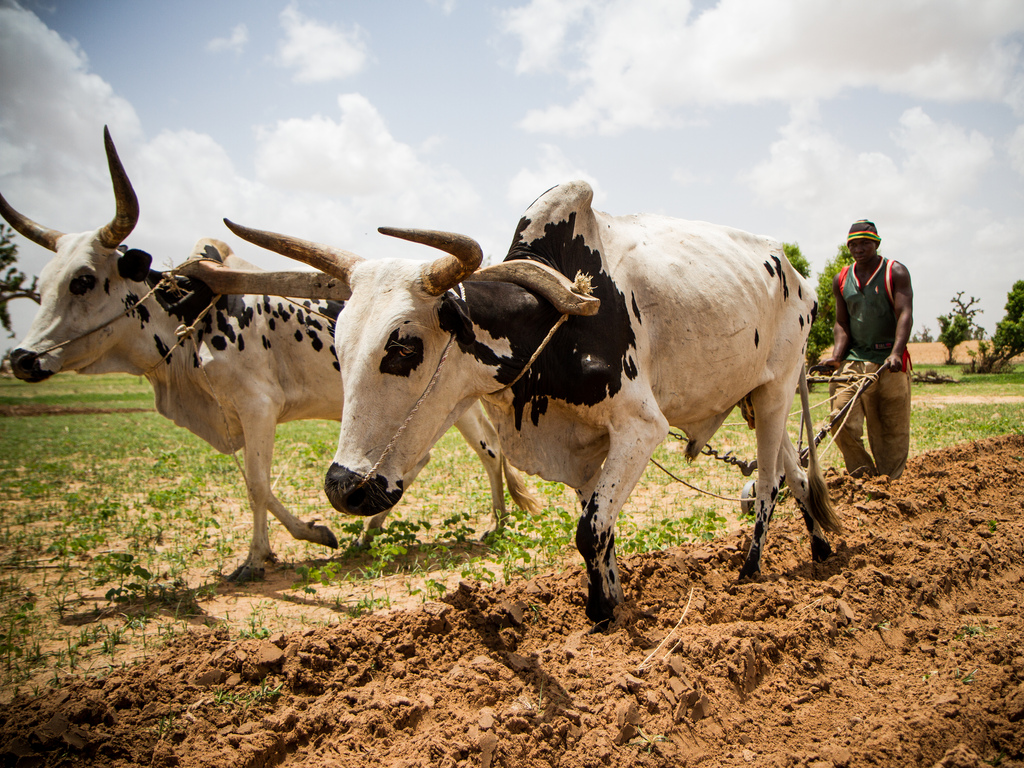
  • Poor Ethiopian Farmers Receive ‘Unprecedented’ Insurance Payout

    Poor Ethiopian Farmers Receive ‘Unprecedented’ Insurance Payout

    Thanks to a groundbreaking new program that relies on advanced satellite technology, a weather index insurance payout of unprecedented scale will benefit poor African farmers.

  • A River Runs Through It: Predicting Floods in the Midwest

    A River Runs Through It: Predicting Floods in the Midwest

    Focusing on the American Midwest, Andrew Robertson analyzes the relationships between floods, weather and climate patters throughout the 20th century.

  • Glenn Denning’s Road to Bali, and the Earth Institute

    Glenn Denning’s Road to Bali, and the Earth Institute

    Glenn Denning grew up in Brisbane, Australia, loved the outdoors and hated the idea of working in an office. And, he really didn’t have any urge to go to other countries. Then he happened to overhear a conversation in a hallway between two students. That bit of serendipity sent him on a road to a…

  • Predicting the Future of Soy in South America

    Predicting the Future of Soy in South America

    In this Q&A, Arthur M. Greene discusses improving climate and agricultural modeling in South America using a new stochastic simulation of future climate.

  • Food Security in the Face of Changing Climate

    Food Security in the Face of Changing Climate

    An interview with James Hansen, an agricultural scientist at the International Research Institute for Climate and Society who also has a prominent role in the world’s largest research program focused specifically on climate change and food security.

  • Putting the Focus on ‘A Thirsty World’

    Putting the Focus on ‘A Thirsty World’

    The water documentary “A Thirsty World” combines French photographer Yann Arthus-Bertrand’s aerial photography with down-to-earth messages, a mélange that calls attention to problems of water security on a global scale.

  • Watering the World’s Crops, Drop by Drop

    Watering the World’s Crops, Drop by Drop

    Dr. Daniel Hillel was recently honored with the World Food Prize for his pioneering work in sustainable agriculture.

  • Composting—Turning Garbage into Black Gold

    Composting—Turning Garbage into Black Gold

    Forty percent of our food is wasted, but through composting, food waste can be turned into black gold—so called because compost, the mixture of decayed organic matter, is valuable as a nutrient-rich soil additive. In the United States, however, less than 3 percent of food waste is composted.

  • How Green is Local Food?

    How Green is Local Food?

    Local food proponents often claim that food grown close to home helps prevent global warming because it requires less fossil fuels to transport, generating fewer greenhouse gas emissions than conventionally produced food. But just how green is local food?

Colorful icons representing nature, sustainable living, and renewable energy with text "Earth Day 2026"

The first Earth Day in 1970 ignited a movement to stop polluting our planet. Today, our scientists and experts are tackling the most pressing challenges to achieve real-world impact. This Earth Day, join us in our commitment to realizing a just and sustainable future for our planet. Visit our Earth Day website for ideas, resources, and inspiration.

  • Poor Ethiopian Farmers Receive ‘Unprecedented’ Insurance Payout

    Poor Ethiopian Farmers Receive ‘Unprecedented’ Insurance Payout

    Thanks to a groundbreaking new program that relies on advanced satellite technology, a weather index insurance payout of unprecedented scale will benefit poor African farmers.

  • A River Runs Through It: Predicting Floods in the Midwest

    A River Runs Through It: Predicting Floods in the Midwest

    Focusing on the American Midwest, Andrew Robertson analyzes the relationships between floods, weather and climate patters throughout the 20th century.

  • Glenn Denning’s Road to Bali, and the Earth Institute

    Glenn Denning’s Road to Bali, and the Earth Institute

    Glenn Denning grew up in Brisbane, Australia, loved the outdoors and hated the idea of working in an office. And, he really didn’t have any urge to go to other countries. Then he happened to overhear a conversation in a hallway between two students. That bit of serendipity sent him on a road to a…

  • Predicting the Future of Soy in South America

    Predicting the Future of Soy in South America

    In this Q&A, Arthur M. Greene discusses improving climate and agricultural modeling in South America using a new stochastic simulation of future climate.

  • Food Security in the Face of Changing Climate

    Food Security in the Face of Changing Climate

    An interview with James Hansen, an agricultural scientist at the International Research Institute for Climate and Society who also has a prominent role in the world’s largest research program focused specifically on climate change and food security.

  • Putting the Focus on ‘A Thirsty World’

    Putting the Focus on ‘A Thirsty World’

    The water documentary “A Thirsty World” combines French photographer Yann Arthus-Bertrand’s aerial photography with down-to-earth messages, a mélange that calls attention to problems of water security on a global scale.

  • Watering the World’s Crops, Drop by Drop

    Watering the World’s Crops, Drop by Drop

    Dr. Daniel Hillel was recently honored with the World Food Prize for his pioneering work in sustainable agriculture.

  • Composting—Turning Garbage into Black Gold

    Composting—Turning Garbage into Black Gold

    Forty percent of our food is wasted, but through composting, food waste can be turned into black gold—so called because compost, the mixture of decayed organic matter, is valuable as a nutrient-rich soil additive. In the United States, however, less than 3 percent of food waste is composted.

  • How Green is Local Food?

    How Green is Local Food?

    Local food proponents often claim that food grown close to home helps prevent global warming because it requires less fossil fuels to transport, generating fewer greenhouse gas emissions than conventionally produced food. But just how green is local food?