Climate110
-
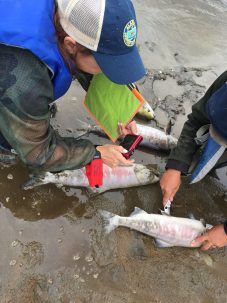
Warming Rivers Are Causing Die-Offs Among Alaska Salmon
As salmon suffer in Alaska’s warming snow- and rain-fed rivers, some scientists are looking to glaciers to predict the future of these fish.
-

Q&A with Juan Nicolás Hernandez-Aguilera on Coffee and Climate
How research at Columbia University is making coffee production more sustainable.
-

Sustainable Development Alum Accepted to Attend the UN Youth Climate Summit in New York
Emilie Baliozian was one of 500 hundred young people from around the world selected to attend the summit after demonstrating a commitment to addressing the climate crisis and displaying leadership in advancing solutions.
-

Renewable Energy Poses a Serious Threat to Human Rights — But It Doesn’t Have To
A conversation on the critical need for embedding human rights, especially those of indigenous communities, within the renewable energy sector, and the hurdles of pursuing environmental justice without compromising human rights.
-

As Temperatures Rise, More California Forests Will Burn
Park Williams and Richard Seager, climate experts at Lamont-Doherty Earth Observatory, discuss why California wildfires are expected to expand and intensify with climate change.
-

How Climate Change Threatens NYC’s Transportation Infrastructure
Environmental Science and Policy alum Susanne DesRoches has testified before Congress on how to build resiliency in roadways and public transit.
-

Team Deciphers Sea-Level Rise From Last Time Earth’s CO2 Was as High as Today
In a coastal cave off Spain, scientists have found evidence showing that more than 3 million years ago, when temperatures were similar to those projected for the end of this century, sea levels were as much as 16 meters higher than they are now.
-

How the Top Ten Democratic Candidates Plan to Deal With Climate Change
It is critical that whoever becomes president in 2020 commits to tackling the climate crisis. Here are the climate plans of the top ten Democratic candidates.
-

You Asked: How Destructive Are the Amazon Rainforest Fires? Can They Be Stopped?
An Earth Institute adjunct tackles reader questions about the record-breaking fires in Brazil.


The first Earth Day in 1970 ignited a movement to stop polluting our planet. Today, our scientists and experts are tackling the most pressing challenges to achieve real-world impact. This Earth Day, join us in our commitment to realizing a just and sustainable future for our planet. Visit our Earth Day website for ideas, resources, and inspiration.
