Climate116
-
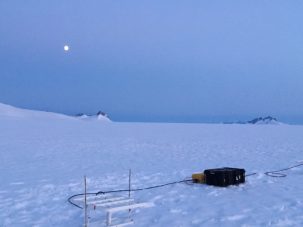
Video: Glacier Research on the Juneau Icefield in Alaska
Research by Lamont’s Johnny Kingslake and Elizabeth Case advances understanding of ice sheet dynamics and how our world may change in the coming centuries.
-

Why Cry for the Cryosphere?
A new book paints a daunting and detailed picture of earth’s natural ice under threat, and explains why what happens in the Arctic doesn’t stay in the Arctic.
-

U.S. Climate Change Litigation in the Age of Trump: Year Two
A new report documents 94 attempts by the Trump Administration to undermine climate protections in 2017 and 2018—and finds that the courts have largely constrained these rollbacks.
-

Center for Climate and Life Announces 2019 Fellows
The three new Fellows, all scientists at Lamont-Doherty Earth Observatory, will pursue high-risk, high-reward research that furthers understanding of how climate change impacts human sustainability.
-

New Podcast: Legal Pathways to Decarbonization in the U.S.
The latest episode of the Columbia Energy Exchange discusses a playbook of legal options available to cut emissions and tackle the challenge of climate change.
-

Earth Institute Alumni Helped Launch Etsy Carbon Offset Initiative
The major e-commerce site is the first to offset 100% of its carbon emissions from shipping — and two Sustainability Management graduates helped to make it happen.
-

How Changes in Climate Impacted Ancient Civilizations
William D’Andrea studies past climates to see how societies such as the Vikings and the Rapanui of Easter Island dealt with environmental change. His work may help us adapt to a hotter future.
-

Mountain-Dwellers Adapt to Melting Glaciers Without Necessarily Caring About Climate Change
A new study challenges the assumption that communities have to believe in climate change before they can take action.
-

Capturing Carbon’s Potential: These Companies Are Turning CO2 into Profits
Researchers and businesses are finding innovative ways to use carbon dioxide captured from power plants or the air.


The first Earth Day in 1970 ignited a movement to stop polluting our planet. Today, our scientists and experts are tackling the most pressing challenges to achieve real-world impact. This Earth Day, join us in our commitment to realizing a just and sustainable future for our planet. Visit our Earth Day website for ideas, resources, and inspiration.
