State of the Planet

News from the Columbia Climate School

Climate155

  • Tracking the Undoing of Climate-Change Measures

    Tracking the Undoing of Climate-Change Measures

    The Sabin Center for Climate Change Law is launching a new tool to identify and explain the efforts taken by the incoming administration to scale back or wholly eliminate federal climate change mitigation and adaptation measures.

  • ‘Tail Risk’: a Chat with Scientist Radley Horton

    ‘Tail Risk’: a Chat with Scientist Radley Horton

    We’re talking to experts around the Earth Institute about what they’re working on, what they would like people to know about it, and what inspired them to go into their field.

  • Two Who Enabled El Niño Forecasts Win 2017 Vetlesen Prize

    Warning Signs Now Applied Globally to Farming, Health, Water Issues

  • Antarctic Scientists Honor Obama by Collecting Climate Data

    Antarctic Scientists Honor Obama by Collecting Climate Data

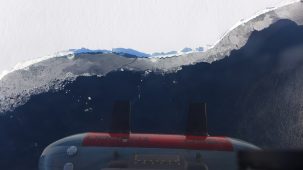
    Researchers studying the West Antarctic Peninsula marine ecosystem will recognize President Obama’s efforts to combat global warming by collecting climate data at an oceanographic station they named for the 44th president.

  • 2016 Sets Another Record for Warmth

    2016 Sets Another Record for Warmth

    The news doesn’t come as a surprise to scientists and others who’ve been watching, but marks a milestone nonetheless: 2016 was the warmest year on record, dating back to the start of modern record keeping in 1880.

  • Green Sahara’s Ancient Rainfall Regime Revealed

    Green Sahara’s Ancient Rainfall Regime Revealed

    Rainfall patterns in the Sahara during the six-thousand-year “Green Sahara” period have been revealed by analyzing marine sediments, according to new research.

  • What You Can Do to Keep Us Moving Forward on Climate

    What You Can Do to Keep Us Moving Forward on Climate

    Many people are concerned that the Republican-controlled Congress and Trump’s administration will stop or reverse the progress the Obama administration has made on climate change. Here’s what you can do about it.

  • The Distracted, Dysfunctional Presidential Transition and the EPA

    The Distracted, Dysfunctional Presidential Transition and the EPA

    The presidential transition process will continue to contain distractions, disinformation and dysfunction, but my hope is that the people running our national government remember that we need clean air, water and food to live. Government’s fundamental function is ensuring our security and health. Environmental rules must be enforced for that function to be performed.

  • How Climate Change Affects New York’s Plants and Animals

    How Climate Change Affects New York’s Plants and Animals

    Climate change is already affecting New York, and these changes will have profound effects on its ecosystems, plants and animals. What are the implications of these projected changes?

Photo of the Earth from space with the text "Lamont at AGU25" on top.

AGU25, the premier Earth and space science conference, takes place December 15-19, 2025 in New Orleans, Louisiana. This year’s theme—Where Science Connects Us—puts in focus how science depends on connection, from the lab to the field to the ballot box. Once again, Lamont-Doherty Earth Observatory and Columbia Climate School scientists, experts, students, and educators are playing an active role, sharing our research and helping shape the future of our planet. #AGU25 Learn More

  • Tracking the Undoing of Climate-Change Measures

    Tracking the Undoing of Climate-Change Measures

    The Sabin Center for Climate Change Law is launching a new tool to identify and explain the efforts taken by the incoming administration to scale back or wholly eliminate federal climate change mitigation and adaptation measures.

  • ‘Tail Risk’: a Chat with Scientist Radley Horton

    ‘Tail Risk’: a Chat with Scientist Radley Horton

    We’re talking to experts around the Earth Institute about what they’re working on, what they would like people to know about it, and what inspired them to go into their field.

  • Two Who Enabled El Niño Forecasts Win 2017 Vetlesen Prize

    Warning Signs Now Applied Globally to Farming, Health, Water Issues

  • Antarctic Scientists Honor Obama by Collecting Climate Data

    Antarctic Scientists Honor Obama by Collecting Climate Data

    Researchers studying the West Antarctic Peninsula marine ecosystem will recognize President Obama’s efforts to combat global warming by collecting climate data at an oceanographic station they named for the 44th president.

  • 2016 Sets Another Record for Warmth

    2016 Sets Another Record for Warmth

    The news doesn’t come as a surprise to scientists and others who’ve been watching, but marks a milestone nonetheless: 2016 was the warmest year on record, dating back to the start of modern record keeping in 1880.

  • Green Sahara’s Ancient Rainfall Regime Revealed

    Green Sahara’s Ancient Rainfall Regime Revealed

    Rainfall patterns in the Sahara during the six-thousand-year “Green Sahara” period have been revealed by analyzing marine sediments, according to new research.

  • What You Can Do to Keep Us Moving Forward on Climate

    What You Can Do to Keep Us Moving Forward on Climate

    Many people are concerned that the Republican-controlled Congress and Trump’s administration will stop or reverse the progress the Obama administration has made on climate change. Here’s what you can do about it.

  • The Distracted, Dysfunctional Presidential Transition and the EPA

    The Distracted, Dysfunctional Presidential Transition and the EPA

    The presidential transition process will continue to contain distractions, disinformation and dysfunction, but my hope is that the people running our national government remember that we need clean air, water and food to live. Government’s fundamental function is ensuring our security and health. Environmental rules must be enforced for that function to be performed.

  • How Climate Change Affects New York’s Plants and Animals

    How Climate Change Affects New York’s Plants and Animals

    Climate change is already affecting New York, and these changes will have profound effects on its ecosystems, plants and animals. What are the implications of these projected changes?