Climate191
-

Tropical Rainfall from Hours to Millennia
Most of Earth’s rainfall occurs in a tropical zonal band that circles the Earth. Understanding how this band will responds to climate change requires us to combine time scales from hours to millennia.
-

The Climate of Things
In his talk on “The Climate of Things,” Professor Dan Rabinowitz of Tel Aviv University argued that the magnitude of climate change warrants a reexamination of modernist social science. Rather than using other disciplines to guide knowledge of the universe, his “fifth environmental paradigm” uses the climate crisis to reexamine the validity of those other…
-

Ancient Pollen Points to Mega-Droughts in California Thousands of Years Ago
Ancient pollen spores that were in the air when mammoths roamed Southern California are providing new insights into historic droughts in the region, including how a series of mega droughts 25,500 to 27,500 years ago changed the ecological landscape.
-
One-Two Punch of Rising Seas, Bigger Storms May Greatly Magnify U.S. East Coast Floods
New Study Quantifies Synergy of Two Climate Hazards
-
Arctic Oil Drilling: Deluding Communities About the Benefits of Resource Extraction
We continue to need resources that the earth provides and someday we may even mine other planets. But communities that rely on mining alone, or even depend on resource extraction as their primary source of revenue, are asking to be left behind in the modern global economy.
-
California Takes the Lead on Climate Policy
While current technology could be used to achieve the new climate policy goals, it will be far easier to meet and exceed the new standards if new technologies are developed and implemented. For California, the key will be the rapid development of the electric car.
-

Bringing Together Storm Tracks and Clouds
The storm tracks define the weather and climate in mid-latitudes. A recent workshop in Switzerland highlighted the important role that clouds play for the response of the storm tracks to climate change.
-

Q&A: Park Williams on Drought, Climate and ‘Cracking the Code’
“Future extremes are going to occur more and more frequently. In planning, we don’t need to plan for the 2 degree warming that we are aiming for as a globe, we need to plan for the 10 degree increase in a day, or the year when there’s no water. We need to plan for worst-case…
-

Seeing the Amazon’s Future Through the Fog
Scientists have developed a new approach to modeling the water and carbon cycles in the Amazon that could lead to better climate forecasts and improved water resource management.


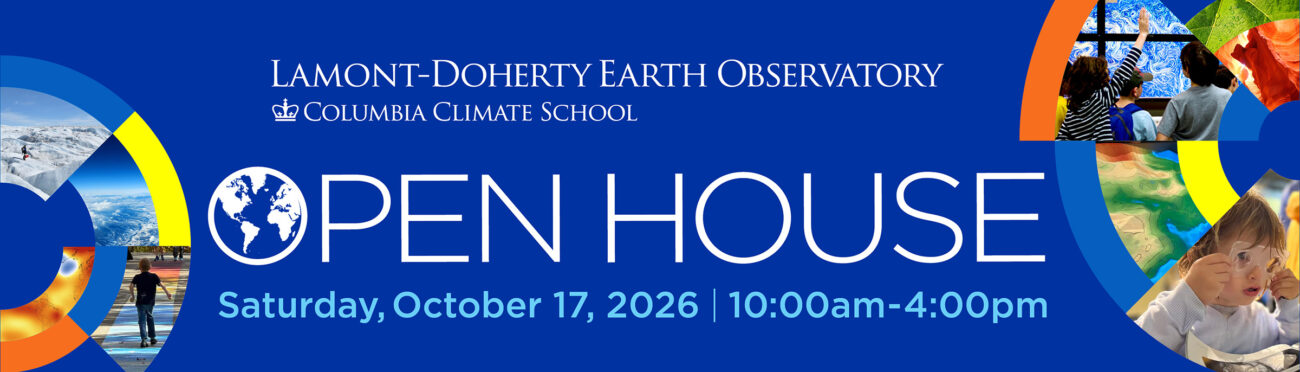
On Saturday, October 17, 2026 from 10am to 4pm, Lamont-Doherty Earth Observatory Open House—our biggest, best science fun and discovery event of the year—will take place on our beautiful campus in Palisades, NY. Mark your calendar and join us for this free, family-friendly celebration of science! RSVP Today!
