State of the Planet

News from the Columbia Climate School

Climate193

  • Bringing Together Storm Tracks and Clouds

    Bringing Together Storm Tracks and Clouds

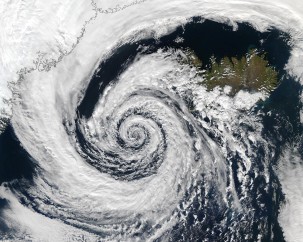
    The storm tracks define the weather and climate in mid-latitudes. A recent workshop in Switzerland highlighted the important role that clouds play for the response of the storm tracks to climate change.

  • Q&A: Park Williams on Drought, Climate and ‘Cracking the Code’

    Q&A: Park Williams on Drought, Climate and ‘Cracking the Code’

    “Future extremes are going to occur more and more frequently. In planning, we don’t need to plan for the 2 degree warming that we are aiming for as a globe, we need to plan for the 10 degree increase in a day, or the year when there’s no water. We need to plan for worst-case…

  • Seeing the Amazon’s Future Through the Fog

    Seeing the Amazon’s Future Through the Fog

    Scientists have developed a new approach to modeling the water and carbon cycles in the Amazon that could lead to better climate forecasts and improved water resource management.

  • How Climate Influences Wolf Recovery in California

    How Climate Influences Wolf Recovery in California

    Some evidence suggests that the glaciers on Mt. Shasta might have something to do with the location of a newly-spotted wolf pack in northern California.

  • Tree Rings on Hawai’i Could Hold New Knowledge About El Niño

    Tree Rings on Hawai’i Could Hold New Knowledge About El Niño

    Annual tree rings are a rare find in the tropical islands of the eastern Pacific. The new discovery of trees with annual rings on a Hawaiian volcano could provide new climate data from a part of the world where much of the variability of the El Niño-Southern Oscillation originates.

  • Warming Climate Is Deepening California Drought

    Scientists Say Increasing Heat Drives Moisture from Ground

  • Can We Save Coral Reefs?

    Can We Save Coral Reefs?

    We are losing coral reefs at an alarming rate and scientists believe that with business as usual they will likely be gone by the end of the century. However, better local management, coupled with new research on coral reef resilience and adaptability, may help buy some time for these indispensable ecosystems.

  • The Environment and the 2016 Elections

    The environment holds the potential to emerge as a political issue in the 2016 presidential election in part because it has gone from being a non-partisan consensus issue to a deeply partisan ideological issue. The battleground will be for the heart and mind of the independent voter.

  • Corals and Climate Change

    Corals and Climate Change

    Corals are already facing a host of stressors—from pollution and overfishing to tourism and coastal development—but climate change puts corals at risk from rising temperatures and ocean acidification. The decline of coral reefs will have devastating consequences for the ocean, and for us.

Collage of Turkiye beach scene and Columbia University Campus with text: UN Climate Change Conference COP31, Antalya, Turkiye, Nov 9-20, 2026

COP31, the 2026 United Nations Climate Change Conference, aims to advance dialogue, strengthen consensus, and accelerate climate action on a global scale. From November 9–20, 2026 in Antalya, Türkiye, heads of state, ministers, scientists, business leaders, and civil society will gather to advance efforts in emission targets, climate finance, and adaptation and resilience. Once again, our experts, students, and global thought leaders from Columbia Climate School and across Columbia University are contributing to key events, sharing insights, and helping shape the dialogue toward ambitious, science-based solutions. Learn More

  • Bringing Together Storm Tracks and Clouds

    Bringing Together Storm Tracks and Clouds

    The storm tracks define the weather and climate in mid-latitudes. A recent workshop in Switzerland highlighted the important role that clouds play for the response of the storm tracks to climate change.

  • Q&A: Park Williams on Drought, Climate and ‘Cracking the Code’

    Q&A: Park Williams on Drought, Climate and ‘Cracking the Code’

    “Future extremes are going to occur more and more frequently. In planning, we don’t need to plan for the 2 degree warming that we are aiming for as a globe, we need to plan for the 10 degree increase in a day, or the year when there’s no water. We need to plan for worst-case…

  • Seeing the Amazon’s Future Through the Fog

    Seeing the Amazon’s Future Through the Fog

    Scientists have developed a new approach to modeling the water and carbon cycles in the Amazon that could lead to better climate forecasts and improved water resource management.

  • How Climate Influences Wolf Recovery in California

    How Climate Influences Wolf Recovery in California

    Some evidence suggests that the glaciers on Mt. Shasta might have something to do with the location of a newly-spotted wolf pack in northern California.

  • Tree Rings on Hawai’i Could Hold New Knowledge About El Niño

    Tree Rings on Hawai’i Could Hold New Knowledge About El Niño

    Annual tree rings are a rare find in the tropical islands of the eastern Pacific. The new discovery of trees with annual rings on a Hawaiian volcano could provide new climate data from a part of the world where much of the variability of the El Niño-Southern Oscillation originates.

  • Warming Climate Is Deepening California Drought

    Scientists Say Increasing Heat Drives Moisture from Ground

  • Can We Save Coral Reefs?

    Can We Save Coral Reefs?

    We are losing coral reefs at an alarming rate and scientists believe that with business as usual they will likely be gone by the end of the century. However, better local management, coupled with new research on coral reef resilience and adaptability, may help buy some time for these indispensable ecosystems.

  • The Environment and the 2016 Elections

    The environment holds the potential to emerge as a political issue in the 2016 presidential election in part because it has gone from being a non-partisan consensus issue to a deeply partisan ideological issue. The battleground will be for the heart and mind of the independent voter.

  • Corals and Climate Change

    Corals and Climate Change

    Corals are already facing a host of stressors—from pollution and overfishing to tourism and coastal development—but climate change puts corals at risk from rising temperatures and ocean acidification. The decline of coral reefs will have devastating consequences for the ocean, and for us.