Climate307
-
Finance, Climate, and Faust
I lifted the title of this entry directly from last week’s Earth and Environmental Science colloquium at Lamont. The talk, given by Dr. Berrien Moore of Climate Central, revolved around the idea that complex systems have inherent instabilities. Using the current financial situation as an example, Moore argued that such systems are marked by important…
-
Climate change law comes to Columbia
Climate change is coming to the legal profession in a big way. And law schools are starting to notice, with Columbia Law School announcing today that it has hired environmental lawyer Michael Gerrard to head a new Center for Climate Change Law.
-
Earth Institute at the American Geophysical Union
Earth Institute scientists are presenting scores of talks at the world’s largest gathering of earth scientists, the fall 2008 meeting of the American Geophysical Union. Subjects include unseen natural hazards, changing climate, and how mankind will deal with these challenges. Most researchers at AGU come from two of the Earth Institute’s largest centers: Lamont-Doherty Earth…
-
Climate matters, and most of the world agrees
Climate matters, and that’s not just the opinion of the Columbia Climate Center. Recent surveys in the US and overseas indicate that most people see climate change as a threat; even those that don’t consider it a serious problem agree that it is worth addressing. In a recent survey of twelve countries, made by HSBC…
-
Welcome to Climate Matters @ Columbia!
Welcome to Climate Matters @ Columbia, a new blog coming out of the recently formed Columbia Climate Center from the Earth Institute, Columbia University. On Climate Matters, we’ll talk about all things climate: from basic climate science to policy considerations, from the climate impacts on public health to using conservation of biodiversity as a strategy…
-
Carbon Dioxide Already in Danger Zone, Warns Study
Revised Theory Says Levels in Air Must Decline, Not Just Stabilize
-
Google Grant to Researchers Aims at Climate-Connected Disease
Work in Ethiopia Will Aid Predictions of Malaria, Meningitis Outbreaks
-
Curbing Coal Emissions Alone Might Avert Climate Danger, Say Researchers
Oil and Gas Seen to Have Lesser Effect
-
Top Science Award Goes To Climate Researcher Wallace Broecker
Balzan Prize Honors Key Insights Into Changes in Oceans, Atmosphere
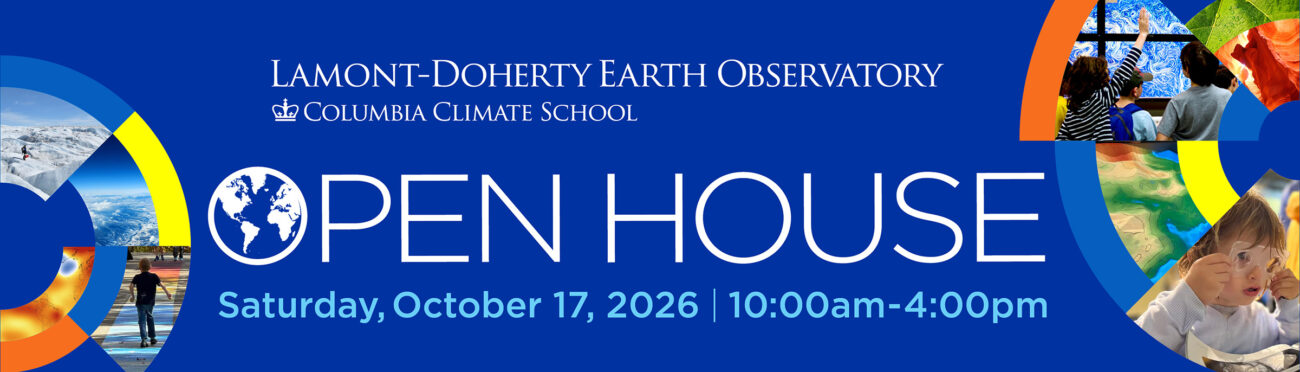
On Saturday, October 17, 2026 from 10am to 4pm, Lamont-Doherty Earth Observatory Open House—our biggest, best science fun and discovery event of the year—will take place on our beautiful campus in Palisades, NY. Mark your calendar and join us for this free, family-friendly celebration of science! RSVP Today!