Earth Sciences133
-

Geology with a Taste of Safari
We started the morning with breakfast and shopping for lunch provisions. We bought a large bag of oranges grown in the groves that surround this region for the equivalent of $1.50, along with cheese and, of course, biltong. The butcher offered many kinds of biltong, from the shaved, proscuitto-like variety to the serious cowboy jerky…
-

Rock Collecting While Watching for Crocodiles, Leopards
On Saturday morning, Ed and I left Pretoria for the next phase of our trip: field work near the Loskop Dam in Mpumalanga Province where a large volcano once existed about two billion years ago. No one has been able to find where this ancient volcano stood but lava flows in the area suggest there…
-

Singing, Clapping, Smiling over Geology in S. Africa
After a morning lecture about the Bushveld Complex and the processes of concentrating ores in magma bodies, Ed and I had to go to the University of Pretoria for Thursday afternoon. I was invited to give a lecture and we were able to have some very interesting conversations about Bushveld research with the people who…
-

Diamond Mine Field Trip on Despite Strike
We woke up Wednesday morning to find out that all unionized government workers, including public school teachers, were on strike. All schools were shuttered and we worried that no one would show up for our workshop. But we arrived at class to find all of our teachers present. They told us this was a once…
-

Getting Underneath South Africa’s Mineral Wealth
Our teaching workshop continued Tuesday with a lecture about mineral resources and their economic importance. South Africa has abundant platinum and gold but also lesser-known elements like vanadium, chromium, and manganese. Vanadium and chromium, important to the steel industry, are found predominantly in the Bushveld Complex where our research is focused. Chromium gives steel much…
-

New York City Rocks Spark Cultural Exchange
The workshop that we are here leading is designed to help South Africa high school teachers make geology come alive for their students. We want to share basic concepts, such as how rocks and minerals form, but also provide activities and materials that can make the concepts more accessible. In planning the workshop, we outlined…
-

Beating Global Heat, But Only By Dumb Luck
After sweltering in New York City’s record temperatures the last couple of months, I recently traveled to the Peruvian Amazon. Oy, I thought. But instead of entering the mother of all sweat lodges, I found relief; for the most part, it was cooler in those tropical lowlands near the equator than outside my office at the corner of Broadway and 114th Street.…
-

Climate and the Border: Why Rising Temperatures Will Add Immigration Challenges
When experts warn of the consequences of global climate change, they usually cite impacts on natural systems. They tell us that ice caps will melt, sea levels will rise, extreme weather will become more common, droughts will increase in frequency, oceans will become more acidic and so on. In recent years, we have also come…
-

South Africa-Bound with Sand from Coney Island
I’m flying to Johannesburg on Friday in what will be my third expedition to South Africa. In the past I’ve traveled here to study the Bushveld Complex, a huge lava formation that provides over 70 percent of the world’s platinum as well as other valuable ores, such as vanadium and chromium, both used to make…


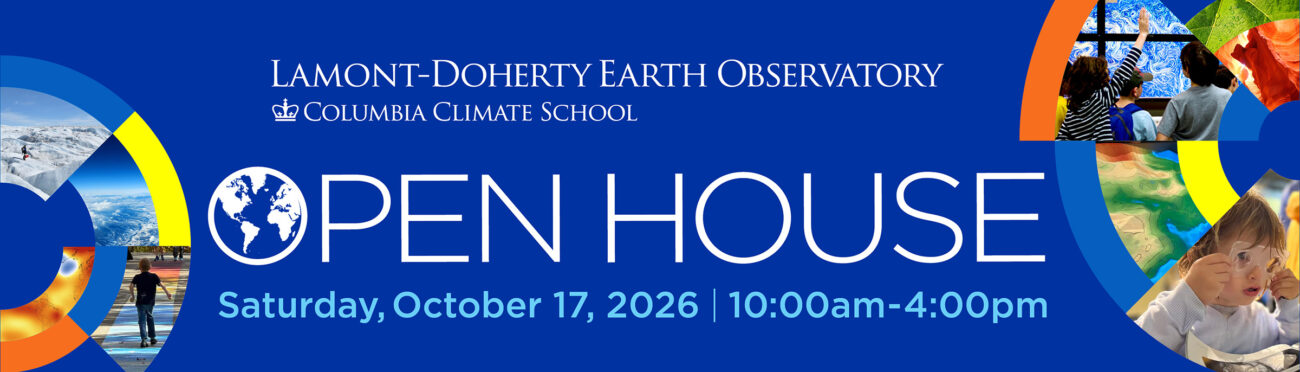
On Saturday, October 17, 2026 from 10am to 4pm, Lamont-Doherty Earth Observatory Open House—our biggest, best science fun and discovery event of the year—will take place on our beautiful campus in Palisades, NY. Mark your calendar and join us for this free, family-friendly celebration of science! RSVP Today!
