Earth Sciences29
-

The Very Lonely Seismometer
Out in the middle of the woods in New York’s exurbs, a hiker finds a TV antenna attached to a rotting oil drum. What is this?
-

What Will the Climate Be Like When Earth’s Next Supercontinent Forms?
In roughly 200 million years, the continents will once again unite into a supercontinent. A new study explores how the next Pangea could affect the global climate.
-

Glaciers in Canada Found To Be Thicker Than Previously Suggested
A new study that collected ice thickness data for a number of glaciers concluded they are 38% thicker than previous estimates, with implications for water availability.
-

Ancient Data Provides Insights for Managing Future Flood Risks in Patagonia
Flood reconstruction in Patagonia allows for enhanced scientific understanding of glacier lake outburst floods, which are a major threat in mountain communities.
-

Scientists Have Discovered an Ancient Lake Bed Deep Beneath the Greenland Ice
Using radar and other techniques, researchers have mapped out the sediments left by a lake that apparently existed before Greenland was glaciated. Next step: drilling through the ice to see what they contain.
-

Data on Past Climates Key to Predicting Future, Scientists Say
An international team suggests that research centers around the world using numerical models to predict future climate change should include simulations of past climates.
-

Nick Frearson Designs Devices for Earth’s Most Extreme Environments
An engineer at Lamont-Doherty, Frearson builds instruments that help scientists collect vital data in Antarctica, the deep sea, and at the top of volcanoes.
-

How a Turbulent Environment Sparked a Leap in Early Human Behavior
A new study suggests that a series of environmental changes in East Africa some 320,000 years ago challenged a previous long-standing way of life for proto-humans, and produced a more adaptable culture.
-

Scientists Harness Satellites to Track Algae Growth on Greenland Ice Sheet
To measure algal blooms across large regions of the Greenland ice, and understand their effects on melting over time, scientists are turning to space.


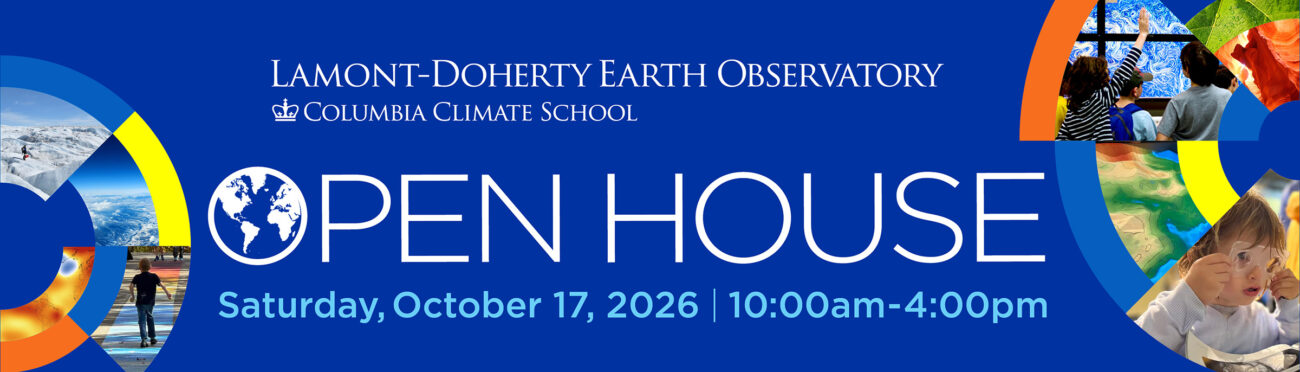
On Saturday, October 17, 2026 from 10am to 4pm, Lamont-Doherty Earth Observatory Open House—our biggest, best science fun and discovery event of the year—will take place on our beautiful campus in Palisades, NY. Mark your calendar and join us for this free, family-friendly celebration of science! RSVP Today!
