Earth Sciences52
-

A Bit of Sun on an Antarctic Thanksgiving
The Rosetta team made two big accomplishments this week: Our lidar returned some beautiful 3D images of the sea ice topography, which can be used to study small details of the ice. And our own Chloe Gustafson won first place in the Antarctic Turkey Trot. She now holds the honor of being the first woman…
-

Ear to the Ground, Listening for Nuclear Blasts
Seismologist Lynn Sykes has been working for more than 50 years to halt the testing of nuclear bombs. In his forthcoming book, Silencing the Bomb: One Scientist’s Quest to Halt Nuclear Testing, Sykes provides an insider’s look at the science behind detecting explosions, and international efforts to establish a series of treaties.
-

Wind, Snow and Ice: Summer in Antarctica
The theme of the past week has been the weather. Weather is of course always happening, but in the lingo of McMurdo Station, ‘weather’ means ‘bad weather.’
-

What We Know About Medicanes—Hurricane-Like Storms in the Mediterranean
They’re rare but can be dangerous, as demonstrated by Medicane Numa’s destruction in Greece last week.
-

Ocean Sediments Off Pacific Coast May Feed Tsunami Danger
Tightly packed sediments help the Cascadia Subduction Zone generate large earthquakes, and could boost its ability to trigger a large tsunami.
-

Let’s Talk About Crevasses—Deep Fractures in Antarctica’s Ice
The word “crevasse” sends shivers down the spine of anyone who works on a glacier. Sometimes hundreds of feet deep and hidden beneath a thin layer of snow, these cracks have claimed the lives of many polar explorers and scientists. They also appear quite frequently in our sensors as we fly our survey flights for…
-

How Will La Niña Affect Winter in the U.S.?
This phenomenon can cause major changes in climate patterns. See what’s in store for your region.
-

Where Is All That Carbon Dioxide Going?
Concurrent with the announcement that human carbon emissions reached a new peak this year, Galen McKinley, a researcher at Columbia University’s Lamont-Doherty Earth Observatory, discusses the difficulties of tracking the sources and destinations of carbon dioxide.
-

Flying is Easy, Just Think Happy Thoughts…
For scientists mapping Antarctica’s Ross Ice Shelf, data collection flights require a demanding schedule: The day starts at 4am and sometimes continues throughout the night.


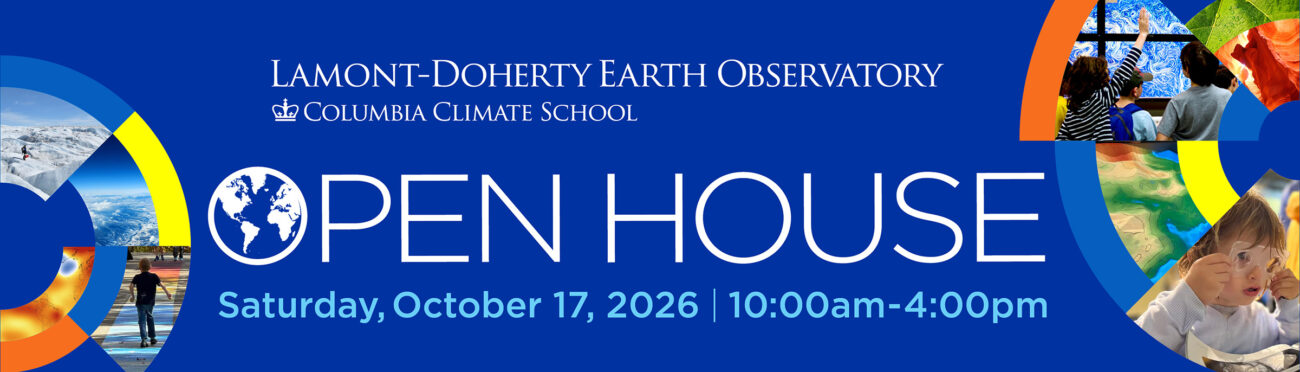
On Saturday, October 17, 2026 from 10am to 4pm, Lamont-Doherty Earth Observatory Open House—our biggest, best science fun and discovery event of the year—will take place on our beautiful campus in Palisades, NY. Mark your calendar and join us for this free, family-friendly celebration of science! RSVP Today!
