Earth Sciences50
-

Finishing the GPS Scouting
We drove through the hills of Sylhet passed rice fields and tea plantations, and through woods looking for appropriate spots to install our GPS systems.
-

Primary Schools to the Rescue
Up ahead was a school, perfect for a GPS installation. Schools proved to be the best sites in the hills, which we covered in either tea plantations or woods.
-

Installing the First Two GPS Sites
From our base in Srimongal, now came the challenging work of finding appropriate locations to install the GPS. It requires a combination of the right tectonic setting and reinforced concrete buildings.
-

Fellowship of the Seismometers
I am back in Bangladesh to start deployment of seismometers and GPS for a large new project that crosses 3 countries: Bangladesh, India and Myanmar.
-

Live from Antarctica: Scientists #TakeoverNSF
On January 31 at 1:00 p.m. EST, Lamont-Doherty’s Hugh Ducklow and his colleagues will use National Science Foundation social media to discuss their research on Antarctic ecology.
-

What Would Happen if the Earth Were Actually Flat?
You could say goodbye to the atmosphere and GPS navigation, to start.
-

Improving Tropical Cyclone Risk Assessment
Chia-Ying Lee, a scientist at the International Research Institute for Climate and Society, studies the structure and intensity evolution of tropical cyclones and how these are influenced by climate change.
-

Why Thawing Permafrost Matters
As the Arctic warms, the unfreezing of permafrost poses a threat to the planet.
-

Humidity May Prove Breaking Point for Some Areas as Temperatures Rise, Says Study
A new study projects that in coming decades the effects of high humidity in many areas may surpass humans’ ability to work or, in some cases, even survive.


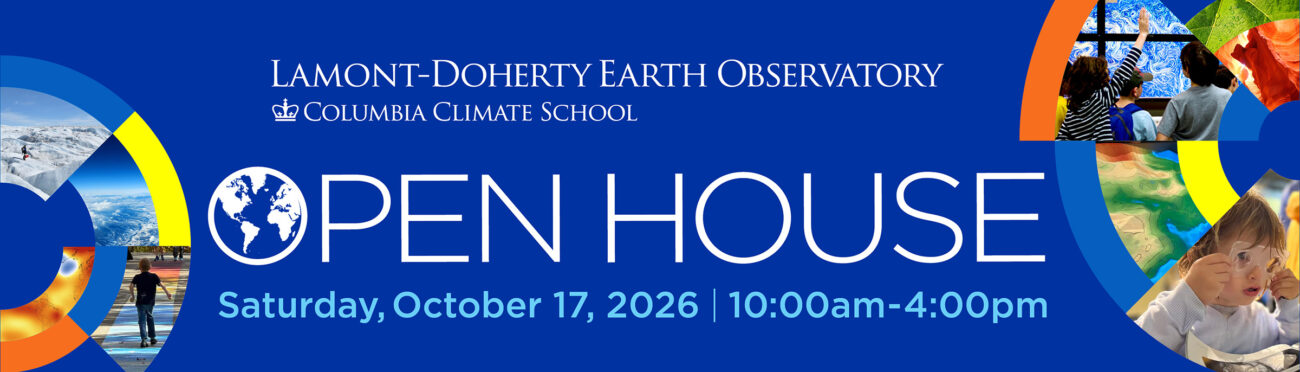
On Saturday, October 17, 2026 from 10am to 4pm, Lamont-Doherty Earth Observatory Open House—our biggest, best science fun and discovery event of the year—will take place on our beautiful campus in Palisades, NY. Mark your calendar and join us for this free, family-friendly celebration of science! RSVP Today!
