Earth Sciences48
-
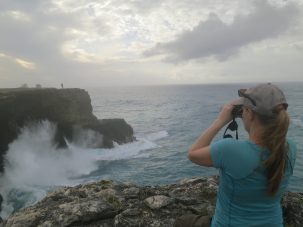
How High Can Seas Rise? On a Tropical Isle, the Answers Are Not Always Obvious.
To help predict the future of sea level rise, scientists are studying ancient corals on the island of Barbados.
-

In Ancient Rocks, Scientists See a Climate Cycle Working Across Deep Time
A gradual shift in Earth’s orbit that repeats every 405,000 years plays a role in natural climate swings.
-

Was the Earth Ever Frozen Solid?
Hundreds of millions of years ago, the planet was trapped in a global ice age. But exactly how icy things got is still up for debate.
-

Laia Andreu-Hayles Explores Tropical Forests in a Warming World
Research by tree-ring scientist Laia Andreu-Hayles will provide much-needed observational climate data for Bolivia and Peru and insight into the climate sensitivity of tropical tree species in the Andes.
-

To Save Coastal Property from Rising Seas, We Need Collaborative Planning
Climate scientist Radley Horton is bringing the effects of sea level rise to decision-makers, and fostering discussions to help society confront climate change.
-

U.S., UK Scientists Join to Study Possible Collapse of Massive Antarctic Glacier
An international collaboration will study the wasting of the Thwaites glacier, which already accounts for around 4 percent of current global sea-level rise, and could collapse within decades or centuries.
-

Exposing Greenland’s Green Past
Findings from last year indicate that the Greenland Ice Sheet is perhaps not as stable as scientists had hoped.
-

Simon Mason Wins Meteorological Award for Outstanding Service
The World Meteorological Organization’s Commission on Climatology recognizes a Columbia climate forecaster’s scientific contributions.
-

Translating Science into Action
How can science be used and transferred effectively by decision-makers? How can we manage scientific uncertainty? These are some of the questions tackled on Monday at the event, ‘Speaking Science to Power.’


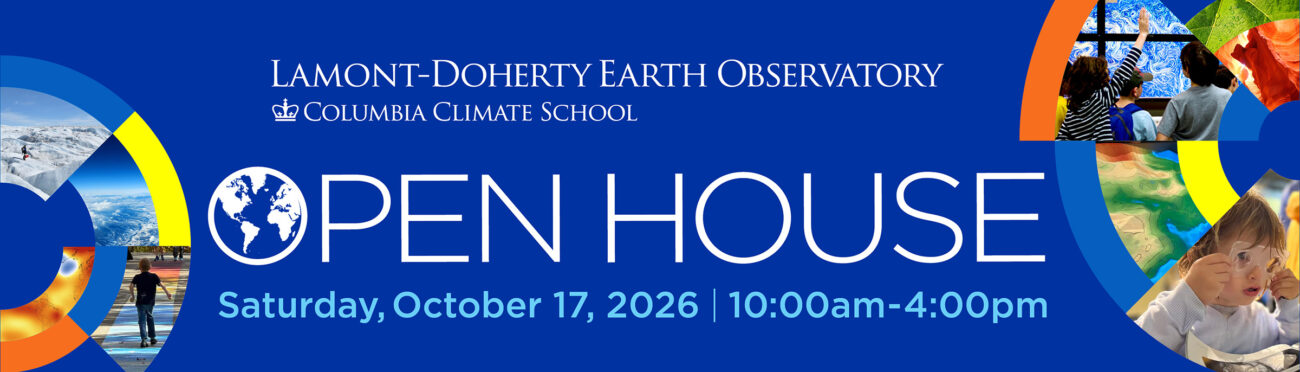
On Saturday, October 17, 2026 from 10am to 4pm, Lamont-Doherty Earth Observatory Open House—our biggest, best science fun and discovery event of the year—will take place on our beautiful campus in Palisades, NY. Mark your calendar and join us for this free, family-friendly celebration of science! RSVP Today!
