Earth Sciences51
-

Hotter Temperatures Will Accelerate Migration of Asylum-Seekers to Europe, Says Study
If carbon emissions hold steady, a new study in Science predicts that the European Union could face a massive influx by 2100.
-

Students Practice GIS and Remote-Sensing Field Work in Black Rock Forest
When it comes to learning about data collection techniques, there is no substitute for field work. In October, three Columbia classes embarked on a field trip to the Black Rock Forest in Cornwall, New York, to get some hands-on experience.
-

In Antarctica, Enough is Never Enough
Almost out of nowhere we were given a surprise opportunity to fly one more survey line on our second-to-last day in Antarctica, and we jumped at it!
-

How Can Changing Climate Affect a Civilization?
Billy D’Andrea is trying to understand Easter Island’s climate history over the last few thousand years and how communities dealt with past climate change.
-

Tiny Losses of Ice at Antarctica’s Fringes May Hasten Declines in Interior
A new study shows that even minor deterioration of ice shelves can instantaneously hasten the decline of ice hundreds of miles landward.
-

Understanding Earth’s Geologic History to Predict the Future
Organic geochemist Pratigya Polissar is developing new tools to look at the history of plants and ecosystems on Earth over the past 20 million years.
-

American Geophysical Union 2017: Key Events From the Earth Institute
A chronological guide to key talks and other events presented by Columbia University’s Earth Institute at the American Geophysical Union 2017 meeting.
-
Spring 2018 Earth Institute Undergraduate Research Assistant Opportunities
By Chandler Precht The Earth Institute, Columbia University, is offering undergraduate students with research assistant opportunities during the spring 2018 semester. Undergraduates from Columbia and Barnard will be able to serve as research assistants on research projects related to sustainable development and the environment with distinguished faculty and researchers at the cutting edge of this…
-
Spring 2018 Earth Institute Internship Opportunities
By Chandler Precht The Earth Institute is offering undergraduate, graduate and PhD students with opportunities to intern in various departments and research centers in a variety of administration, communications and research roles. Interns work on a variety of sustainability-focused projects across The Earth Institute. These projects provide interns with hands-on workplace experience, allowing them to…


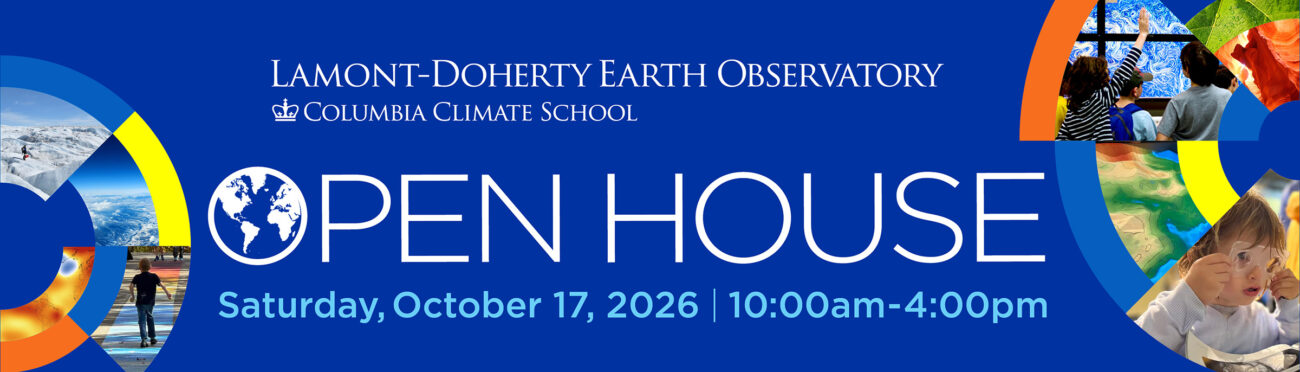
On Saturday, October 17, 2026 from 10am to 4pm, Lamont-Doherty Earth Observatory Open House—our biggest, best science fun and discovery event of the year—will take place on our beautiful campus in Palisades, NY. Mark your calendar and join us for this free, family-friendly celebration of science! RSVP Today!
