Earth Sciences85
-
Barbados Corals
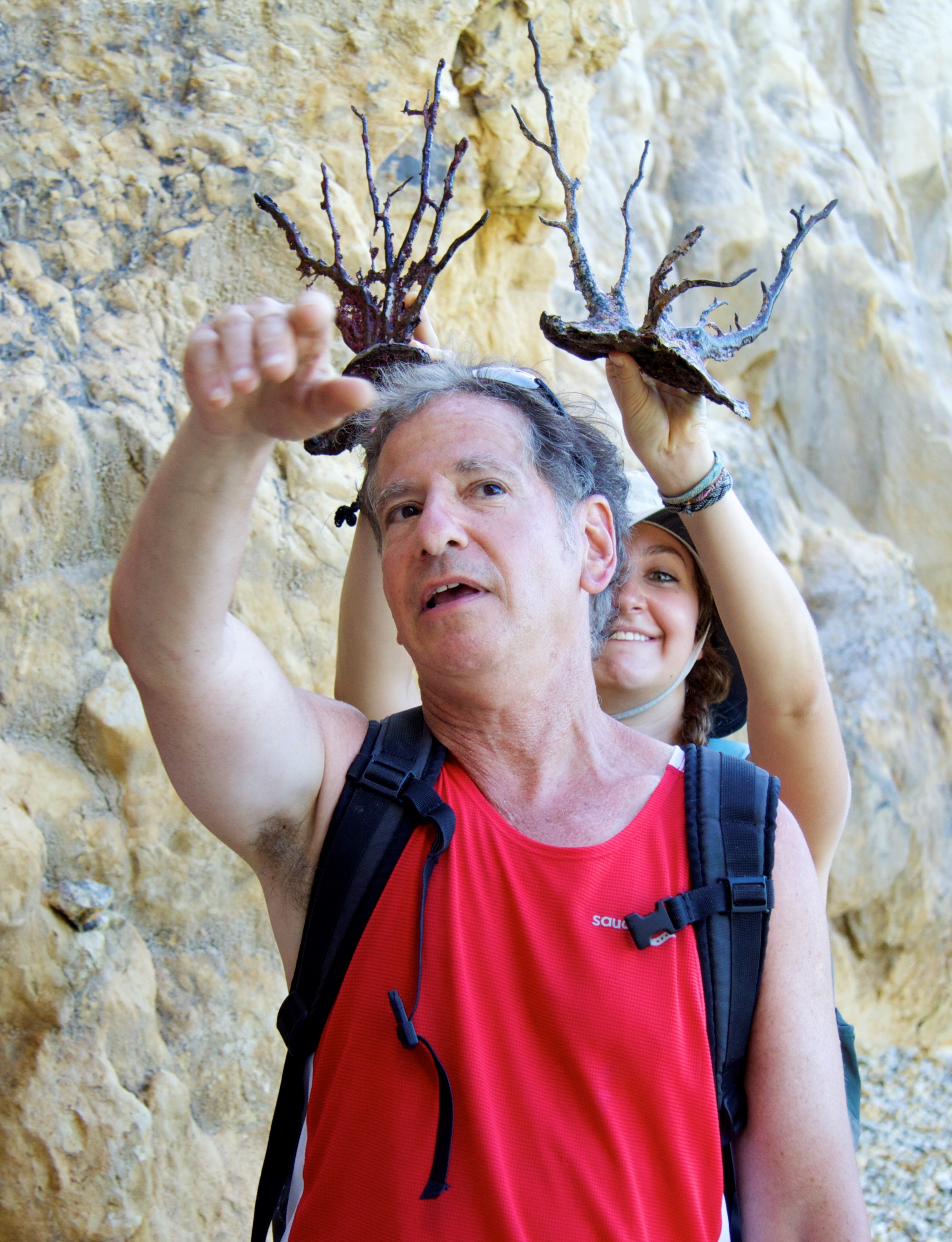
A new video, “Flip Flops and Outcrops,” captures good vibrations from a recent Columbia University geology field trip to the Caribbean island of Barbados
-

Climate Change Innovator Elected to National Academy
Peter Kelemen, a geologist at Lamont-Doherty Earth Observatory who studies rocks from the deep earth and, recently, their possible uses in battling climate change, has been elected to the National Academy of Sciences.
-

Amid a Fossil Bonanza, Drilling Deep into Pre-Dinosaurian Rocks
On a high ridge in Arizona’s Petrified Forest National Park, paleontologist Paul Olsen sits on the fallen trunk of a 215-million-year-old tree, now turned to stone. The tree once loomed 70 or 80 feet above a riverine landscape teeming with fish, turtles, giant crocodilians and tiny, early species of dinosaurs.
-

Photo Essay: Unearthing the Lost World Below a Petrified Forest
In Arizona’s Petrified Forest National Park, researchers are scouring the fossil-rich surface and drilling deep into ancient rocks to learn what happened during the late Triassic, some 201 million to 235 million years ago.
-

Crossing 400ppm: Welcome to the Pliocene
“Right now, we’re living in a world of a Pliocene atmosphere,” scientist Maureen Raymo of the Lamont-Doherty Earth Observatory tells the Yale Forum on Climate Change and the Media. “But the whole rest of the climate system — the oceans are trying to catch-up, the ice sheets are waning, and everything is trying to catch…
-

Celebrate Earth Day with Extreme Science
Lamont-Doherty Earth Observatory scientist Robin Bell will participate in a Google+ Hangout hosted by the White House on Tuesday, April 22 at 4:00 p.m. EDT. Bell, who will join the Hangout from New Zealand, is a polar scientist who studies sub-glacial lakes, ice sheet dynamics and tectonics in Earth’s polar regions.
-

Black Holes
In most observed galaxy hearts, Massive black holes reside, Formed from dark-baryon parts, As huge stars collapse or collide.
-

Lords of the Past
With life, legged and finned, Earth had been teeming, Slitherers, predators, graceful trees tall … Now, of these species, we are only dreaming: Glossopteris, trilobites, eurypterids, all.
-

From Theory to Reality: Closing the Carbon Loop
Carbon capture, storage and reuse has the potential to help us reduce CO2 emissions and combat global warming. The Lenfest Center for Sustainable Energy is bringing together experts from an array of fields to assess the state of the technology April 14-16.


The first Earth Day in 1970 ignited a movement to stop polluting our planet. Today, our scientists and experts are tackling the most pressing challenges to achieve real-world impact. This Earth Day, join us in our commitment to realizing a just and sustainable future for our planet. Visit our Earth Day website for ideas, resources, and inspiration.