Earth Sciences95
-

Seismology as Performance Art
Ideally, seismic stations are sited in remote, quiet locations. But other considerations are important for a good station, particularly security. As a result, we placed most of our stations in towns near schools, hospitals or town halls, where people could keep an eye on them.
-

Surface Views of the Southern East Africa Rift Inspire a Look Underground
Driving around the Rungwe volcanic province in the southern East Africa Rift installing seismometers, we have the chance to observe first hand how geological processes in action create the most dramatic forms at Earth’s surface.
-

Tackling an Ice Age Mystery
In a new study in Nature, climate scientist Maureen Raymo and her colleagues show that variations in sunlight interact with Earth’s topography and the size of ice sheets to control Earth’s ice ages on 100,000 year cycles. One important finding: as ice sheets grow bigger, they also become more vulnerable to melting.
-

Conservation & Environmental Sustainability – Fall 2013 Courses
The Earth Institute Center for Environmental Sustainability (EICES) at Columbia University provides executive training in environmental sustainability through courses in science, economics and policy. We invite you to join our leading experts and practitioners, strengthen your understanding of human-ecosystem interactions, and become an effective environmental leader and decision-maker.
-

A Moon Holiday to Get Away From It All
A national park on the moon? Preposterous? Not if the Apollo Lunar Landing Legacy Act, put forward by Congresswomen Donna Reed (D – Maryland) and Eddie Bernice Johnson (D – Texas) passes. We could very well be on our way to having a national park on the Moon protecting sites of historical value – where…
-
‘Highway from Hell’ Fueled Costa Rican Volcano
Finding Could Lead to Improved Eruption Forecasting
-

Cicadas Leave Trail of Dead Leaves
As you travel through our region, you may notice stands of trees with branch tips covered in dead leaves. The damage is not from the hot and humid weather, but rather the aftermath of the cicadas.
-
Distant Quakes Trigger Tremors at U.S. Waste-Injection Sites, Says Study
Finding Could Help Identify Critically Stressed Faults
-

Photo Essay: High Desert, Deep Earth
In the Arabian peninsula nation of Oman, geologists are studying the Hajar mountains–a range containing rocks that have been thrust up from the deep earth. Accessible to humans in only a few places on earth, these kinds of rocks offer clues to the planet’s deep history–and possible ways that natural processes may be harnessed to…


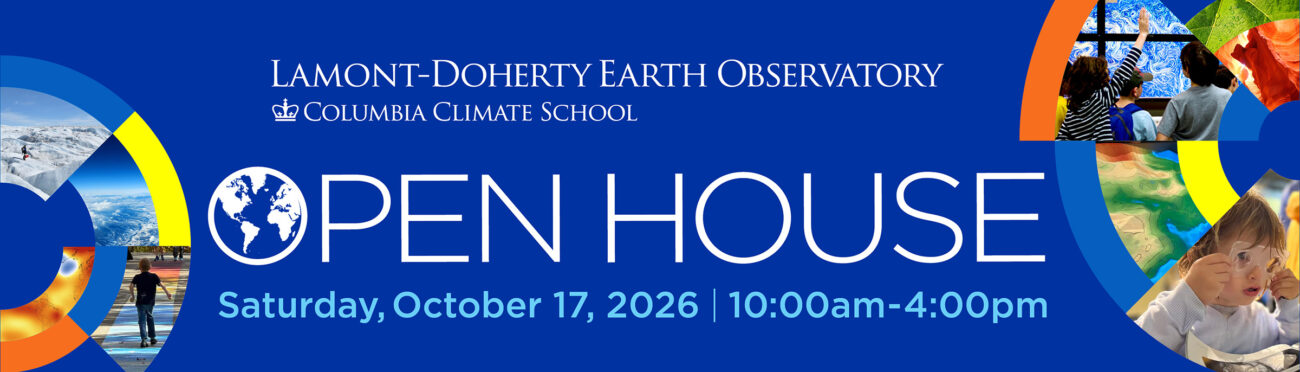
On Saturday, October 17, 2026 from 10am to 4pm, Lamont-Doherty Earth Observatory Open House—our biggest, best science fun and discovery event of the year—will take place on our beautiful campus in Palisades, NY. Mark your calendar and join us for this free, family-friendly celebration of science! RSVP Today!
