Energy32
-
The Environment and the 2016 Elections
The environment holds the potential to emerge as a political issue in the 2016 presidential election in part because it has gone from being a non-partisan consensus issue to a deeply partisan ideological issue. The battleground will be for the heart and mind of the independent voter.
-

Where is Solar Power Headed?
To have a shot at curbing the worst impacts of climate change, we need to extricate our society from fossil fuels and ramp up our use of renewable energy. Where does solar energy stand today, and where does it need to go in order for us to make the transition to renewable energy?
-

Hospitalizations Increase Near Fracking Sites, Study Shows
People living in areas of Pennsylvania where hydraulic fracturing is booming are suffering increasing rates of hospitalization, a new study says. The study is one of a small but growing number suggesting that the practice could be affecting human health.
-
Sustainability Policy Is Taking Hold in China
I left China encouraged by the widespread receptivity to the theory and practice of sustainability, but aware of the huge challenge that lies ahead. As we flew from Guiyang to Beijing for the return flight home, I looked down and saw a countryside dotted with scores of windmills. The transition from a coal-based economy to…
-
How the Transition to Renewable Energy Could Come
In the United States, our political process sends us strong signals about what problems and proposals can achieve agenda status. Increased federal support for science and technology will not be easy, but unlike a carbon tax, it is capable of drawing bipartisan support.
-

The Race for Better Batteries
The worldwide transition from fossil fuels to renewable sources of energy is under way, but to integrate all this variable power into the grid, battery storage is key. Researchers around the world are working on developing better and cheaper batteries.
-

From the Nile to the Sundarbans: the Undergraduate Capstones
This spring, students in the Undergraduate Program in Sustainable Development presented innovative solutions to sustainability issues as part of their Capstone Workshop. Their clients ranged from the United States Military Academy at West Point to the Sabin Center for Climate Change Law.
-
A Carbon Tax Is Not Feasible or Practical
The idea behind the carbon tax is that by raising the price of fossil fuels, one promotes energy efficiency and, as fossil fuels become more expensive, renewable energy technologies will become more competitive. I am certain this is true. But few elected officials are going to advocate higher fossil fuel prices.


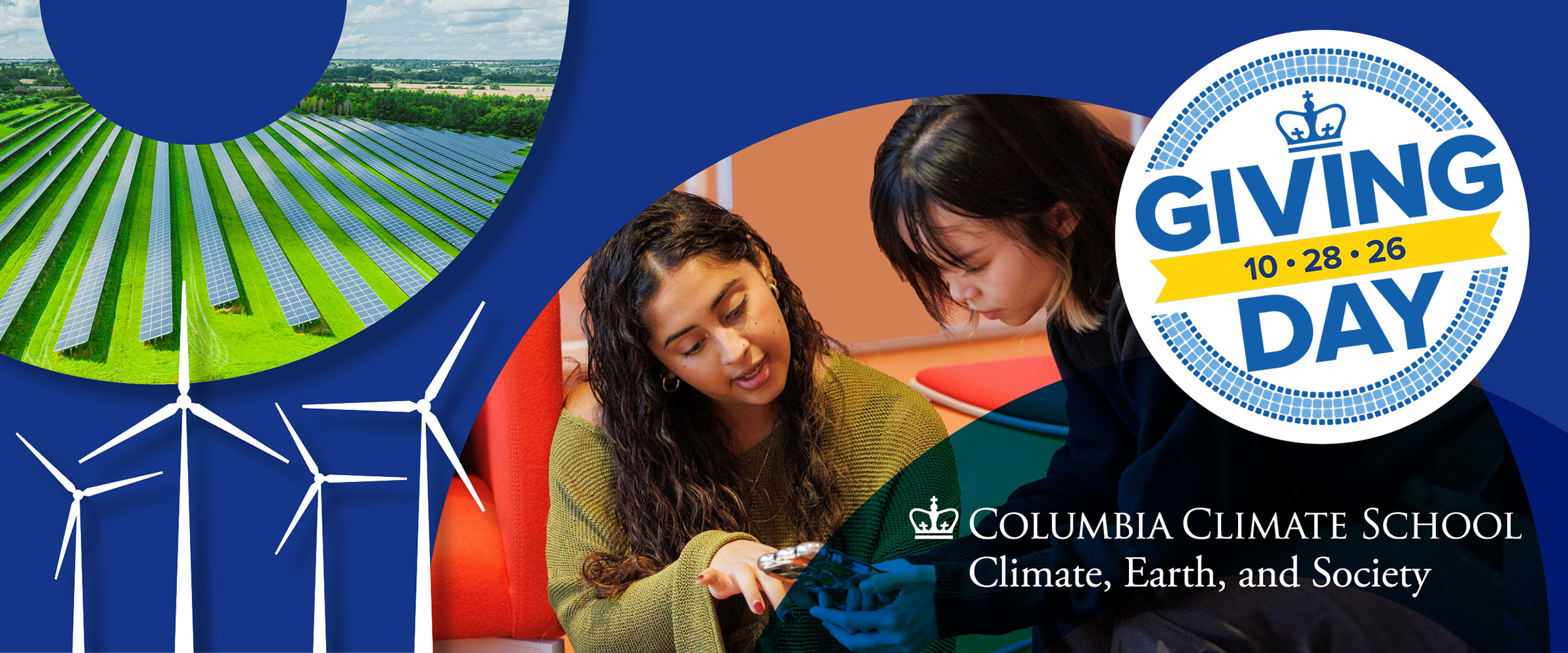
October 28, 2026 is Columbia Giving Day! Your gift to Columbia Climate School helps advance interdisciplinary research, educate the next generation of leaders, and transform bold ideas into real-world solutions for climate, Earth, and society.