Natural Disasters37
-
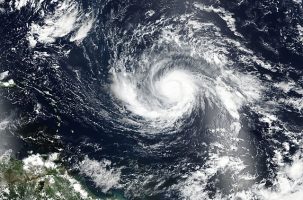
Hurricane Irma: Resources for Journalists
As Hurricane Irma batters the Caribbean with winds up to 185 miles per hour, Earth Institute experts are standing by to answer questions from the media.
-

Disaster Recovery and Reconstruction is a National Security Issue
National security is about protecting the safety and way of life of the American people. It is the single most important responsibility of government. We need to get past dysfunction and treat natural and human made disaster response and recovery as a national security issue.
-
![How Will Scientists Find Out Whether Climate Change Made Hurricane Harvey Worse? [Video]](https://media.news.climate.columbia.edu/wp-content/uploads/2016/01/Figure1-200x150.jpg)
How Will Scientists Find Out Whether Climate Change Made Hurricane Harvey Worse? [Video]
It’s too soon to say there’s a connection, but searching for the fingerprints of climate change shouldn’t take too long.
-

Earth Institute Experts Break Down the Causes and Impacts of Hurricane Harvey
As Texas reels in the aftermath of Hurricane Harvey, our scientists are helping to make sense of how this storm became so destructive, and what’s needed for recovery.
-

Recovery from Hurricane Harvey Could Take 15 Years
The director of Columbia’s National Center for Disaster Preparedness weighs in on the heartbreaking devastation in Texas.
-

How did Hurricane Harvey Become so Powerful, so Quickly?
Over the past day and a half, Hurricane Harvey’s winds have quickened from about 35 to 109 miles per hour. What’s driving this massive power-up?
-

Hurricane Harvey: Resources for Journalists
Earth Institute experts are on-hand to answer media questions about hurricane physics, rapid intensification, emergency response, and more.
-

How Will Climate Change Impact Shelter?
In this video, Lamont-Doherty Earth Observatory researchers Robin Bell, Radley Horton, and Adam Sobel explain their research and how it can help improve adaptation practices and make our homes, livelihoods, and the systems we rely on more resilient to extreme weather and sea level rise.
-

Defining and Predicting Heat Waves in Bangladesh
New research shows that in Bangladesh, heat wave predictability exists from a few days to several weeks in advance, which could save thousands of lives.


![How Will Scientists Find Out Whether Climate Change Made Hurricane Harvey Worse? [Video]](https://media.news.climate.columbia.edu/wp-content/uploads/2016/01/Figure1-400x300.avif)


By studying thousands of buildings and analyzing their electricity use, Columbia Climate School Dean Alexis Abramson has been able to uncover ways to significantly cut energy consumption and emissions. Watch the Video: “Engineering a Cooler Future Through Smarter Buildings“
