State of the Planet

News from the Columbia Climate School

Natural Disasters45

  • Study: NASA Sites Vulnerable to Climate Change

    Study: NASA Sites Vulnerable to Climate Change

    NASA has been at the forefront of climate science, launching satellites that take the pulse of Earth’s land, oceans and atmospheric systems. But the agency is increasingly vulnerable itself to the effects of a changing climate.

  • NYC, Gulf Coast Teens Talk About Life After Disaster

    NYC, Gulf Coast Teens Talk About Life After Disaster

    At the two-year anniversary of Superstorm Sandy, high school students in New York City posed questions about life during and after a catastrophe to a very particular group of experts – high school students in the Gulf Coast who had experienced the BP oil spill and had lived through as many as six hurricanes in…

  • Eye on the Storm

    Eye on the Storm

    Atmospheric scientist Adam Sobel is author of the new book “Storm Surge: Hurricane Sandy, Our Changing Climate and Extreme Weather of the Past and Future.” Sobel was one of the first researchers to explain to media and the public what might be brewing, before the storm hit. In the aftermath, he looked closely at the…

  • What Do Wildfires Have to Do with Climate Change?

    What Do Wildfires Have to Do with Climate Change?

    “Climate change has been making the fire season in the United States longer and on average more intense,” said John Holdren, President Obama’s science advisor. And, wildfires are not only intensified by climate change, they also exacerbate it.

  • The Art and Science of Climate Change

    The Art and Science of Climate Change

    This fall, the photographs of Sebastião Salgado provide the springboard for an ambitious program of panel discussions, lectures and film screenings addressing the urgent issue of climate change, at the International Center of Photography in New York City.

  • Photo Essay: Open House at Lamont-Doherty

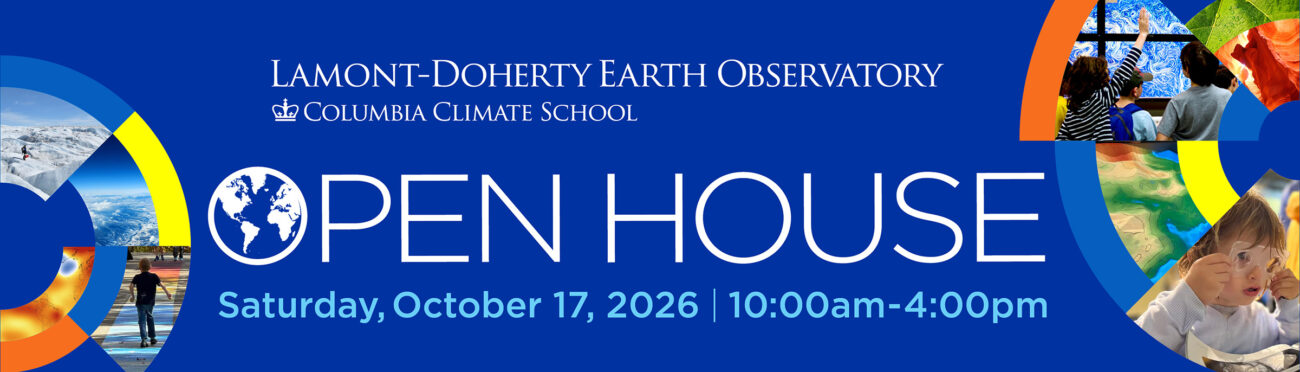
    Photo Essay: Open House at Lamont-Doherty

    Bend a rock. Channel your historic ‘birthquake.’ Check out rocks, fossils, sediment cores and more at Lamont’s Open House on Saturday, October 11.

  • What Everyone Should Know About Climate Change

    What Everyone Should Know About Climate Change

    Climate scientist William D’Andrea of the Lamont-Doherty Earth Observatory asked young scientists attending a symposium last October, “What do you wish everyone knew about climate change?” He turned the responses into this video, which covers the topic pretty well.

  • Is the Highest Climb Sustainable, and Who Pays the Price?

    Is the Highest Climb Sustainable, and Who Pays the Price?

    The Khumbu Icefall on Mount Everest is perhaps the most well-known and notoriously dangerous glacial feature on the planet. In a fresh post on the Glacier Hub blog, the Earth Institute’s Ben Orlove, writing with anthropologist Pasang Yangjee Sherpa of Penn State, recounts a recent workshop held in Kathmandu to address the issues raised by…

  • Beneath an Icelandic Glacier, Another Eruption Brewing

    Beneath an Icelandic Glacier, Another Eruption Brewing

    The 2,000-meter tall Bárðarbunga volcano in Iceland is at risk of eruption, an event that could send a cloud of ash and steam high into the atmosphere and cause extensive disruptions in air travel, among other effects, according to media reports. Earth Institute scientist Ben Orlove looks into it on the Glacier Hub blog.

Banner with images representing environmental issues and text "You Asked: Our Scientists and Experts Answer Your Burning Questions."

You Asked invites you to share your most pressing questions about climate, science, and sustainability. Lamont-Doherty Earth Observatory and Columbia Climate School experts will respond with clear, evidence-based answers. Pose your questions and story ideas!

  • Study: NASA Sites Vulnerable to Climate Change

    Study: NASA Sites Vulnerable to Climate Change

    NASA has been at the forefront of climate science, launching satellites that take the pulse of Earth’s land, oceans and atmospheric systems. But the agency is increasingly vulnerable itself to the effects of a changing climate.

  • NYC, Gulf Coast Teens Talk About Life After Disaster

    NYC, Gulf Coast Teens Talk About Life After Disaster

    At the two-year anniversary of Superstorm Sandy, high school students in New York City posed questions about life during and after a catastrophe to a very particular group of experts – high school students in the Gulf Coast who had experienced the BP oil spill and had lived through as many as six hurricanes in…

  • Eye on the Storm

    Eye on the Storm

    Atmospheric scientist Adam Sobel is author of the new book “Storm Surge: Hurricane Sandy, Our Changing Climate and Extreme Weather of the Past and Future.” Sobel was one of the first researchers to explain to media and the public what might be brewing, before the storm hit. In the aftermath, he looked closely at the…

  • What Do Wildfires Have to Do with Climate Change?

    What Do Wildfires Have to Do with Climate Change?

    “Climate change has been making the fire season in the United States longer and on average more intense,” said John Holdren, President Obama’s science advisor. And, wildfires are not only intensified by climate change, they also exacerbate it.

  • The Art and Science of Climate Change

    The Art and Science of Climate Change

    This fall, the photographs of Sebastião Salgado provide the springboard for an ambitious program of panel discussions, lectures and film screenings addressing the urgent issue of climate change, at the International Center of Photography in New York City.

  • Photo Essay: Open House at Lamont-Doherty

    Photo Essay: Open House at Lamont-Doherty

    Bend a rock. Channel your historic ‘birthquake.’ Check out rocks, fossils, sediment cores and more at Lamont’s Open House on Saturday, October 11.

  • What Everyone Should Know About Climate Change

    What Everyone Should Know About Climate Change

    Climate scientist William D’Andrea of the Lamont-Doherty Earth Observatory asked young scientists attending a symposium last October, “What do you wish everyone knew about climate change?” He turned the responses into this video, which covers the topic pretty well.

  • Is the Highest Climb Sustainable, and Who Pays the Price?

    Is the Highest Climb Sustainable, and Who Pays the Price?

    The Khumbu Icefall on Mount Everest is perhaps the most well-known and notoriously dangerous glacial feature on the planet. In a fresh post on the Glacier Hub blog, the Earth Institute’s Ben Orlove, writing with anthropologist Pasang Yangjee Sherpa of Penn State, recounts a recent workshop held in Kathmandu to address the issues raised by…

  • Beneath an Icelandic Glacier, Another Eruption Brewing

    Beneath an Icelandic Glacier, Another Eruption Brewing

    The 2,000-meter tall Bárðarbunga volcano in Iceland is at risk of eruption, an event that could send a cloud of ash and steam high into the atmosphere and cause extensive disruptions in air travel, among other effects, according to media reports. Earth Institute scientist Ben Orlove looks into it on the Glacier Hub blog.