State of the Planet

News from the Columbia Climate School

Natural Disasters49

  • Gone to Sea No More

    Gone to Sea No More

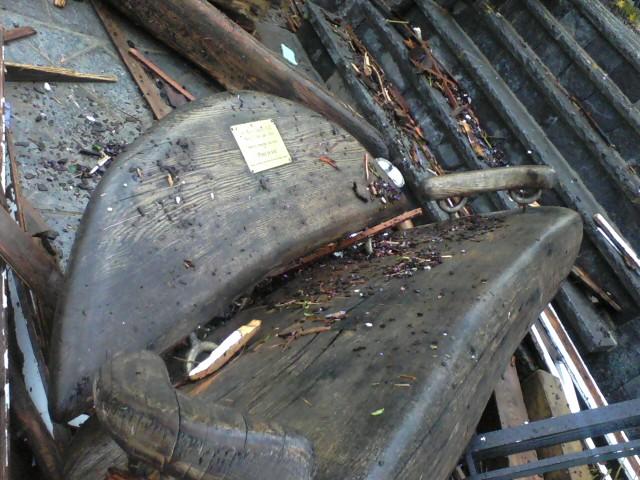
    After John Diebold, an enormously popular and influential marine scientist, died suddenly in summer 2010, friends and family erected a memorial to him: a carved red oak bench they installed on a causeway along the Hudson River, inscribed with “GONE TO SEA.” Then along came Hurricane Sandy.

  • Talking Data-Driven Development with Haiti’s Prime Minister

    Talking Data-Driven Development with Haiti’s Prime Minister

    On April 22, 2013 the Earth Institute’s Haiti Research and Policy Program at the Center on Globalization and Sustainable Development welcomed Prime Minister Laurent Lamothe to the Spring 2013 Haiti Dialogue Series and the Columbia University World Leader’s Forum. The prime minister and Haitian diplomats met with Earth Institute senior researchers to discuss the strategies…

  • A Library of Giant Landslides

    A Library of Giant Landslides

    A new method for detecting big landslides is allowing scientists to understand the dynamics of these elusive events almost instantly, without traipsing to remote mountains or scrambling up rugged peaks months, or even years, later. In a recent study in the journal Science, Göran Ekström and Colin Stark, geophysicists at Columbia University’s Lamont-Doherty Earth Observatory,…

  • Where’s My Seasonal Tornado Forecast?

    Where’s My Seasonal Tornado Forecast?

    Tornadoes, derechos and other violent storms can kill hundreds each year and cause billions in damages. How well can we predict them? How will climate change influence their occurrence? Experts from around the country discussed these issues at a recent workshop.

  • The Law of Drowning Nations

    The Law of Drowning Nations

    Sea levels are inching up year by year, and by various projections could be two to six feet higher by 2100—enough to make some small, low-lying island nations uninhabitable, or simply to wipe them off the map. What rights will citizens have to live elsewhere; in fact, will these entities actually still be nations, with…

  • NY State Prepares for Natural Disasters: A Q&A with Cynthia Rosenzweig

    NY State Prepares for Natural Disasters: A Q&A with Cynthia Rosenzweig

    Cynthia Rosenzweig of the NASA Goddard Institute for Space Studies talks about the work of the New York State Ready Commission, set up after Hurricane Sandy to study how the state can better prepare for natural disasters.

  • A New Primer on Sea Level

    A New Primer on Sea Level

    The threat of sea-level rise–actually, its ongoing reality–has been on many more minds since New York and surrounding areas were walloped during Hurricane Sandy by a record-high storm surge, abetted by a water level that has risen steadily over the last century. That level will keep rising if climate keeps warming, and so, probably, will…

  • Overcoming Challenges to Local Development in Haiti

    Overcoming Challenges to Local Development in Haiti

    Haiti Dialogue Series: Should funds be more effectively channeled through the Haitian government, a decentralized finance program could help streamline financing and reinforce local government planning efforts. As part of the Haiti Research and Policy Program dialogue series, Tatiana Wah was joined by Leslie Pean to discuss possible approaches to achieving the call for decentralization…

  • Jamuna River

    Jamuna River

    The last part of our river work was on the Jamuna River, as the Brahmaputra is called south of where if diverges from its former course. It shifted up to 100 km to this course about 200 years ago. We visited Sirajganj where an embankment protects the city from the migrating river and Aricha near…

Composite banner with modern building at night and portrait of Dean Alexis Abramson that reads "Science for the Planet"

By studying thousands of buildings and analyzing their electricity use, Columbia Climate School Dean Alexis Abramson has been able to uncover ways to significantly cut energy consumption and emissions. Watch the Video: “Engineering a Cooler Future Through Smarter Buildings

  • Gone to Sea No More

    Gone to Sea No More

    After John Diebold, an enormously popular and influential marine scientist, died suddenly in summer 2010, friends and family erected a memorial to him: a carved red oak bench they installed on a causeway along the Hudson River, inscribed with “GONE TO SEA.” Then along came Hurricane Sandy.

  • Talking Data-Driven Development with Haiti’s Prime Minister

    Talking Data-Driven Development with Haiti’s Prime Minister

    On April 22, 2013 the Earth Institute’s Haiti Research and Policy Program at the Center on Globalization and Sustainable Development welcomed Prime Minister Laurent Lamothe to the Spring 2013 Haiti Dialogue Series and the Columbia University World Leader’s Forum. The prime minister and Haitian diplomats met with Earth Institute senior researchers to discuss the strategies…

  • A Library of Giant Landslides

    A Library of Giant Landslides

    A new method for detecting big landslides is allowing scientists to understand the dynamics of these elusive events almost instantly, without traipsing to remote mountains or scrambling up rugged peaks months, or even years, later. In a recent study in the journal Science, Göran Ekström and Colin Stark, geophysicists at Columbia University’s Lamont-Doherty Earth Observatory,…

  • Where’s My Seasonal Tornado Forecast?

    Where’s My Seasonal Tornado Forecast?

    Tornadoes, derechos and other violent storms can kill hundreds each year and cause billions in damages. How well can we predict them? How will climate change influence their occurrence? Experts from around the country discussed these issues at a recent workshop.

  • The Law of Drowning Nations

    The Law of Drowning Nations

    Sea levels are inching up year by year, and by various projections could be two to six feet higher by 2100—enough to make some small, low-lying island nations uninhabitable, or simply to wipe them off the map. What rights will citizens have to live elsewhere; in fact, will these entities actually still be nations, with…

  • NY State Prepares for Natural Disasters: A Q&A with Cynthia Rosenzweig

    NY State Prepares for Natural Disasters: A Q&A with Cynthia Rosenzweig

    Cynthia Rosenzweig of the NASA Goddard Institute for Space Studies talks about the work of the New York State Ready Commission, set up after Hurricane Sandy to study how the state can better prepare for natural disasters.

  • A New Primer on Sea Level

    A New Primer on Sea Level

    The threat of sea-level rise–actually, its ongoing reality–has been on many more minds since New York and surrounding areas were walloped during Hurricane Sandy by a record-high storm surge, abetted by a water level that has risen steadily over the last century. That level will keep rising if climate keeps warming, and so, probably, will…

  • Overcoming Challenges to Local Development in Haiti

    Overcoming Challenges to Local Development in Haiti

    Haiti Dialogue Series: Should funds be more effectively channeled through the Haitian government, a decentralized finance program could help streamline financing and reinforce local government planning efforts. As part of the Haiti Research and Policy Program dialogue series, Tatiana Wah was joined by Leslie Pean to discuss possible approaches to achieving the call for decentralization…

  • Jamuna River

    Jamuna River

    The last part of our river work was on the Jamuna River, as the Brahmaputra is called south of where if diverges from its former course. It shifted up to 100 km to this course about 200 years ago. We visited Sirajganj where an embankment protects the city from the migrating river and Aricha near…