Poverty / Development18
-
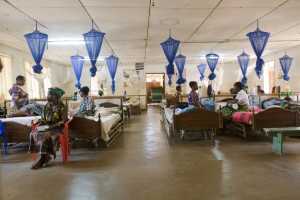
Climate Change: a Matter of Public Health
People have tried to cast climate change as an environmental issue, a social justice issue and a development issue. Madeleine Thomson of the International Research Institute for Climate and Society argues climate change can be understood much better if we consider it an issue of global public health.
-

Student Research Showcase 2014
The Earth Institute, Columbia University was proud to support student research in the areas of environment and sustainable development at the annual Student Research Showcase on April 25, 2014. Student interns, research assistants and travel grant recipients, and their Faculty and Research Advisors, were honored for their research contributions that ranged in topics from biodiversity,…
-

In Haiti, Exploring What Drives People to Alter the Landscape
Study of the Pedernales Watershed, located along Haiti’s southern national boundary with the Dominican Republic, may provide insights into the stark contrast in land cover patterns between the two countries.
-

IPCC Says Managing Risks of Climate Change is Critical
Among the key findings of the WGII AR5 Report chapter on human security, a topic highlighted in the Report for the first time, is that societies in conflict are more vulnerable to climate change.
-

Mekong Delta and Three Gorges Dam: World’s First Climate Change Resettlements?
Many resettlers are economically better off, but the dislocations remain significant, especially for older resettlers, who have a harder time getting work in the newly developed industrial sector. Although the plight of some resettlers has been quite difficult (one older man competed fiercely to serve as a porter for us for the royal sum of…
-

Using Technology for Development in NYC
Very little has been discussed on how information and communication technologies can provide opportunity to middle and lower-income citizens in developed countries and cities, such as New York City and its five boroughs. New data released by the Census Bureau shows that even as the recession has ended, the city’s poverty rate continues to increase…
-
An Inside Look at “The Toughest Job You’ll Ever Love”
This semester, the Undergraduate Program in Sustainable Development was pleased to host Carey Clinton, Regional Recruiter, and BriAnne Watkins, Assessment Specialist Recruiter, of the Peace Corps at the Earth Institute as part of the Sustainability Speaker Series.
-

Science and Solutions for Sustainable Development: 2013 Annual Report
The Earth Institute is grateful to its many partners for their important role in the effort to develop the science and solutions necessary for sustainable development. Please visit the interactive digital 2013 Annual Report to read more about how we are forging partnerships across disciplines and sectors to advance the global effort to guide our…
-

Coastal Erosion and Adaptation to Climate Change
Increasing understanding of the extent of coastal erosion and its interaction with other naturally existing geographical features such as mangrove vegetation is one of the areas of research that may help reduce vulnerability of small-island developing states to climate hazards.


By studying thousands of buildings and analyzing their electricity use, Columbia Climate School Dean Alexis Abramson has been able to uncover ways to significantly cut energy consumption and emissions. Watch the Video: “Engineering a Cooler Future Through Smarter Buildings“
