Posts
-
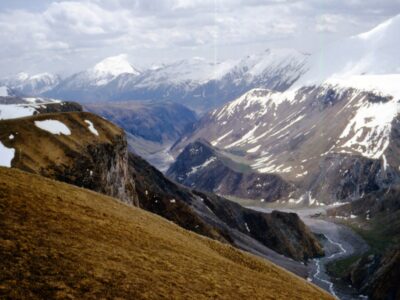
New Climate Finance Initiative Supports Climate Adaptation Efforts in Glacier-Dependent Regions
A newly approved $250 million from the Green Climate Fund will target glacier melt in Central Asia, the South Caucasus and Pakistan, offering an example of large-scale climate finance for adaptation.
-
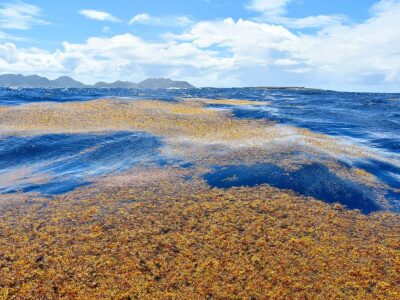
Harnessing AI, Scientists Discover a Rise in Floating Algae Across the Global Ocean
A recent study demonstrates the power of artificial intelligence as a tool for processing large amounts of ocean data.
-
Leveraging Risk Communications to Bridge Tribal Voices
A new, collaborative project aims to elevate and bridge Tribal voices in disaster risk communication.
-
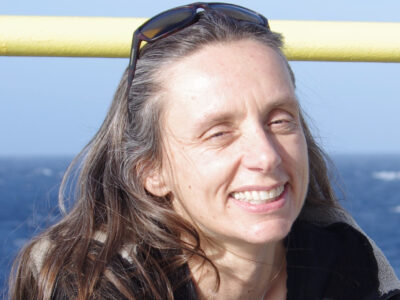
Women in Science: Climate Scientist Gisela Winckler
Winckler focuses on the history and causes of past, present and future climate variability, as well as the ocean’s role in the climate system and the carbon cycle.
-
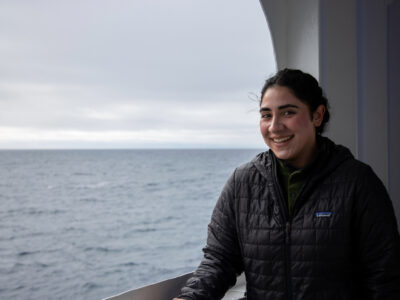
Women in Science: Paleoceanographer Apollonia Arellano
Arellano uses geochemical analyses to reconstruct deep ocean circulation in the North Atlantic Ocean.
-
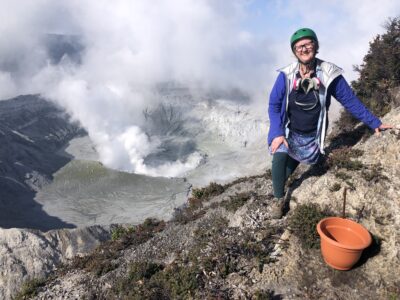
Women in Science: Geochemist Terry Plank
Award-winning geochemist and volcanologist Terry Plank studies the phenomena shaping the Earth’s crust and how they affect the world’s volcanoes.
-

Women in Science: Disaster Preparedness Researcher Das Dores Ngueussie Ngamini
Ngamini uses her background in atmospheric sciences and climate modeling to support research and solutions for climate adaptation and disaster preparedness.
-

Women in Science: Climate Impact Researcher Sanketa Kadam
In honor of International Day of Women and Girls in Science, we’re featuring Kadam, who researches compound extreme events in India and their impacts on crops and farmland.
-
Celebrating the 2026 International Day of Women and Girls in Science
In honor of this year’s theme, “Synergizing AI, Social Science, STEM and Finance: Building Inclusive Futures for Women and Girls,” we’re highlighting just some of the exceptional women researchers from the Columbia Climate School.


