climate change129
-
On the Subject of Dust
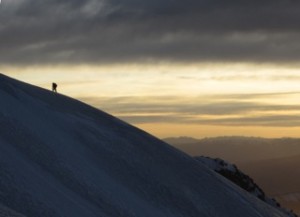
Our field team has set camp at 5045 m on the dusty slopes of Ampato, an extinct, ice-clad volcano in the Western Cordillera. This is the very mountain from which Juanita, the famous Incan ‘ice maiden’, was plucked back in 1995. The tents are clustered in the lee of a large glacial erratic and, now…
-

The Year of Drought and Flood
It seems that this year the world is experiencing a crisis of both too little water and too much. And while these crises often occur simultaneously in different regions, they also happen in the same places as short, fierce bursts of rain punctuate long dry spells.
-

Somali Drought; Harbinger of Hard Times
For all its problems, Southern California has been a wonderful home for a lot of people over the past 100 or so years. It has nice beaches, good roads, plenty of places to eat, and, for now, a reliable supply of drinking water. Now imagine the L.A. riots had spread across the entire region, plunging…
-

Going West
After a busy few weeks in the Cordillera Carabaya, our field team has said goodbye to the snowy, tempestuous climate of the eastern Andes and is moving west to the desert of Arequipa. Here the mountains are massive, isolated volcanoes, many of which exceed 6000 m in elevation. In fact, Coropuna is the third highest…
-

Climate News Roundup: Week of 7/10
Climate Change Drives Disease in Crucial Seaweed Species, Study Finds, Reuters, Jul 12 A new study from the University of New South Wales in Sydney links the spread of disease in a type of seaweed that is critical for marine life to climate change. Through field and lab observations, the researchers discovered that in warmer…
-

Mad Dogs and Englishmen
Our field team has acquired a dog, ¨”Mooch”. Walking back to camp yesterday, amid driving snow and fully laden with rock samples, there he was exploring what passes for our kitchen. Unlike most Andean dogs – ferocious beasts trained to keep geologists from harassing the livestock – this one is a cheerful soul, happy to…
-

Studying the Farthest-North Trees
A team led by Kevin Anchukaitis of the Lamont-Doherty Earth Observatory Tree Ring Lab is currently in Alaska’s Arctic National Wildlife Refuge, studying the effects of changing climate on trees. Working near the treeline, they’re taking cores from spindly white spruces to measure weather of the past.
-

Can the Oceans Keep Mopping Up Carbon Dioxide?
The oceans absorb nearly a third of the carbon dioxide humans put into the air, and this has helped offset CO2’s potential to warm global temperatures. But many researchers think the oceans are struggling to keep pace with rising emissions. A new study looks at 30 years of data to see how natural variability and…
-

Ancient mud from the high Andes
Thanks in large part to Matt, an undergraduate from Pacific Lutheran University in Washington, our field team now has more than sixty samples for surface-exposure dating. This is no easy feat, for collecting these samples requires a great deal of hammering on granite boulders with nothing more than a hammer and chisel. There are other…


AGU25, the premier Earth and space science conference, takes place December 15-19, 2025 in New Orleans, Louisiana. This year’s theme—Where Science Connects Us—puts in focus how science depends on connection, from the lab to the field to the ballot box. Once again, Lamont-Doherty Earth Observatory and Columbia Climate School scientists, experts, students, and educators are playing an active role, sharing our research and helping shape the future of our planet. #AGU25 Learn More
