climate change131
-
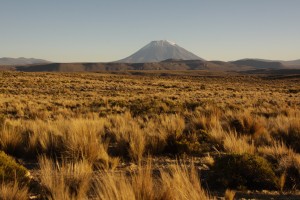
Into Thin(ner) Air – On Route to the Cordillera Carabaya
This morning we left Arequipa and the comforts of the tourist trail, driving east across the puna towards the Andes proper. Our route took us along the newly constructed Caraterra Interoceanica – a highway linking the Pacific coast of Peru to ports in Brazil – and up to elevations of 4700 m. Along the way…
-

At the Feet of El Misti
What a difference a day makes! We’ve said goodbye to the sprawling metropolis of Lima and now are happily settled in Arequipa – the White City. This name refers to the white sillar rock used in the construction of the old colonial city and which is in fact a pyroclastic deposit from the volcanoes towering…
-

Off to Lima, World’s Second Largest Desert City
18th June 2011 Lima, Peru Our 2011 field season is underway. After a full day’s travel from New York, we arrived in Lima, the capital of Peru. This sprawling city perched on the edge of the Pacific Ocean is home to more than nine million people and, after Cairo, is the largest desert city in…
-

Deciphering Past Climate Change in the High Andes
High above the tropical lowlands, the Andes form a formidable topographic barrier separating the coastal deserts in the west from the Amazon rainforest to the east. The Peruvian Andes are the highest peaks in all the tropics and, despite their proximity to the equator, are mantled with snow and ice. However, the glaciers clinging to…
-

Climate News Roundup: Week of 6/12
California re-embraces carbon market, Reuters, June 13 After a court ordered California to consider alternatives to cap and trade, the Air Resources Board published a 120-page policy analysis on Monday, examining five approaches to cut emissions, including a carbon tax, direct regulation of power plants and big factories, and a cap-and-trade system. The report concludes…
-

To the tip of the Andes
In the semi-arid Andes, glaciers store water and control the runoff of mountain rivers. They feed water to big cities such as Lima and Arequipa and irrigate the surrounding lowlands. But as the planet warms, mountain glaciers in the tropics are receding steadily. Despite their paramount importance, we don’t know the scale and the rate…
-

Climate Change Threatens Fragile Ecosystem in the Andes
A new audio slideshow about the páramo ecosystem in the Andes, at risk of becoming drier because of changing climate conditions
-

Losing Our Coral Reefs
Coral reefs, the “rainforests of the sea,” are some of the most biodiverse and productive ecosystems on earth. But tragically, they are in crisis.
-

Time and Technology and the Really Down Deep
Two years before Google Earth was launched, Bill Ryan and Suzanne Carbotte, oceanographers at the Lamont-Doherty Earth Observatory, began a project to transform the way we look at the ocean. They started collecting reams of data that had been gathered by scientists sailing on research vessels all over the world since the 1980s, one ship…


AGU25, the premier Earth and space science conference, takes place December 15-19, 2025 in New Orleans, Louisiana. This year’s theme—Where Science Connects Us—puts in focus how science depends on connection, from the lab to the field to the ballot box. Once again, Lamont-Doherty Earth Observatory and Columbia Climate School scientists, experts, students, and educators are playing an active role, sharing our research and helping shape the future of our planet. #AGU25 Learn More
