climate change20
-

How to Defeat the Climate Change Complexity Monster
Use key questions to cut amorphous slogans like “climate emergency” into addressable pieces.
-

Vikings Abandoned Greenland Centuries Ago in Face of Rising Seas, Says New Study
Counterintuitively, seas were rising around Greenland as it went through a cold period centuries ago. This helped drive out Viking colonists, says new research.
-

Land Subsidence in the Netherlands
At a symposium on land subsidence, I learned about how the Dutch transformed their country so that about a quarter of it is below sea level and how they cope with it.
-

New Program for High School Students Will Explore Climate Complexity in Chile and Argentina
A Columbia Climate School expert shares her goals for the Climate Corps Pre-College Chile and Argentina Program.
-

1,000-Plus Years of Tree Rings Confirm Historic Extremity of 2021 Western North America Heat Wave
Scientists quickly pronounced the summer 2021 heat wave that hit western North America to be unprecedented, but they had no long-term physical proof. Now they do.
-

“Urgency. Gravity. Hope.” World’s Top Climate Report Highlights Dire Need for Climate Action
The Intergovernmental Panel on Climate Change’s assessment report issues catastrophic warning if immediate climate action is not taken by governments across the globe.
-

Without Changes, Global Food Systems May Drive World Beyond Climate Targets, Says Study
Production of meat, dairy and rice are the leading sources of food-related emissions. Improved management practices and changes in diet could go a long way to addressing the issues.
-

Flooding in Jakarta: A Call to Increase Climate Change Awareness
Despite being frequent victims of climate-driven disasters, Indonesians are largely unaware of climate change and its impacts. Education, media attention, and conversations could be key to shifting those perceptions.
-

Climate Education in the U.S.: Where It Stands, and Why It Matters
Young people need to learn about climate change because it is going to shape their futures in many ways. What are they learning about it in school?


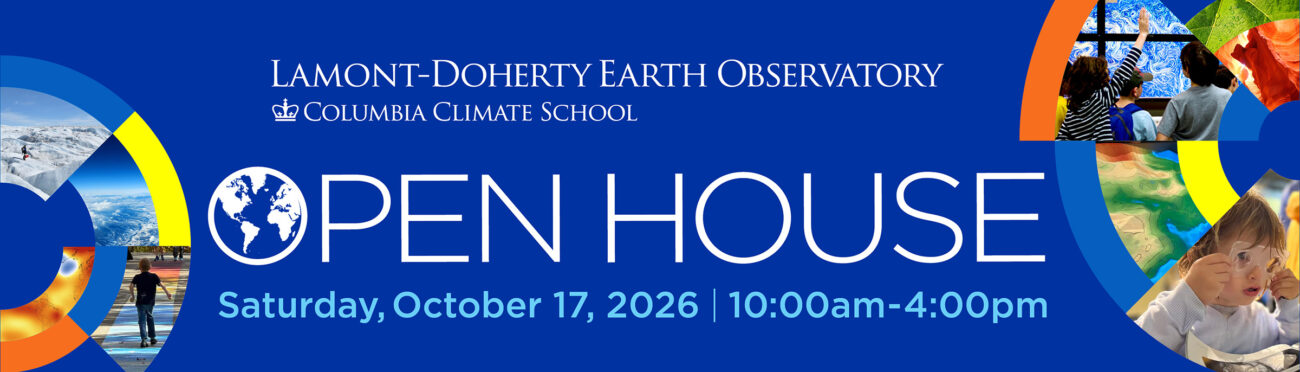
On Saturday, October 17, 2026 from 10am to 4pm, Lamont-Doherty Earth Observatory Open House—our biggest, best science fun and discovery event of the year—will take place on our beautiful campus in Palisades, NY. Mark your calendar and join us for this free, family-friendly celebration of science! RSVP Today!
