climate change77
-

Humidity May Prove Breaking Point for Some Areas as Temperatures Rise, Says Study
A new study projects that in coming decades the effects of high humidity in many areas may surpass humans’ ability to work or, in some cases, even survive.
-

In Antarctica, Enough is Never Enough
Almost out of nowhere we were given a surprise opportunity to fly one more survey line on our second-to-last day in Antarctica, and we jumped at it!
-

What Caused the Great Famine?
Scientists are unraveling the driving forces of one of the worst environmental disasters in human history, in hopes of predicting and preparing for the next global drought.
-

How Can Changing Climate Affect a Civilization?
Billy D’Andrea is trying to understand Easter Island’s climate history over the last few thousand years and how communities dealt with past climate change.
-

Columbia Climate Scientist Joins Quest to ‘Make Our Planet Great Again’
The International Research Institute for Climate and Society’s Alessandra Giannini was selected as one of French President’s Macron’s climate laureates.
-

Tiny Losses of Ice at Antarctica’s Fringes May Hasten Declines in Interior
A new study shows that even minor deterioration of ice shelves can instantaneously hasten the decline of ice hundreds of miles landward.
-

Professor Dong Guo: China, Peer Effect and Sustainability
Sustainability isn’t just about the environment. Guo explains how social and economic factors, like employment and education, fit in.
-

The Greenland Ice Sheet Is Sponging Up Meltwater
As climate warms, the surface of the Greenland ice sheet is melting, and all that meltwater ends up in seasonal rivers that flow to the sea. At least that is what scientists have assumed until now. A new study has shown that some of the meltwater is actually being soaked into porous subsurface ice and…
-

How to Make the Holidays More Sustainable
It can be tough to balance holiday celebrations with a sustainable lifestyle, but there are ways to make greener choices without becoming a grinch.


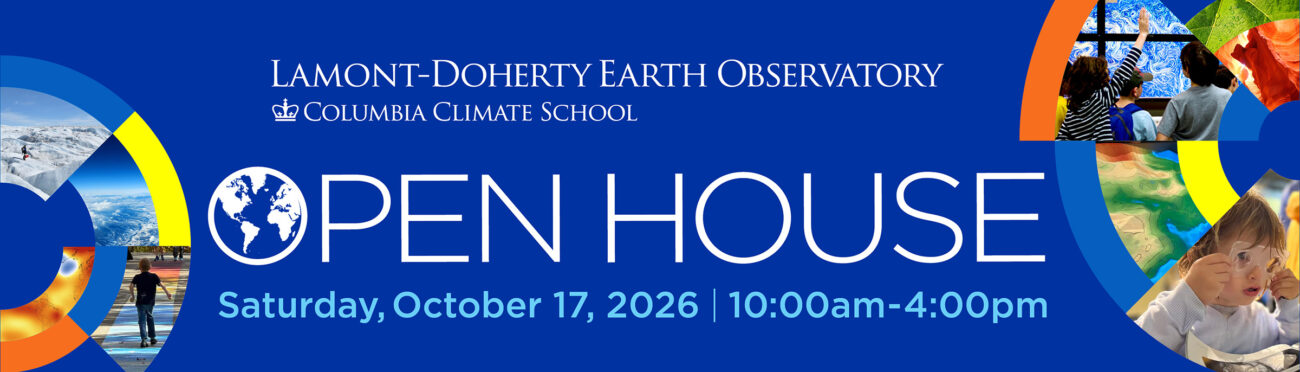
On Saturday, October 17, 2026 from 10am to 4pm, Lamont-Doherty Earth Observatory Open House—our biggest, best science fun and discovery event of the year—will take place on our beautiful campus in Palisades, NY. Mark your calendar and join us for this free, family-friendly celebration of science! RSVP Today!
