climate science12
-

Wallace Broecker, Prophet of Climate Change
Wallace Broecker, a geochemist who initiated key research into the history of earth’s climate and humans’ influence upon it, died Feb. 18 in New York. He was 87.
-

Confirming Long-Term Trend, 2018 Was Fourth Warmest Year on Record
Earth’s global surface temperatures in 2018 were the fourth warmest since modern record keeping began in the 1880s, according to independent analyses by NASA and the National Oceanic and Atmospheric Administration.
-

Autonomous Robots Carry Out First Long-Term Missions Under Antarctic Ice
A team of autonomous ocean robots deployed in January 2018 has carried out the first year-long observations under an Antarctic ice shelf.
-

Uncovering the Future of Greenland’s Ice Sheet
Joerg Schaefer and Gisela Winckler, scientists at Lamont-Doherty Earth Observatory, received funding from the Center for Climate and Life to examine the vulnerability of Greenland’s massive ice sheet.
-

Climate-Driven Fires Could Turn Yellowstone Forests to Grassland By Midcentury
A new study shows that some of Yellowstone National Park’s forests may be at a climate tipping point, and could be replaced by grassland by the middle of this century.
-

American Geophysical Union 2018: Key Events From the Earth Institute
The American Geophysical Union fall meeting takes place Dec. 10-14 in Washington, D.C. Here is a guide to key talks and other events from Columbia’s Earth Institute.
-

A New Primer on Climate Change
A Q&A with Jason Smerdon, coauthor of the newly revised Climate Change: The Science of Global Warming and Our Energy Future.
-

M.S. Sustainability Science Student Aims To Make Scientific Models Accessible For Communities
Isabela Brown wants to use her graduate degree to integrate social, political, and scientific frameworks into environmental models.
-

Researchers Say an 1800s Global Famine Could Happen Again
The Global Famine was one of the worst humanitarian disasters in history, killing as many people as World War II. A new analysis suggests it could happen again, only worse because of climate change.


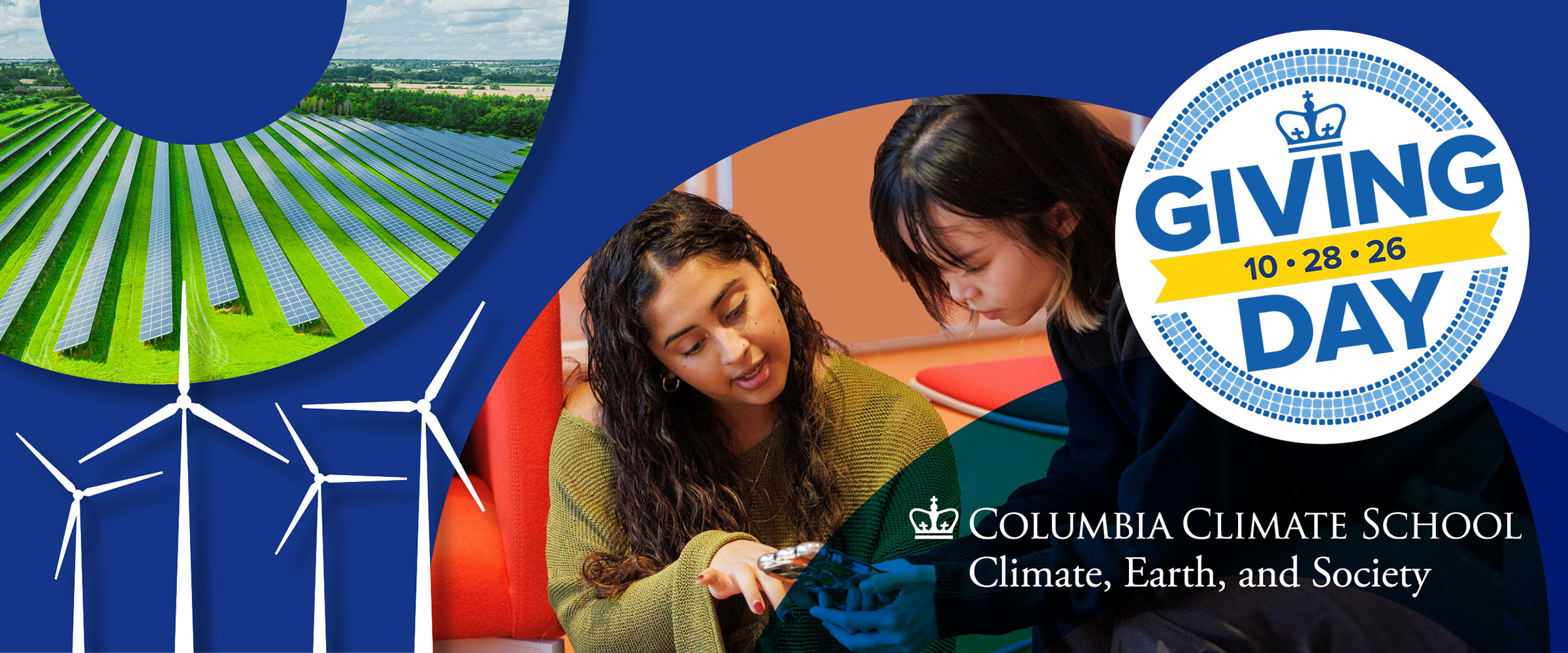
October 28, 2026 is Columbia Giving Day! Your gift to Columbia Climate School helps advance interdisciplinary research, educate the next generation of leaders, and transform bold ideas into real-world solutions for climate, Earth, and society.
