conservation11
-
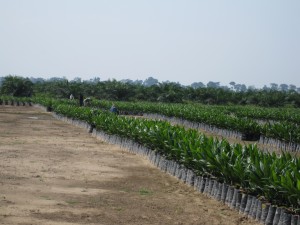
Can Intensive Farming Save Tropical Forests?
With 7 billion people on the planet and some 40 percent of earth’s land surface already covered with croplands and pastures, the only remaining frontiers for agricultural expansion are dwindling tropical forests. Some see high-yield industrial-scale farming as a way to take the pressure off; the theory goes that if more produce can be grown…
-

Opening the Door to More Rooftop Farming?
The NYC Department of City Planning has proposed new zoning rules to make it easier to retrofit buildings for energy efficiency – including a provision on rooftop greenhouses.
-

One Billion Gallons a Day, Naturally
If not for the amazing feats of planning and engineering that provide access to clean water, New York City would never have become the essential node in the many meshworks of the world that it is today.
-

Online Course – Introduction to Environmental Policy
We are excited to let you know that CERC is offering a piloted version of Introduction to Environmental Policy online as part of our Executive Education Program in Conservation and Environmental Sustainability.
-

Ecosystem Services for Conservation
Register for Ecosystem Services for Conservation and Poverty Reduction.
-

Greenbuilding in Riverside Park
Preview of carbon-neutral facility, built of recycled materials that will operate entirely off the grid in Riverside Park.
-

The Buzz on Elephants
African-born, Oxford-trained biologist Lucy King recently won an award for a promising solution to a longstanding problem in Africa—elephants raiding crops.
-

Farmers, Flames and Climate: Are We Entering an Age of ‘Mega-Fires’?
For millennia, people have set fires to clear land for cultivation, pastures or hunting; so-called slash-and-burn agriculture is still common across much of tropical Africa, Asia and South America. It has been a useful strategy–but …
-

Two Wren Brains Are Better Than One
When researchers observed activity in the brains of plain-tailed wrens while singing, they discovered something striking: In both sexes, the neurons reacted more strongly to the duet song than individual contributions — they are seemingly wired to enhance cooperation.


The first Earth Day in 1970 ignited a movement to stop polluting our planet. Today, our scientists and experts are tackling the most pressing challenges to achieve real-world impact. This Earth Day, join us in our commitment to realizing a just and sustainable future for our planet. Visit our Earth Day website for ideas, resources, and inspiration.
