Indigenous Rights
-
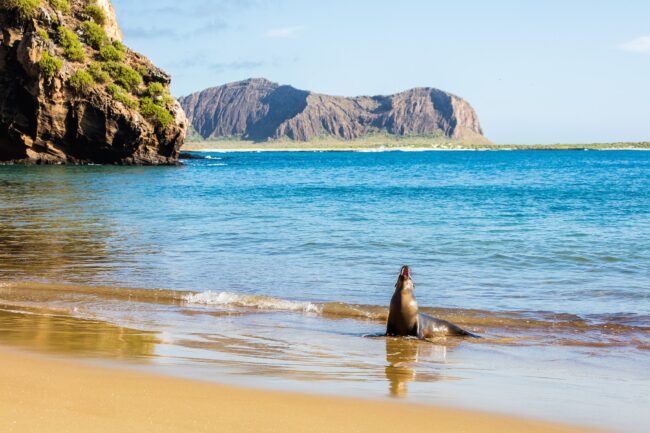
Ecuador’s High-Stakes Vote: Will the Galápagos Become a U.S. Navy Outpost?
Ecuadorians will vote whether or not to overturn the current constitution. If the referendum passes, it will likely dismantle the Rights of Nature, which is indirectly on the ballot, and also formally allow Ecuador to host foreign bases.
-

At a Conference in Nepal, Indigenous-Led Research and Education Will Take Center Stage
An assembly later this month will showcase Indigenous contributions to addressing climate change and sustainable development through traditional knowledge and community-driven solutions.
-

Alaska Challenges Reinstated Protections for Tongass National Forest
A coalition of Alaskan groups have challenged the Biden administration’s reinstated rules to protect the Tongass National Forest, a major carbon sink that is crucial to Indigenous groups, local biodiversity and the Alaskan economy.
-

Just Transitions: Can Wind and Solar Projects Turn Human Rights Lessons Into Leadership?
Wind and solar projects have a human rights problem. But they don’t have to.
-

Leaders from Glaciated Regions Highlight Importance of Women, Youth, and Indigenous Peoples at COP26
They discussed adaptation strategies for mountain regions.
-

Protecting Temperate Old-Growth Rainforest is Key for a Sustainable Future
As tensions run high between environmental activists, loggers and government in British Columbia, Canada, there may be more at risk than we think.
-

Tidal Communities Make Their Case for Shaping Resilient Coastal Futures
A recent conversation focused on three coastlines where Indigenous and Black communities are caught between rising seas and societal and development threats on land.
-

Strengthening the Rights of Forest Guardians Can Reduce Future Pandemic Risk
A recent webinar discussed a critical yet often overlooked strategy for pandemic mitigation: securing the rights of Indigenous forest guardians.
-

World is Not on Track to Achieve Global Deforestation Goals
Progress requires large-scale development projects to increase transparency and inclusion of grassroots and Indigenous groups.


The first Earth Day in 1970 ignited a movement to stop polluting our planet. Today, our scientists and experts are tackling the most pressing challenges to achieve real-world impact. This Earth Day, join us in our commitment to realizing a just and sustainable future for our planet. Visit our Earth Day website for ideas, resources, and inspiration.
