State of the Planet

News from the Columbia Climate School

International Research Institute for Climate and Society29

  • The Truth About Verification

    The Truth About Verification

    The December 2011 precipitation forecast issued by the International Research Institute for Climate and Society called for a 75 percent chance of above normal precipitation over parts of the Philippines between January and March. As the months played out, storms brought roughly eight inches more rain than usual for the period. That’s about 85 percent…

  • Breaking the Poverty Trap in Ethiopia: Subsistence, Satellites, and Some Other Important Stuff

    Breaking the Poverty Trap in Ethiopia: Subsistence, Satellites, and Some Other Important Stuff

    Two acres of cracked earth. In northern Ethiopia, it can be a trap that keeps farmers tethered to it for generations. Or it can be a springboard to a better life for this and future generations. What impedes it from showing its springier qualities? You could argue the biggest pressure on the land comes from…

  • An Interactive Map of Scientific Fieldwork

    An Interactive Map of Scientific Fieldwork

    Earth Institute scientists explore how the physical world works on every continent — over and under the arctic ice, in the grasslands of Mongolia, on volcanoes in Patagonia, over subduction zones in Papua New Guinea, and on the streets of New York City.

  • More Food Insecurity Expected in Horn of Africa

    More Food Insecurity Expected in Horn of Africa

    The current rainy season in the Horn of Africa is off to a poor start, and fear of famine once again looms large for the region.

  • Climate Services: Power in Numbers

    Climate Services: Power in Numbers

    Many countries and organizations are already investing in climate services, says IRI’s Steve Zebiak. What has been missing until recently is a central platform for capturing experiences and sharing best practices–enter the Climate Services Partnership.

  • Climate Services: Bring In Many Perspectives, Early On

    Climate Services: Bring In Many Perspectives, Early On

    What’s a “climate service”? Depends on whom you ask, which is why it is crucial to bring as many different perspectives to the table, says Guy Brassuer, head of Germany’s Climate Service Center.

  • A Model for Improving Climate Services in Africa

    A Model for Improving Climate Services in Africa

    A groundbreaking set of new online climate data maps for Ethiopia gives users free access to 30 years of rainfall and temperature data for the entire country at the click of a button. This is unprecedented anywhere in Africa.

  • Climate Services: Global Framework

    Climate Services: Global Framework

    Jerry Lengoasa, Deputy Secretary General of the World Meteorological Organization — How do we bridge the gap between those who have the knowledge and those who don’t, those who have the capacity and those who don’t have the capacity, and the capability?

  • Climate Services: A Private-Sector Perspective

    Climate Services: A Private-Sector Perspective

    For the private sector, climate services need to be framed in terms of business risks and drivers, says Jean-Cristophe Amado, Risk Manager at Acclimatise North America.

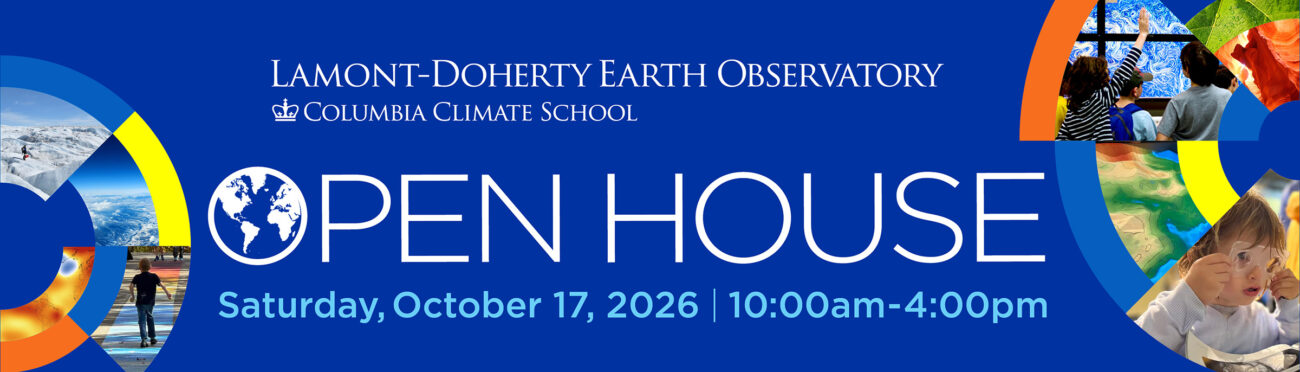
Blue banner with kids and Earth photos. Text: "Lamont-Doherty Earth Observatory Open House, Saturday, October 17, 2026, 10am-4pm.

On Saturday, October 17, 2026 from 10am to 4pm, Lamont-Doherty Earth Observatory Open House—our biggest, best science fun and discovery event of the year—will take place on our beautiful campus in Palisades, NY. Mark your calendar and join us for this free, family-friendly celebration of science! RSVP Today!

  • The Truth About Verification

    The Truth About Verification

    The December 2011 precipitation forecast issued by the International Research Institute for Climate and Society called for a 75 percent chance of above normal precipitation over parts of the Philippines between January and March. As the months played out, storms brought roughly eight inches more rain than usual for the period. That’s about 85 percent…

  • Breaking the Poverty Trap in Ethiopia: Subsistence, Satellites, and Some Other Important Stuff

    Breaking the Poverty Trap in Ethiopia: Subsistence, Satellites, and Some Other Important Stuff

    Two acres of cracked earth. In northern Ethiopia, it can be a trap that keeps farmers tethered to it for generations. Or it can be a springboard to a better life for this and future generations. What impedes it from showing its springier qualities? You could argue the biggest pressure on the land comes from…

  • An Interactive Map of Scientific Fieldwork

    An Interactive Map of Scientific Fieldwork

    Earth Institute scientists explore how the physical world works on every continent — over and under the arctic ice, in the grasslands of Mongolia, on volcanoes in Patagonia, over subduction zones in Papua New Guinea, and on the streets of New York City.

  • More Food Insecurity Expected in Horn of Africa

    More Food Insecurity Expected in Horn of Africa

    The current rainy season in the Horn of Africa is off to a poor start, and fear of famine once again looms large for the region.

  • Climate Services: Power in Numbers

    Climate Services: Power in Numbers

    Many countries and organizations are already investing in climate services, says IRI’s Steve Zebiak. What has been missing until recently is a central platform for capturing experiences and sharing best practices–enter the Climate Services Partnership.

  • Climate Services: Bring In Many Perspectives, Early On

    Climate Services: Bring In Many Perspectives, Early On

    What’s a “climate service”? Depends on whom you ask, which is why it is crucial to bring as many different perspectives to the table, says Guy Brassuer, head of Germany’s Climate Service Center.

  • A Model for Improving Climate Services in Africa

    A Model for Improving Climate Services in Africa

    A groundbreaking set of new online climate data maps for Ethiopia gives users free access to 30 years of rainfall and temperature data for the entire country at the click of a button. This is unprecedented anywhere in Africa.

  • Climate Services: Global Framework

    Climate Services: Global Framework

    Jerry Lengoasa, Deputy Secretary General of the World Meteorological Organization — How do we bridge the gap between those who have the knowledge and those who don’t, those who have the capacity and those who don’t have the capacity, and the capability?

  • Climate Services: A Private-Sector Perspective

    Climate Services: A Private-Sector Perspective

    For the private sector, climate services need to be framed in terms of business risks and drivers, says Jean-Cristophe Amado, Risk Manager at Acclimatise North America.