natural disasters5
-
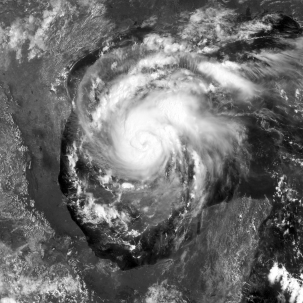
Hurricane Harvey: Resources for Journalists
Earth Institute experts are on-hand to answer media questions about hurricane physics, rapid intensification, emergency response, and more.
-

New Images From Under Alaska Seafloor Suggest High Tsunami Danger
Scientists probing under the seafloor off Alaska have mapped a geologic structure that they say signals potential for a major tsunami in an area that normally would be considered benign.
-

Palcacocha Icefalls Demonstrate Hazard Vulnerabilities in Peru
In the last week, calving events at Lake Palcacocha in the Peruvian Andes released masses of ice from a glacier on Mount Pucaranra, showing the weakness of the existing infrastructure designed to protect the region from floods.
-

The Role Of Government In Rebuilding After Disasters
The fundamental job of government is to provide security and safety for its people. Natural disasters may be predictable to some degree, but they are unavoidable. What is avoidable is the sense of economic hopelessness that follows these events.
-

Construction in the Swamp
Despite the miserable weather and ongoing rain, we constructed a wooden structure to hold the GPS receivers, solar panels and other electronic equipment between the three wells. We worked out how and where to mount the antennas and had parts made to accomplish it. Although I had to leave before it was completed, the team…
-

Connecting Space to Village in West Africa
A new project, SERVIR-West Africa, will use space-based climate, weather land cover, and other NASA satellite data to address issues such as food security and the availability of fresh water in Ghana, Burkina Faso, Senegal and Niger.
-

Learning from El Niño as La Niña Odds Rise
Although El Niño is weakening, its ramifications continue to be felt around the world. Drought and resulting food insecurity is one of the major implications for southeast Asia, eastern and southern Africa, Central America and the Caribbean. Sixty million are in need of emergency relief today, according to the United Nations.
-

Top Seismology Award Goes to Pioneer in Rock Mechanics: Christopher Scholz
For his pioneering work in rock mechanics and his skill at communicating earthquake science, Scholz is being honored on April 20 by the Seismological Society of America with its top award, the Harry Fielding Reid Medal.
-

Without the Montreal Protocol, More Intense Tropical Cyclones
Using one of the most advanced atmospheric computer models available, scientists compared our expected future with a scenario in which ozone-depleting substances had never been regulated.


The first Earth Day in 1970 ignited a movement to stop polluting our planet. Today, our scientists and experts are tackling the most pressing challenges to achieve real-world impact. This Earth Day, join us in our commitment to realizing a just and sustainable future for our planet. Visit our Earth Day website for ideas, resources, and inspiration.
