natural disasters8
-
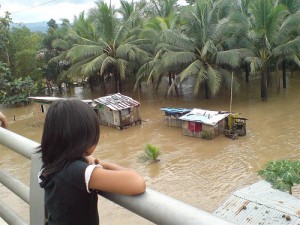
“You are Misinformed”–Planning for Flood Regime Change
Lately a lot of people are wondering just how helpful the 100-year flood benchmark really is, as places seem to be getting hit by 100-year floods all the time.
-

Before the Flood—Predicting the Deluge
The Columbia Global Flood Project is based on the conviction that while human beings may not have direct control of where and how much rain falls, there is a great deal more that can be done to manage the risk of extreme flooding around the world.
-

Floods and Coal – The Water-Energy Nexus Redux
Beyond the human toll, the floods in Australia have other repercussions, the most notable being the effect on the global coal market. According to Reuters, “Australia’s $50 billion coal export industry has been brought to a virtual standstill”.
-

Think Globally, Act Locally: Climate Adaptation in Action
Across Indonesia, several effective climate adaptation actions on local levels are underway. These actions serve as a reminder of the important change that starts with a community of dedicated individuals.
-
Climate Change Could Drive Vast Human Migrations
Displacements Already Underway, Says Report
-
Accounting for Katrina’s Dead
How do we fully account for the people killed by Hurricane Katrina? Should we count the kidney dialysis patient who died when treatment was interrupted? What about a despondent evacuee who committed suicide months after leaving New Orleans? Or the suspected looter shot in the street? More importantly, what happens to our understanding of the…
-
Hurricane Katrina: Don’t Blame Nature
by John Mutter It has been one year since hurricane Katrina laid waste to New Orleans and a sizeable stretch of the Gulf Coast. What made that event a disaster, however, happened well before the storm actually came ashore. With hurricanes, the rule for survival is simple — get out! If you get out you…
-
It’s 2025. Where Do Most People Live?
Researchers at the Center for Climate Systems Research (CCSR), a part of The Earth Institute, have developed a high-resolution map of projected population change for the year 2025. The innovative map shows a world with large areas of population loss in parts of Eastern Europe and Asia, but significant gains elsewhere. The work, Mapping the…
-
Study Shows Lack of National Consensus on Teaching K-12 Students about Human-Environmental Impacts
The destruction caused by natural disasters such as Hurricane Katrina and human activities such as mountaintop removal mining are powerful examples of how the environment and society are tightly interwoven. But to what extent do, or should, state science curricula in the U.S. seek to investigate or influence the nature of this interaction? That is…


The first Earth Day in 1970 ignited a movement to stop polluting our planet. Today, our scientists and experts are tackling the most pressing challenges to achieve real-world impact. This Earth Day, join us in our commitment to realizing a just and sustainable future for our planet. Visit our Earth Day website for ideas, resources, and inspiration.
