At this year’s COP climate summit in Antalya, Türkiye, world leaders, citizens, academics, activists, scientists, students and community representatives will join together once again to strategize, implement and take stock of the global fight against climate change.
Between November 9 and November 20, Columbia and Climate School representatives will be among COP31 attendees, giving presentations, hosting panels and fostering connections that could lead to ambitious collaborations. Below, they share their hopes and expectations for the conference.
You can read about additional COP31 coverage and events here.
Alexis Abramson

What will you be doing at COP31?
I look forward to representing the Columbia Climate School and supporting events that emphasize the role higher education can play in generating and promoting climate solutions. I will also moderate a panel called “From Climate Ambition to Implementation: Financing the Systems That Deliver,” where we’ll discuss practical approaches to financing system-wide transitions and accelerating implementation of the Paris Agreement. Throughout the conference, I plan to continue building partnerships, connecting with colleagues from around the world and identifying how the Climate School’s work can translate into practical solutions.
What do you think COP31 should focus on?
Last year in Belém, adaptation was a central focus, particularly how to help vulnerable countries and communities pay for and manage the consequences of climate change. I would like COP31 to be the place where we focus on delivery. On finance, I hope to see a more concrete plan for turning the $300 billion-a-year goal into real funds available for adaptation, mitigation and the phasing out of fossil fuels. I also hope we’ll sharpen how we measure adaptation and resilience, so we can better understand needs and track progress.
What are some takeaways you’d like to see come out of the summit, even without an official delegation from the U.S. this year?
The U.S. has historically been an influential negotiator, but my experience at COP30 showed me that the process keeps moving forward. The EU, China and many others are taking significant climate action. Many people from the U.S. were also at COP30, representing businesses, universities, NGOs, cities and states. They are working to implement solutions and will continue to do so. The economics alone make the case for the clean energy transition, and that is an important driver of U.S. participation.
Romany M. Webb

What will you be doing at COP31?
I will be participating in various workshops and other discussions focused on advancing innovative climate solutions. There are two areas that I’m particularly excited to have the opportunity to speak about. The first is ocean-based climate solutions. As the U.N. has said, the ocean “is the world’s greatest ally against climate change,” with the potential to contribute to both mitigation and adaptation goals. Countries have started to recognize this but, still, ocean-based climate solutions remain under-funded and under-utilized. COP31 has the potential to change that. The COP31 Action Agenda listed “oceans and seas” as one of 10 priority areas and November 17 has been designed as “Oceans Day.” On that day, I’ll be speaking at the Ocean Pavilion about a new UNEP report I co-authored, which discusses the need for responsible development of ocean-based climate solutions, like blue carbon ecosystem restoration.
A second, related area of focus for me at COP31 is carbon dioxide removal (CDR). The recent “Limiting Overshoot” report from the U.N. made clear that we need CDR, not only to get to net zero, but also to address temperature overshoot. I’m looking forward to connecting with others working on CDR to discuss how to responsibly scale-up these technologies both on land and in the ocean.
What do you personally hope to achieve while you’re there?
I am looking forward to connecting with existing partners and building new relationships with policymakers and practitioners. I hope to have the opportunity to share with them some of the work we are doing at the Sabin Center for Climate Change Law on issues relating to the energy transition, climate finance, climate litigation and much more. The various tools and resources the Sabin Center makes available can help government, business and community leaders advance action on climate change, but only if they know about them, so getting the word out is important. Equally important, I want to hear from these leaders about where they see gaps or have needs that we could help address, through research or other work.
What are some larger-scale actions or takeaways you’re hoping to see come out of the summit?
The organizers of COP31—Türkiye and Australia—have said they want it to be “a COP of implementation and acceleration.” I very much hope they can deliver on that. For so many years now, we’ve seen countries make big commitments at COPs, but nothing actually change on the ground. That can’t continue. We need countries, especially Global North countries, to step up on things like climate finance, technology transfer and capacity building. I will be watching closely what happens in those areas.
As part of that, I’m keen to see whether and how the COP31 Presidency’s proposed Climate Implementation Bridge will be operationalized. The goal of the bridge is to help Global South countries overcome barriers to climate projects, including by improving access to finance. That will be important across a range of sectors, but especially for ocean-based climate solutions which, for various reasons, are particularly difficult to finance. Globally over the last decade, just $13 billion was directed towards ocean-climate sustainability, which is well short of the estimated $550 billion needed each year. I hope COP31 delivers practical solutions to overcome these sorts of challenges.
Rebecca Lowy
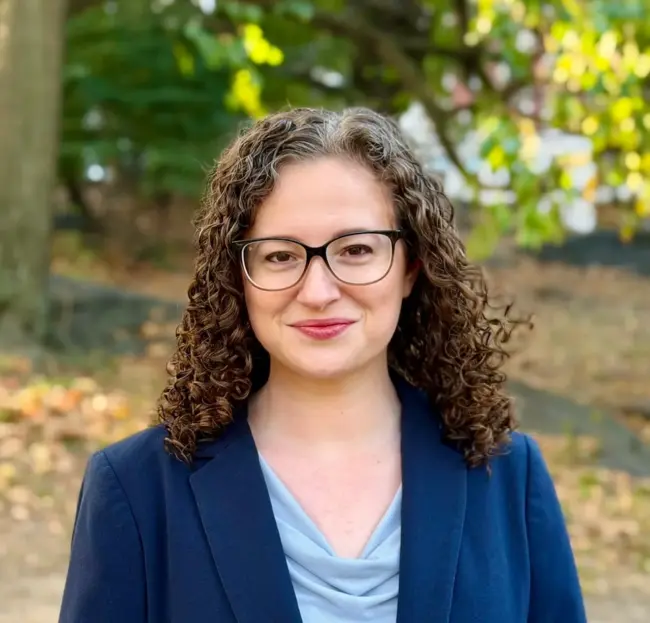
What will you be doing at COP31?
I am acting as a Liaison Officer for Legal Response International, which provides free legal support to developing countries as well as civil society observer organizations during the COPs. I will be managing legal queries from delegates and coordinating with our team of experts to provide responses during negotiations.
What do you personally hope to achieve while you’re there?
I hope to support climate decision-making by providing vital legal resources to developing country delegations. I also look forward to gaining first-hand insight into how multilateral negotiations unfold on the ground.
What are some larger-scale actions or takeaways that you’re hoping to see come out of the summit?
I’m hoping to see ambitious commitments to emissions reductions that directly plan for and manage the anticipated 1.5°C overshoot. I’m also watching how renewable energy is being framed as a buffer against fossil fuel market volatility and national security risks, which could boost efforts towards global electrification.


