Climate2
-
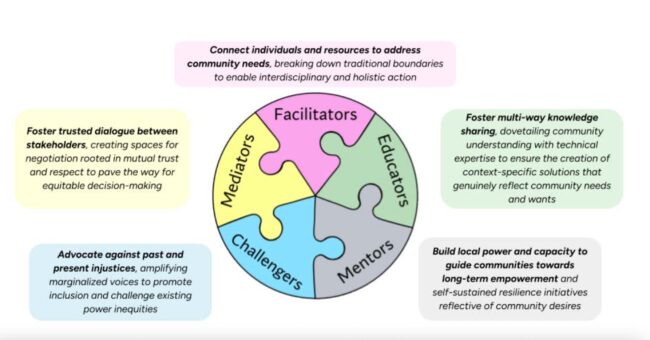
Planning Exercises That Got Community Engagement Right
The Resilient Coastal Communities Project has a new white paper that highlights examples of truly fair and accountable resilience planning.
-
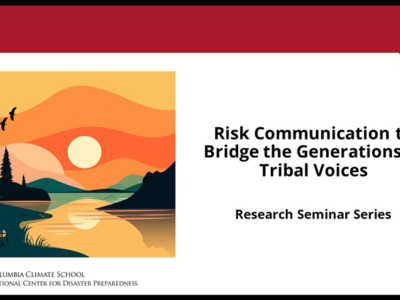
Leveraging Risk Communications to Bridge Tribal Voices
A new, collaborative project aims to elevate and bridge Tribal voices in disaster risk communication.
-

Women in Science: Climate Scientist Gisela Winckler
Winckler focuses on the history and causes of past, present and future climate variability, as well as the ocean’s role in the climate system and the carbon cycle.
-
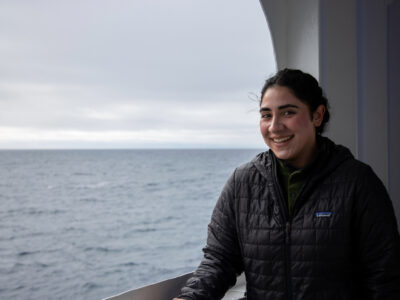
Women in Science: Paleoceanographer Apollonia Arellano
Arellano uses geochemical analyses to reconstruct deep ocean circulation in the North Atlantic Ocean.
-

Women in Science: Disaster Preparedness Researcher Das Dores Ngueussie Ngamini
Ngamini uses her background in atmospheric sciences and climate modeling to support research and solutions for climate adaptation and disaster preparedness.
-

Women in Science: Climate Impact Researcher Sanketa Kadam
In honor of International Day of Women and Girls in Science, we’re featuring Kadam, who researches compound extreme events in India and their impacts on crops and farmland.
-
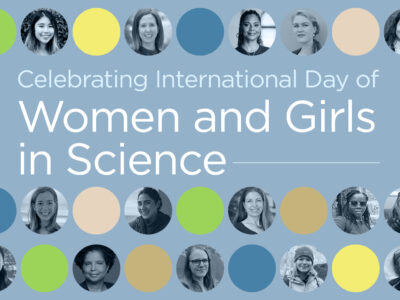
Celebrating the 2026 International Day of Women and Girls in Science
In honor of this year’s theme, “Synergizing AI, Social Science, STEM and Finance: Building Inclusive Futures for Women and Girls,” we’re highlighting just some of the exceptional women researchers from the Columbia Climate School.
-

How Can We Mend Our Living World?
An interdisciplinary panel discussed some of the complex issues facing our society as ecosystems collapse and relationships must be reevaluated.
-
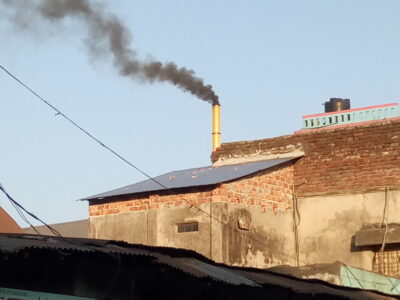
Can Carbon Markets Offset the Emissions We Can’t Eliminate?
A conversation about carbon markets with Shubham Deshmukh, a recent M.S. in Sustainability Management graduate.


The first Earth Day in 1970 ignited a movement to stop polluting our planet. Today, our scientists and experts are tackling the most pressing challenges to achieve real-world impact. This Earth Day, join us in our commitment to realizing a just and sustainable future for our planet. Visit our Earth Day website for ideas, resources, and inspiration.
