State of the Planet

News from the Columbia Climate School

Climate210

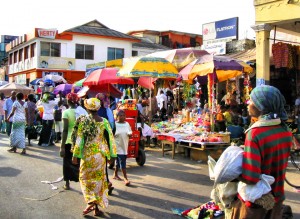
  • Farmers in Senegal Use Forecasts to Combat Climate Risks

    Farmers in Senegal Use Forecasts to Combat Climate Risks

    Recent trainings in Senegal have improved trust between farmers and researchers, leading to increased use of climate forecasts and other information.

  • Collecting Core Data About Arctic Ecosystems

    Collecting Core Data About Arctic Ecosystems

    Our team spent most of Friday on the Arctic sea ice, drilling and sampling ice cores at our main field site. For each core collected, Lamont-Doherty Earth Observatory scientists Andy Juhl and Craig Aumack take a number of different physical, chemical and biological measurements

  • Heat-Related Deaths in Manhattan Projected to Rise

    Killing Season May Push Into Spring and Fall, Says Study

  • What Lies Beneath Arctic Ice?

    What Lies Beneath Arctic Ice?

    On Thursday we lowered a camera into an ice borehole to get a look at the underside of the ice. In the following video, you can clearly see the algae living in the bottom of the ice due to their pigments, which they use to harvest light.

  • National Grid Joins the Corporate Circle

    National Grid Joins the Corporate Circle

    The Earth Institute is pleased to welcome National Grid into the Corporate Circle, a collective partnership of leading corporations from across the globe committed to pursuing sustainable development objectives. Through a generous gift, National Grid will support sustainable energy research at the Earth Institute.

  • Ice Capades

    Ice Capades

    Fieldwork is exciting and inspiring, leading scientists to new ideas, places and observations about how the world works. Spring on Alaska’s North Slope provides an especially productive environment for fieldwork. When the sun never sets, it’s easy to linger in the field and the lab long into the well-lit night.

  • Students Work on Net Zero Energy to Adaptation Planning Projects

    By Noah Morgenstein This past May, seniors in the Capstone Workshop in Sustainable Development delivered their final presentations to fellow students and faculty at Columbia University. The workshop is a required course for students in the Sustainable Development major or special concentration. Unlike traditional courses, the workshop requires students to work collaboratively on a client project…

  • Settling in to Work and Life in Barrow

    Settling in to Work and Life in Barrow

    While I arrived in Barrow, Alaska on Tuesday, Lamont-Doherty Earth Observatory scientists Andy Juhl and Craig Aumack, and graduate student Kyle Kinzler from Arizona State University, got here one week ago.

  • Measuring the Effect of China’s Arctic Interests

    Measuring the Effect of China’s Arctic Interests

    Of non-Arctic states, China has shown the most interest in the Arctic as climate change opens up the region to new economic development. The ways in which China attempts to balance its economic interests and environmental responsibilities within its energy policy may provide a predictor of its future behavior in the Arctic.

Composite banner with modern building at night and portrait of Dean Alexis Abramson that reads "Science for the Planet"

By studying thousands of buildings and analyzing their electricity use, Columbia Climate School Dean Alexis Abramson has been able to uncover ways to significantly cut energy consumption and emissions. Watch the Video: “Engineering a Cooler Future Through Smarter Buildings

  • Farmers in Senegal Use Forecasts to Combat Climate Risks

    Farmers in Senegal Use Forecasts to Combat Climate Risks

    Recent trainings in Senegal have improved trust between farmers and researchers, leading to increased use of climate forecasts and other information.

  • Collecting Core Data About Arctic Ecosystems

    Collecting Core Data About Arctic Ecosystems

    Our team spent most of Friday on the Arctic sea ice, drilling and sampling ice cores at our main field site. For each core collected, Lamont-Doherty Earth Observatory scientists Andy Juhl and Craig Aumack take a number of different physical, chemical and biological measurements

  • Heat-Related Deaths in Manhattan Projected to Rise

    Killing Season May Push Into Spring and Fall, Says Study

  • What Lies Beneath Arctic Ice?

    What Lies Beneath Arctic Ice?

    On Thursday we lowered a camera into an ice borehole to get a look at the underside of the ice. In the following video, you can clearly see the algae living in the bottom of the ice due to their pigments, which they use to harvest light.

  • National Grid Joins the Corporate Circle

    National Grid Joins the Corporate Circle

    The Earth Institute is pleased to welcome National Grid into the Corporate Circle, a collective partnership of leading corporations from across the globe committed to pursuing sustainable development objectives. Through a generous gift, National Grid will support sustainable energy research at the Earth Institute.

  • Ice Capades

    Ice Capades

    Fieldwork is exciting and inspiring, leading scientists to new ideas, places and observations about how the world works. Spring on Alaska’s North Slope provides an especially productive environment for fieldwork. When the sun never sets, it’s easy to linger in the field and the lab long into the well-lit night.

  • Students Work on Net Zero Energy to Adaptation Planning Projects

    By Noah Morgenstein This past May, seniors in the Capstone Workshop in Sustainable Development delivered their final presentations to fellow students and faculty at Columbia University. The workshop is a required course for students in the Sustainable Development major or special concentration. Unlike traditional courses, the workshop requires students to work collaboratively on a client project…

  • Settling in to Work and Life in Barrow

    Settling in to Work and Life in Barrow

    While I arrived in Barrow, Alaska on Tuesday, Lamont-Doherty Earth Observatory scientists Andy Juhl and Craig Aumack, and graduate student Kyle Kinzler from Arizona State University, got here one week ago.

  • Measuring the Effect of China’s Arctic Interests

    Measuring the Effect of China’s Arctic Interests

    Of non-Arctic states, China has shown the most interest in the Arctic as climate change opens up the region to new economic development. The ways in which China attempts to balance its economic interests and environmental responsibilities within its energy policy may provide a predictor of its future behavior in the Arctic.