Earth Sciences26
-

Melting Glaciers Have Shifted the Earth’s Axis
New research from the Chinese Academy of Sciences shows that polar drift experienced in the 1990s was caused by a redistribution of water from glaciers to oceans.
-

Hidden Within African Diamonds, a Billion-Plus Years of Deep-Earth History
Fluids trapped within the stones are helping researchers reconstruct the deep history of the continent, and eventually maybe others.
-

All-ABOARD: Changing Minds and Hearts at Sea
Pilot project aims to build diversity, equity, and inclusion in the geosciences via a unique ship-based professional development model.
-

Can a New Type of Glacier on Mars Aid Future Astronauts?
A recent publication identifies evidence of glacial activity and underground ice on Mars in an unusually flat and temperate area, which could serve as a future human landing site.
-

Sidney Hemming, Paleoclimate Detective, Wins Guggenheim Fellowship
A Q&A with the geochemist, who plans to investigate a key climate interval millions of years ago.
-

Age Newly Verified, One of Oldest Prehuman Fossils Leads to New Finds
Controversy over the age of an early fossil of Homo erectus has been settled, and has led to other specimens.
-

Earth Institute Photos of Our Amazing Planet
Throughout Earth Month, we’ll be sharing some of the incredible photos that our researchers have captured during field work. Enjoy!
-

‘Terminal Moraine’ Artists Intend to Bring Brooklyn Back to its Glacial Roots
An upcoming installation at the Brooklyn Botanic Garden intertwines the sounds of glacial recession and tree growth to help visitors connect with the area’s history.
-

Chasing Gold, Geysers and Geothermal Power With Carolina Muñoz-Saez
The postdoctoral researcher studies hydrothermal systems and will soon go to the Chilean Andes to explore how geyser activity there may be related to glacier growth and retreat over thousands of years.


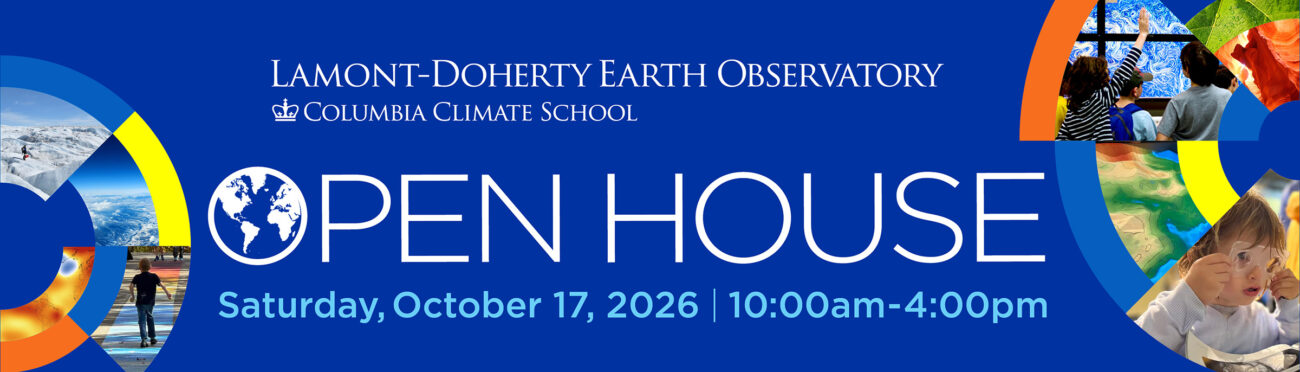
On Saturday, October 17, 2026 from 10am to 4pm, Lamont-Doherty Earth Observatory Open House—our biggest, best science fun and discovery event of the year—will take place on our beautiful campus in Palisades, NY. Mark your calendar and join us for this free, family-friendly celebration of science! RSVP Today!
