Earth Sciences3
-

Earth’s Continents Stabilized Due to Furnace-Like Heat, Study Reveals
The new discovery has implications beyond geologic history, such as the search for critical minerals and habitable planets beyond Earth.
-

Nine Lamont-Doherty Earth Observatory Researchers Honored by Leading Scientific Organizations
Scientists connected with the Lamont-Doherty Earth Observatory, which is part of the Columbia Climate School, received notable accolades from renowned national and international research societies this fall.
-
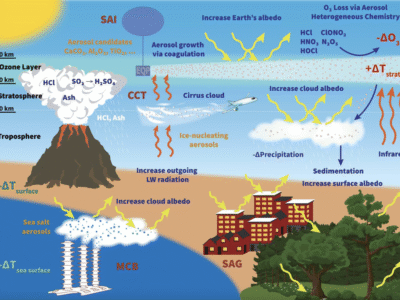
How Hard Is It to Dim the Sun?
Solar radiation management is gaining traction as a climate intervention—but new research warns that real-world constraints make it riskier and more uncertain than most models suggest.
-

Where Soil Meets Data: Yushu Xia’s Mission To Support a Healthier Planet
Xia discusses her research projects, mentorship goals, and the importance of staying ahead in a changing scientific landscape.
-

Mercury Rising: Why Emissions of This Deadly Neurotoxin May Soon Increase
The EPA is proposing changes to the Mercury and Air Toxic Standards (MATS), which would weaken mercury emissions limits from U.S. fossil fuel power plants by 70 percent.
-
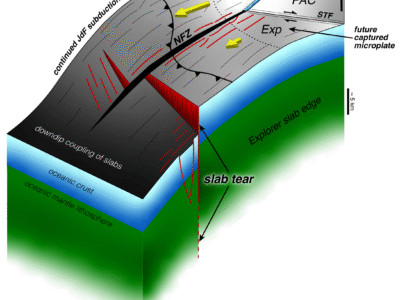
Earth’s Crust Is Tearing Apart off the Pacific Northwest—and That’s Not Necessarily Bad News
Using seismic reflection imaging—essentially an ultrasound of the Earth’s subsurface—and detailed earthquake records, researchers captured a subduction zone in the process of tearing itself apart.
-
Columbia Will Co-Lead Major Project To Study Global Carbon Cycle
Awarded by Schmidt Sciences, a new grant will provide up to $45 million to four interdisciplinary teams of researchers who will seek to improve climate modeling across land, air and sea.
-

Why Is Modeling Climate More Complex Than Forecasting Weather?
Climate models must simulate many overlapping systems to predict or project future climate.
-

Taking Science Education to the Seas With the 2025 School of Rock
Aboard the R/V Marcus G. Langseth, 13 teachers traveled from San Diego to the Galápagos Islands this summer, learning about oceanography and collaboration along the way.


The first Earth Day in 1970 ignited a movement to stop polluting our planet. Today, our scientists and experts are tackling the most pressing challenges to achieve real-world impact. This Earth Day, join us in our commitment to realizing a just and sustainable future for our planet. Visit our Earth Day website for ideas, resources, and inspiration.
