Earth Sciences4
-
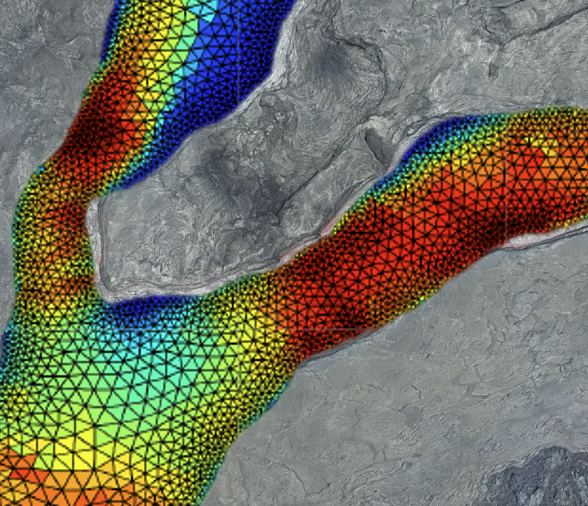
Study Reveals How Gas Bubbles Shaped Kīlauea’s 2018 Lava Flow
New research shows that gas bubbles played a central role in controlling how fast and far the lava traveled, and that lava flow models need to account for bubbles to more accurately forecast where lava will stop.
-
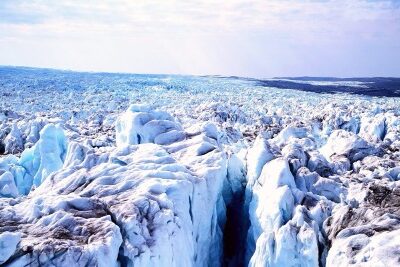
Massive Calving Episode in Greenland May Foreshadow More Rapid Ice Sheet Loss
Researchers studying a lake drainage event in Greenland determined that large amounts of meltwater can lead to massive glacier calving events and accelerate ice sheet loss.
-
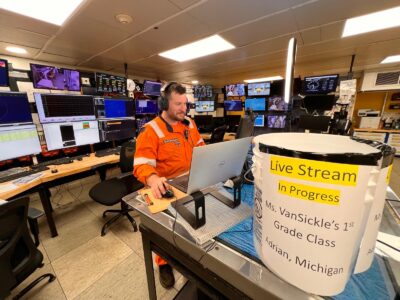
Life Aboard the Langseth: A Q&A With Chief Science Officer Cody Bahlau
On Columbia’s global research vessel, the R/V Marcus G. Langseth, Bahlau serves as the key link between scientists, crewmembers and operations on shore.
-
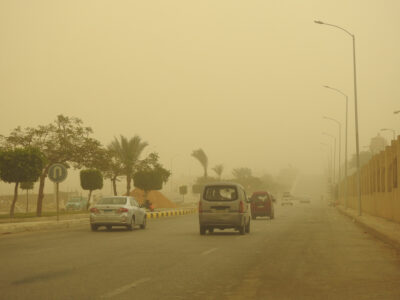
June Research Roundup: Select Papers
In this month’s edition of our research roundup, we highlight a new study on African air pollution; deep Earth carbon recycling; and a Pacific cooling mystery.
-
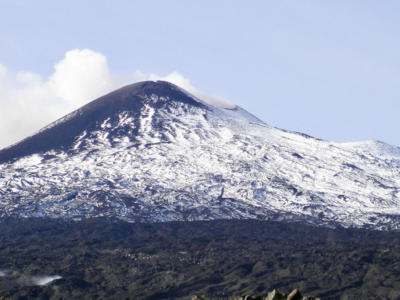
Carbon Dioxide and Water Played Key Roles in Historic Mount Etna Eruptions
Understanding these dynamics can help geologists assess the risk of future eruptions.
-

New Research Indicates That in the Future, Trees May Store Less Carbon Than Expected
Even as trees photosynthesize late into the year, their growth stops by mid-summer, which impacts their carbon uptake.
-
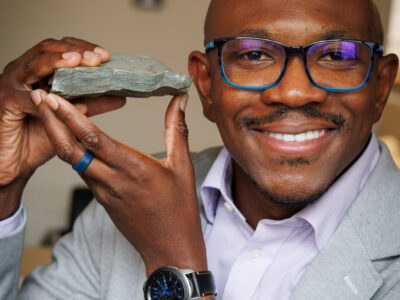
Geologist Folarin Kolawole Receives 2026 National Geographic Wayfinder Award
Folarin Kolawole is one of 15 recipients of this year’s National Geographic Society’s Wayfinder Award, which recognizes people whose work is expanding our understanding of the planet and helping to protect its future.
-
World Oceans Day Reimagines Our Relationship With the Water Around Us
In honor of this annual U.N. event, we are highlighting our coverage of ocean research and education initiatives at the Columbia Climate School and Lamont-Doherty Earth Observatory.
-

Why Manhattanhenge Matters Beyond the Sunset
Manhattanhenge is a reminder that we live on a tilted, rotating planet orbiting something much larger—a perspective scientists link to stronger spatial awareness and environmental concern.



COP31, the 2026 United Nations Climate Change Conference, aims to advance dialogue, strengthen consensus, and accelerate climate action on a global scale. From November 9–20, 2026 in Antalya, Türkiye, heads of state, ministers, scientists, business leaders, and civil society will gather to advance efforts in emission targets, climate finance, and adaptation and resilience. Once again, our experts, students, and global thought leaders from Columbia Climate School and across Columbia University are contributing to key events, sharing insights, and helping shape the dialogue toward ambitious, science-based solutions. Learn More
