Earth Sciences98
-
Climate Scientist, Volcanologist Elected to National Academy of Sciences
Mark Cane, an expert on the El Niño climate pattern, and Terry Plank, an authority on explosive volcanoes—both scientists at Columbia University’s Lamont-Doherty Earth Observatory–have been elected to the National Academy of Sciences. Membership in the National Academy, given for excellence in original scientific work, is one of the highest honors awarded to engineers and…
-

Contest Aims to Bring ‘Dark Data’ into Digital Archives
The scientific publisher Elsevier and a data archiving facility at Columbia University’s Lamont-Doherty Earth Observatory are offering $5,000 and a trophy to the person with the best example of how data-preservation techniques are being used to advance new discoveries in the earth sciences.
-

‘Chasing Ice’: Watching History Unfold, and Disappear
Near the end of “Chasing Ice,” a hunk of glacier the size of lower Manhattan explodes, rolls and crashes into the sea. If that sounds like a spoiler, well, go see the movie and you’ll know you would have known it was coming anyway. And the beauty of the movie is that it will still…
-

Greenland Welcomes Icepod and the 2013 Science Season
Icepod joined the first large wave of science teams headed to Greenland via the NYANG LC130 transport system. Four LC130 aircraft were packed to bursting with pallets of equipment, supplies and science teams anxious to get to their designated research locations.
-
Students Share Findings from Global Research
This April over fifty students shared the results of their respective research projects with the rest of the Columbia community as part of the 2013 Student Research Showcase. While all within the field of sustainable development, research topics ranged from climate change to community development and included work from across the world.
-

Fossil Fuels Do Far More Harm Than Nuclear Power
Pushker Kharecha and James E. Hansen write about their recent paper on the long-term health effects of nuclear power versus fossil fuels, and argue that nuclear power needs to be part of the solution to climate change.
-

Careers in Earth Science
Last year, President Obama launched Educate to Innovate, a campaign designed to improve the participation and performance of the nation’s students in science, technology, engineering and mathematics (STEM).
-
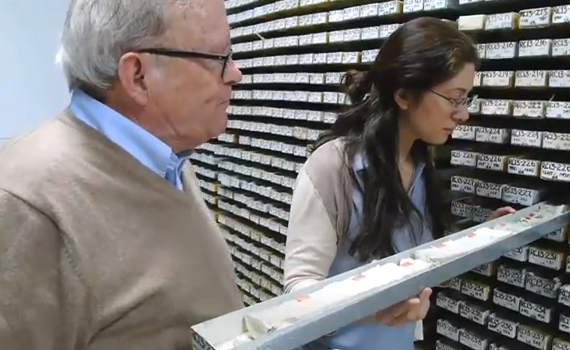
Plumbing the Deep Ocean Floor
A video profile of the Lamont-Doherty Core Repository—the world’s largest collection of deep sea sediments, some as old as 100 million years. The 19,000 cores, largely collected by Lamont’s own research vessels, are a central resource for the global scientific community, which uses them for studies of earth’s past and current environment, especially in regard…
-

Greenhouse Gases Like Steroids for Extreme Weather
The fourth seminar in the Earth Institute’s Sustainable Development Seminar Series, “Ch Ch Ch Changes – recent trends in temperature extremes and hydroclimate,” brought together experts in the fields of climate change and hydrology to discuss emerging trends in global weather events.


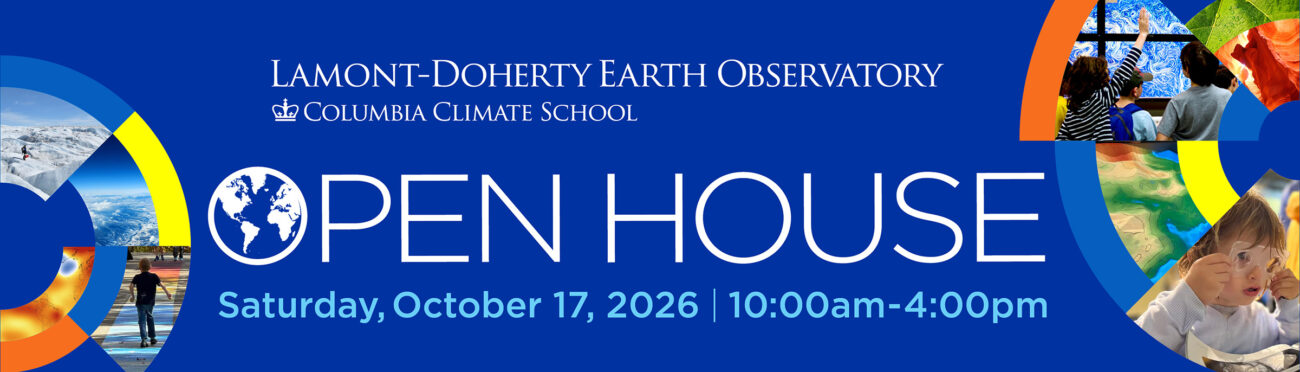
On Saturday, October 17, 2026 from 10am to 4pm, Lamont-Doherty Earth Observatory Open House—our biggest, best science fun and discovery event of the year—will take place on our beautiful campus in Palisades, NY. Mark your calendar and join us for this free, family-friendly celebration of science! RSVP Today!