Earth Sciences100
-

Unplanned Time in Dhaka
Due to the speed at which the two Scotts were able to repair the compaction meter, I found myself with two extra days in Dhaka. Besides numerous quickly planned meetings, I got to see the celebration of the arrival of Bengali Spring and the growing protest movement against the light sentence for Islamists convicted of…
-

Resistivity in Comilla
I headed east to Comilla for 4 days to train 6 Dhaka University students and graduates to use the resistivity imaging system we bought for the project. The system will send electric currents into the ground to map the distribution of sand and muds. The 1000s of measurements will create a catscan-like image of the…
-
Latest Korea Nuke Test Dwarfed Previous Ones
Seismic Waves Show Steady Progress to Bigger Bomb, Say Scientists
-

Wrapping up in Sylhet
Able to drive again, we wrapped up the last few days of the conclave with more outcrop geology, drilling wells through the sediments, 3D filming and a barbeque. The conclave turned to be an extremely successful means of getting us excited due to the tremendous cross-fertilization that occurred.
-

Hartal!
A two day general strike disrupted our field plans, but Bangladeshis are adept at adapting to any change. We walked the local outcrops one day and hired a small pickup truck the next and managed to accomplish our goals despite the political turmoil.
-

Conclave in Sylhet, Bangladesh
Our project studying the Ganges-Brahmaputra Delta in Bangladesh consists of many components studying different tectonic and sedimentary aspects of the geology. To bring all the parts together, we are holding a meeting we are calling the “conclave” in NE Bangladesh. We are jointly visiting places that can help us to develop an integrated understanding of…
-
Lamont Oceanographer Recognized for Pioneering Work on Global Ocean Currents
An oceanographer who has painstakingly collected measurements from each of the world’s oceans to understand how the oceans move heat and freshwater around the planet to influence climate is the winner of the 2013 Prince Albert 1 Medal for outstanding contributions to oceanography, given by the International Association for the Physical Sciences of the Ocean…
-

Welcoming a New Instrument for ‘Probing’ the Polar Regions
In 2009 it was just a dream. But creative vision, sweat equity, good partnerships and funding can bring dreams to reality, and 2013 delivered. It was four years ago that a small team of Lamont scientists, polar geophysicist Robin Bell, engineer Nick Frearson and ocean climate physicist Chris Zappa, began discussions of an instrument that…
-
Bogged Down in Alaska
For thousands of years Arctic peat bogs have soaked up atmospheric carbon like a giant sponge. But as the poles warm, the arctic bogs will decay and expel billions of tons of carbon back into the air—or will they? A warmer climate might actually improve growing conditions in the bogs, allowing them to take up…


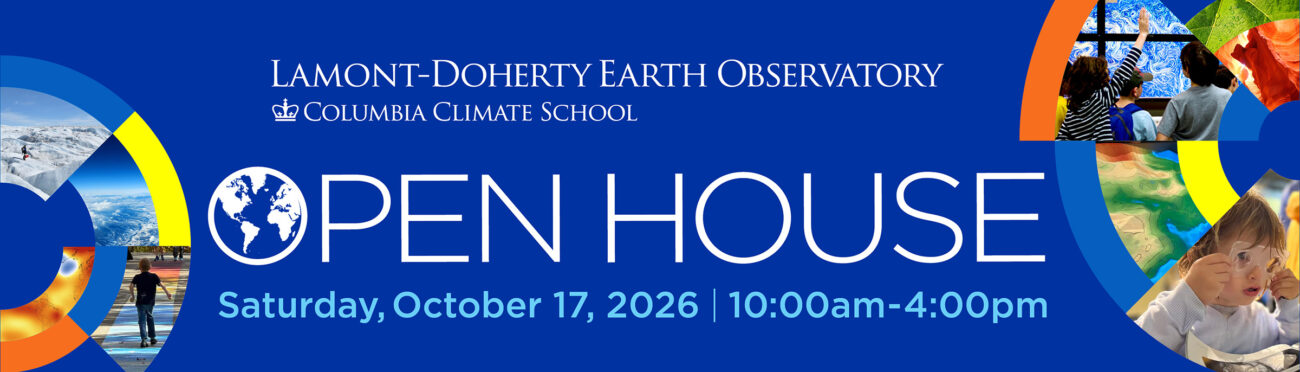
On Saturday, October 17, 2026 from 10am to 4pm, Lamont-Doherty Earth Observatory Open House—our biggest, best science fun and discovery event of the year—will take place on our beautiful campus in Palisades, NY. Mark your calendar and join us for this free, family-friendly celebration of science! RSVP Today!
