State of the Planet

News from the Columbia Climate School

Natural Disasters54

  • Seeking the Deadly Roots of the Dinosaurs’ Ascent

    Seeking the Deadly Roots of the Dinosaurs’ Ascent

    Over the past 450 million years, life on earth has undergone at least five great extinctions, when biological activity nosedived and dominant groups of creatures disappeared. The final one (so far) was 65 million years ago, when it appears that a giant meteorite brought fires, shock waves and tsunamis, then drastically altered the climate. That killed off…

  • Along an Ancient Coast, Clues to a Global Extinction

    Along an Ancient Coast, Clues to a Global Extinction

    Wave-washed sea cliffs along the coasts of western England and Wales are home to spectacular assemblages of rocks and fossils that may hold keys to understanding a sudden global extinction 201.4 million years ago that cleared the way for the rapid evolution of dinosaurs. Paleontologist Paul Olsen and geologist Dennis Kent of Columbia University’s Lamont-Doherty…

  • The Triassic and Today: Hinge Points in Earth’s History

    The Triassic and Today: Hinge Points in Earth’s History

    Paleontologist Paul Olsen has been investigating the causes of Triassic-Jurassic extinction–a turning point in earth’s history that wiped out many life forms and started the reign of dinosaurs. More than 200 million years separate us from this catastrophe (also called the End-Triassic Extinction), but it could contain some lessons for us today, says Olsen.  For…

  • Drilling into the Jurassic in New Jersey

    Drilling into the Jurassic in New Jersey

    One hour from New York City, where the suburbs of New Jersey give way to farms, a team of scientists are drilling for ancient rocks on the edge of a cornfield. The rocks hold clues about what the earth was like about 201 million years ago,during the great extinction that allowed dinosaurs to dominate. Listen…

  • Cities Are Where the Action Is, Post-Rio

    Cities Are Where the Action Is, Post-Rio

    Representatives of the worlds’ cities came to Rio in June for a series of events focused on the problems pressing in on the burgeoning urban population. Mayors around the world already are working on solutions and came out of Rio with concrete commitments for the future.

  • For Tomorrow’s Leaders, a Tool Box for a Complex World

    For Tomorrow’s Leaders, a Tool Box for a Complex World

    How are the global leaders of tomorrow going to secure renewable sources of energy, solve the problems of water scarcity, and maintain our standard of living – all while improving health, ending poverty, and accommodating a growing population and changing environment? The World Economic Forum, with its commitment to “improving the state of the world,”…

  • Investigating Giant, Unseen Landslides

    Investigating Giant, Unseen Landslides

    Steep mountains produce some of the biggest landslides on earth but in such rugged terrain who’s around to notice? These monster back country slides are now gaining attention from far-away scientists, aided by a global network of seismic stations, earth-orbiting satellites and the crowd-sourcing power of the internet.

  • Photo Essay: In the Heart of Dryness

    Photo Essay: In the Heart of Dryness

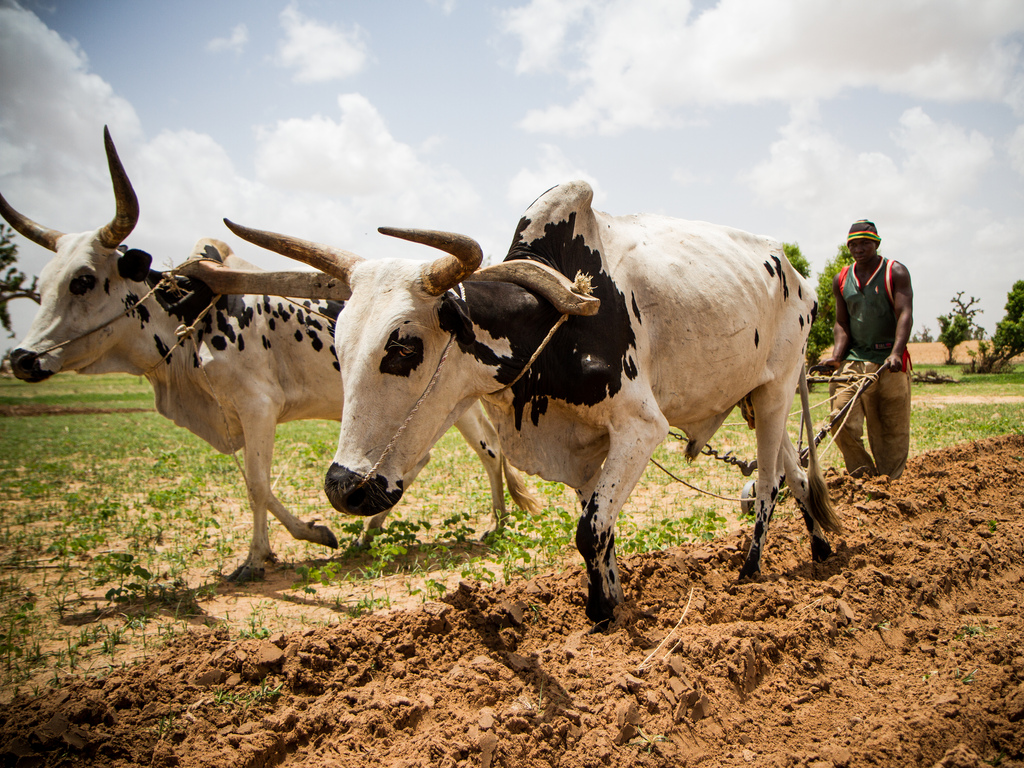
    Explore the country of Niger in this visual essay while learning about the importance of seasonal forecasting to the Sahel, one of the poorest and most climate-vulnerable regions in the world.

  • Decadal Prediction: The New Kid On the Block

    Decadal Prediction: The New Kid On the Block

    Research on decadal prediction—what the climate is going to be like a decade or two from now—is still relatively new and experimental. It’s also in high demand by planners and decision makers interested in building dams and other large-scale development projects. In a new paper, IRI’s Lisa Goddard and colleagues discuss how decadal prediction research…

Colorful icons representing nature, sustainable living, and renewable energy with text "Earth Day 2026"

The first Earth Day in 1970 ignited a movement to stop polluting our planet. Today, our scientists and experts are tackling the most pressing challenges to achieve real-world impact. This Earth Day, join us in our commitment to realizing a just and sustainable future for our planet. Visit our Earth Day website for ideas, resources, and inspiration.

  • Seeking the Deadly Roots of the Dinosaurs’ Ascent

    Seeking the Deadly Roots of the Dinosaurs’ Ascent

    Over the past 450 million years, life on earth has undergone at least five great extinctions, when biological activity nosedived and dominant groups of creatures disappeared. The final one (so far) was 65 million years ago, when it appears that a giant meteorite brought fires, shock waves and tsunamis, then drastically altered the climate. That killed off…

  • Along an Ancient Coast, Clues to a Global Extinction

    Along an Ancient Coast, Clues to a Global Extinction

    Wave-washed sea cliffs along the coasts of western England and Wales are home to spectacular assemblages of rocks and fossils that may hold keys to understanding a sudden global extinction 201.4 million years ago that cleared the way for the rapid evolution of dinosaurs. Paleontologist Paul Olsen and geologist Dennis Kent of Columbia University’s Lamont-Doherty…

  • The Triassic and Today: Hinge Points in Earth’s History

    The Triassic and Today: Hinge Points in Earth’s History

    Paleontologist Paul Olsen has been investigating the causes of Triassic-Jurassic extinction–a turning point in earth’s history that wiped out many life forms and started the reign of dinosaurs. More than 200 million years separate us from this catastrophe (also called the End-Triassic Extinction), but it could contain some lessons for us today, says Olsen.  For…

  • Drilling into the Jurassic in New Jersey

    Drilling into the Jurassic in New Jersey

    One hour from New York City, where the suburbs of New Jersey give way to farms, a team of scientists are drilling for ancient rocks on the edge of a cornfield. The rocks hold clues about what the earth was like about 201 million years ago,during the great extinction that allowed dinosaurs to dominate. Listen…

  • Cities Are Where the Action Is, Post-Rio

    Cities Are Where the Action Is, Post-Rio

    Representatives of the worlds’ cities came to Rio in June for a series of events focused on the problems pressing in on the burgeoning urban population. Mayors around the world already are working on solutions and came out of Rio with concrete commitments for the future.

  • For Tomorrow’s Leaders, a Tool Box for a Complex World

    For Tomorrow’s Leaders, a Tool Box for a Complex World

    How are the global leaders of tomorrow going to secure renewable sources of energy, solve the problems of water scarcity, and maintain our standard of living – all while improving health, ending poverty, and accommodating a growing population and changing environment? The World Economic Forum, with its commitment to “improving the state of the world,”…

  • Investigating Giant, Unseen Landslides

    Investigating Giant, Unseen Landslides

    Steep mountains produce some of the biggest landslides on earth but in such rugged terrain who’s around to notice? These monster back country slides are now gaining attention from far-away scientists, aided by a global network of seismic stations, earth-orbiting satellites and the crowd-sourcing power of the internet.

  • Photo Essay: In the Heart of Dryness

    Photo Essay: In the Heart of Dryness

    Explore the country of Niger in this visual essay while learning about the importance of seasonal forecasting to the Sahel, one of the poorest and most climate-vulnerable regions in the world.

  • Decadal Prediction: The New Kid On the Block

    Decadal Prediction: The New Kid On the Block

    Research on decadal prediction—what the climate is going to be like a decade or two from now—is still relatively new and experimental. It’s also in high demand by planners and decision makers interested in building dams and other large-scale development projects. In a new paper, IRI’s Lisa Goddard and colleagues discuss how decadal prediction research…