research32
-

Call for Proposals: Earth Frontiers: A New Seed Funding Program
This fall, the Earth Institute will be evaluating project proposals under its new Earth Frontiers seed funding program for Columbia University faculty and researchers. The program, which was first announced this past spring of 2019, is accepting projects through September 9, 2019.
-

Where Science Meets Policy: Lamont-Doherty Earth Observatory Hosts Environmental Policy Students
As part of the MPA in Environmental Science and Policy, students undertake science courses that will serve as a foundational basis for tackling policy issues. Who better to learn from than the individuals who dominate earth science research?
-

How Much Do Climate Fluctuations Matter for Global Crop Yields?
A new study finds that ENSO has caused widespread, simultaneous crop failures in recent history, running counter to the long-held assumption that crop failures in geographically distant breadbasket regions are unrelated.
-

Part of the Pacific Ocean Is Not Warming as Expected. Why?
Climate models predict that as a result of human-induced climate change, the surface of the Pacific Ocean should be warming. But one key part is not.
-

Scientists Map Huge Undersea Fresh-Water Aquifer Off U.S. Northeast
In a new survey of the sub-seafloor off the U.S. Northeast coast, scientists have made a surprising discovery: a gigantic aquifer of relatively fresh water trapped in porous sediments lying below the salty ocean.
-

Melting of Himalayan Glaciers Has Doubled in Recent Years
A new study is the latest and perhaps most convincing indication that climate change is eating the Himalayas’ glaciers, potentially threatening water supplies for hundreds of millions of people across much of Asia.
-

How Energy Choices After Fukushima Impacted Human Health and the Environment
A new paper examines CO2 emissions and mortality rates after Japan and Germany shifted away from nuclear power.
-

Large Volcanic Eruptions Can Alter Hurricane Strength and Frequency
A new study is the first to untangle the effects of volcanic eruptions and El Niño events on hurricane patterns.
-

High School Students in Peru Discover Lead Contamination Hotspots
Equipped with a field testing kit originally developed within Columbia’s Earth Institute, the “Lead-Free Kids Peru” project has tested hundreds of soil samples for the toxic metal — and dug up some startling results in the process.


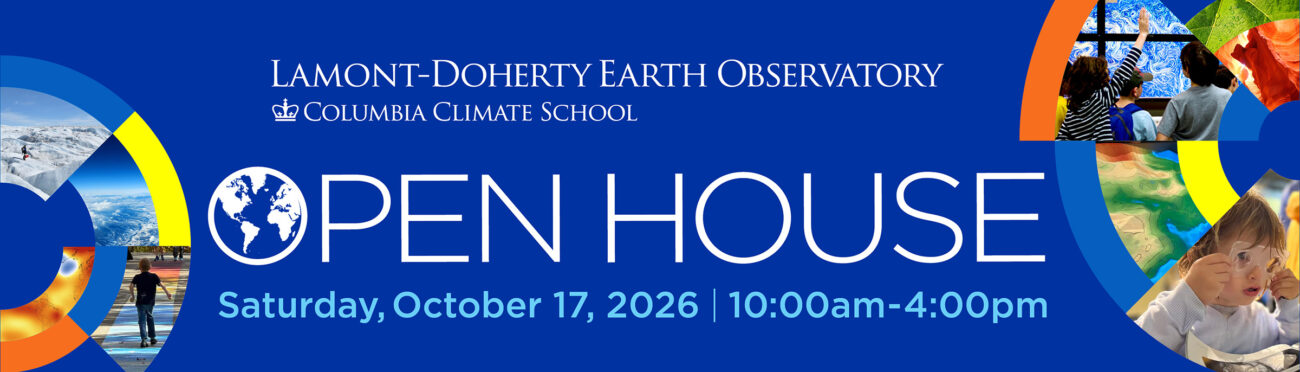
On Saturday, October 17, 2026 from 10am to 4pm, Lamont-Doherty Earth Observatory Open House—our biggest, best science fun and discovery event of the year—will take place on our beautiful campus in Palisades, NY. Mark your calendar and join us for this free, family-friendly celebration of science! RSVP Today!
