volcanoes
-
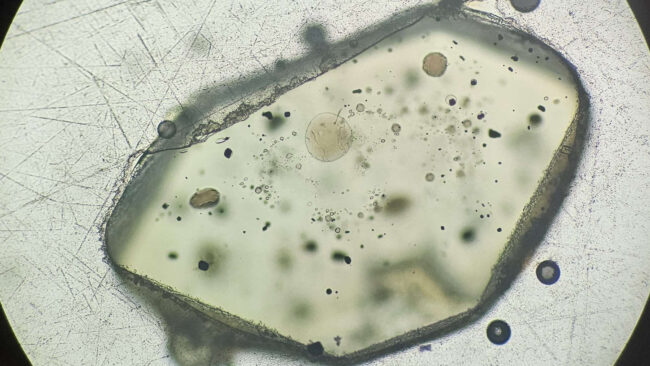
A New Origin Story for Earth’s Carbon
An analysis of volcanic rocks bearing an isotopic signature from Earth’s core suggests meteorites delivered much of the planet’s carbon late in its formation.
-
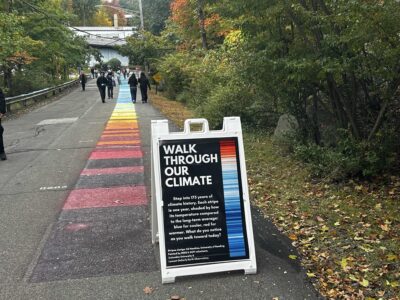
From Landslides to Lava: A Journalism Student’s First Lamont Open House
Oobleck, seismology and seafloor sediments bring Earth science alive during the observatory’s annual public celebration.
-
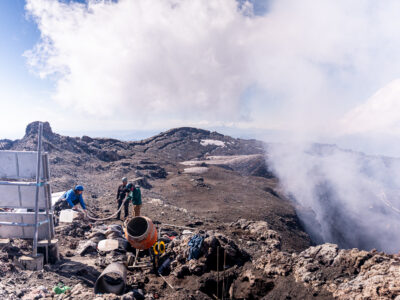
Wiring the Spirit’s House
Lamont scientists Terry Plank and Einat Lev worked with partners in Chile to install a new suite of sensors on the summit of Villarrica, bringing real-time monitoring to one of Chile’s most active volcanoes.
-
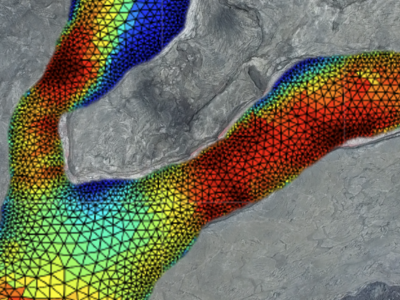
Study Reveals How Gas Bubbles Shaped Kīlauea’s 2018 Lava Flow
New research shows that gas bubbles played a central role in controlling how fast and far the lava traveled, and that lava flow models need to account for bubbles to more accurately forecast where lava will stop.
-
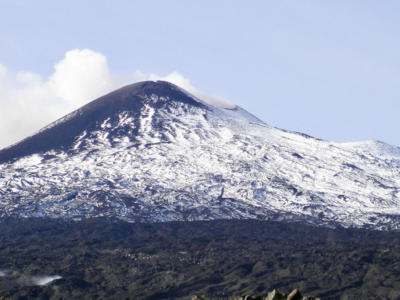
Carbon Dioxide and Water Played Key Roles in Historic Mount Etna Eruptions
Understanding these dynamics can help geologists assess the risk of future eruptions.
-
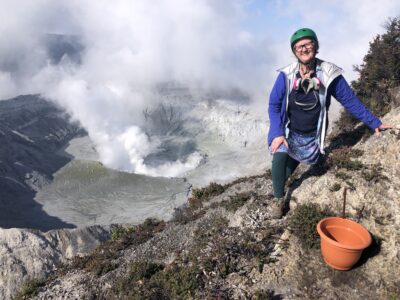
Women in Science: Geochemist Terry Plank
Award-winning geochemist and volcanologist Terry Plank studies the phenomena shaping the Earth’s crust and how they affect the world’s volcanoes.
-
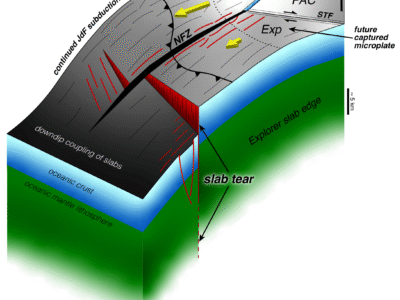
Earth’s Crust Is Tearing Apart off the Pacific Northwest—and That’s Not Necessarily Bad News
Using seismic reflection imaging—essentially an ultrasound of the Earth’s subsurface—and detailed earthquake records, researchers captured a subduction zone in the process of tearing itself apart.
-

Women in Science: Volcano Researcher Ally Peccia
In honor of International Day of Women and Girls in Science, we’re highlighting amazing scientists like Peccia, who studies the interactions between volcanoes and the climate.
-

Can ‘Super Volcanoes’ Cool the Earth in a Major Way? A New Study Suggests No.
An extended volcanic winter could have huge impacts on all living creatures. But could this really happen?


COP31, the 2026 United Nations Climate Change Conference, aims to advance dialogue, strengthen consensus, and accelerate climate action on a global scale. From November 9–20, 2026 in Antalya, Türkiye, heads of state, ministers, scientists, business leaders, and civil society will gather to advance efforts in emission targets, climate finance, and adaptation and resilience. Once again, our experts, students, and global thought leaders from Columbia Climate School and across Columbia University are contributing to key events, sharing insights, and helping shape the dialogue toward ambitious, science-based solutions. Learn More
